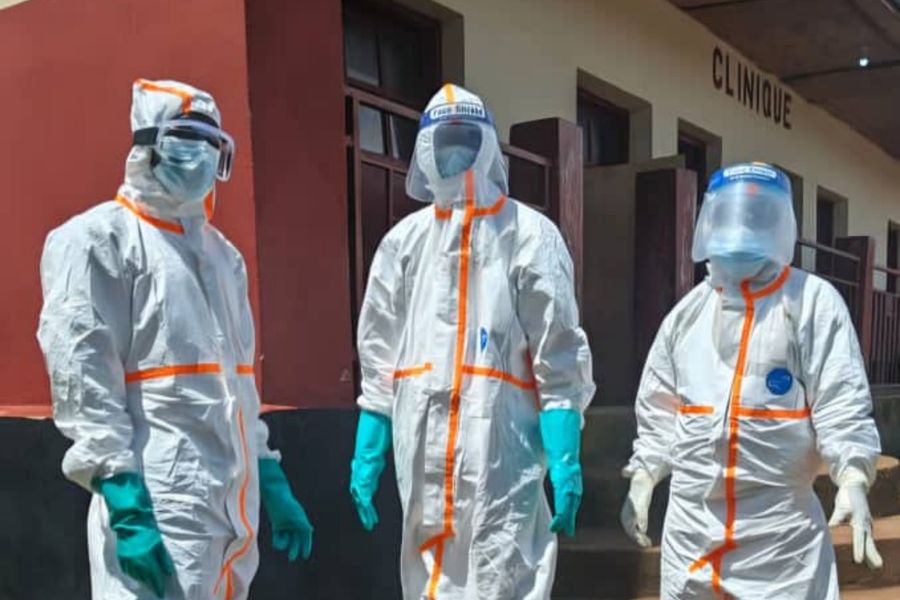
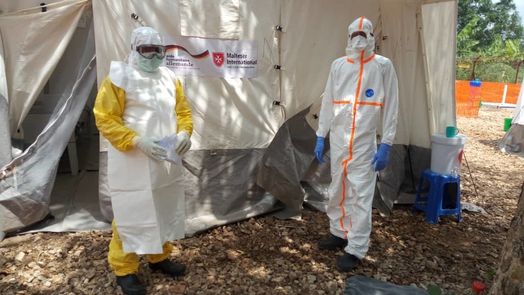
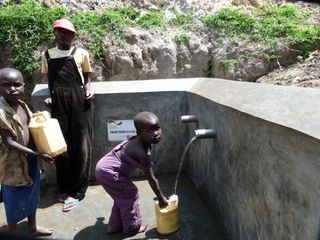
Around Lake Albert, again in the south of the project region, outbreaks of cholera are not rare. As the lake is the only source of water for the population around, the disease spreads rapidly if once broken out.
All the hitherto attempts to build latrines and secure sources for drinking water did not bring about the expected success: During rain season, the ground water rises up to one meter under the earths surface and floods the latrines. It is difficult to find clean sources because the water often mixes up with the water from the lake or with ground water already contaminated by the latrines.
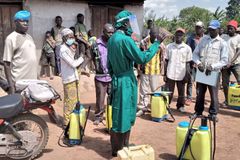
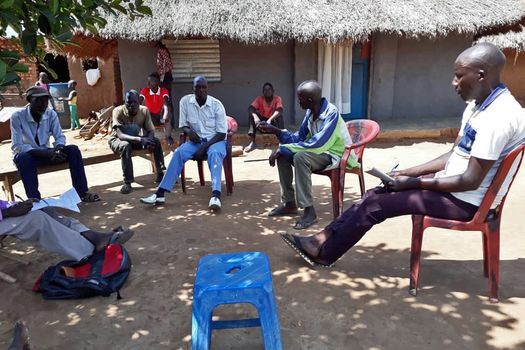
In connection with the fight against the plague and cholera, new committees (COLLE - Comité locale pour la lutte contre lépidémie) within the affected village communities have been created. The members of these committees are trained in identifying cases of plague and cholera, preventing the spreading of the diseases and sensitising the population. They organize awareness campaigns with information material such as posters and audio visual material including radio spots, sketches and songs all developed and provided by Malteser International. All the material is available in the seven relevant languages spoken in the region.
Due to the fact that the number of people infected with the HI virus has risen dramatically - especially in the northern part of the project region -, Malteser International in cooperation with the diocese of Mahagi opened two AIDS information centres (CIELS - Centres d´information et d´éducation pour la lutte contre le SIDA), one in Ariwara, the other one in Mahagi, in 2004.
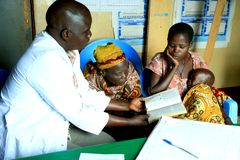
In four health zones severely affected by the spread of HIV/AIDS, Malteser International additionally offers voluntary counselling and testing in several health facilities.
In order to ensure a constant sensitisation, three radio stations play anti-AIDS spots created by the CIELS four times a day in four different languages. Furthermore, the information centres offer education events in schools, institutions run by the church or for special target groups such as mothers.
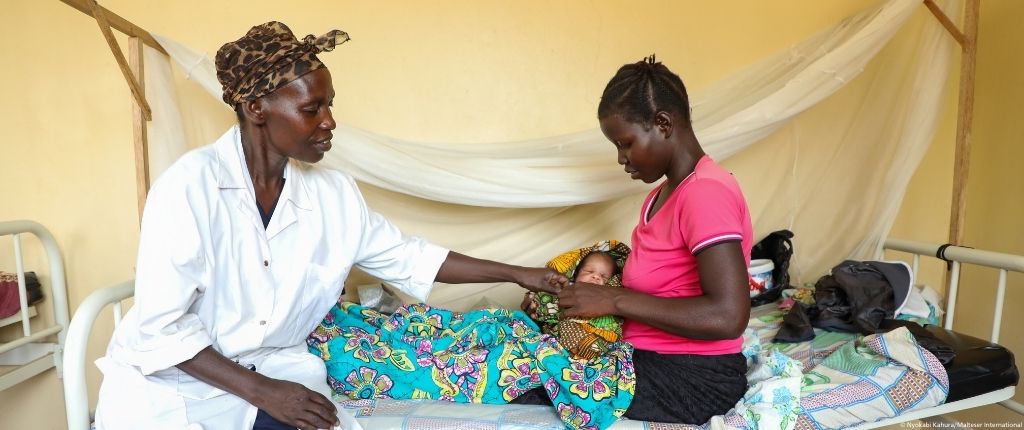
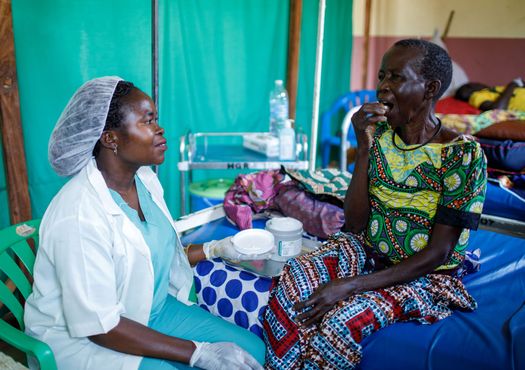
Another widespread disease is epilepsy. Despite the tense security situation and attacks by rebels, Malteser International trained ten health centres in identifying and treating epilepsy. Less than five Euros ensure the treatment of a person suffering from epilepsy with medical drugs for one year so that the patient can live a normal life.
- Reduction of the mortality and morbidity rate due to the plague, cholera, epilepsy and HIV/AIDS in the project area
- Actively include the population in health education
- Prevent the spreading of the plague, cholera and HIV/AIDS through responsibility and education of the population
- Reduce the stigma through education and open discussions
- Distribution of 600 water cans to the population living in the areas affected by cholera
- Training of medical staff in the health centres in diagnosis and treatment of the diseases
- Creation and training of local health committees (Comité locale pour la lutte contre les épidémies, COLLE) in prevention and identification of the diseases
- Production of print material and audio-visual material
- Free supply of medical drugs
- Opening of two AIDS information centres
- Construction of HIV/AIDS centres for voluntary counselling and testing in four health facilities
| Project data | |
| Duration: | 2004 to March 2006 |
| Financing: | EuropeAid (2004), Federal Foreign Office of Germany (for the plague and Cholera, 2005/06), Pooled Fund UN (since 2006 for HIV/AIDS and the plague) |
| Partner: | the local health authorities (BCZ - Bureaux centraux des zones de santé), Diocese of Mahagi |
| | |
| Contact | |
| Malteser: | info@malteser-international.org |
| |
| |