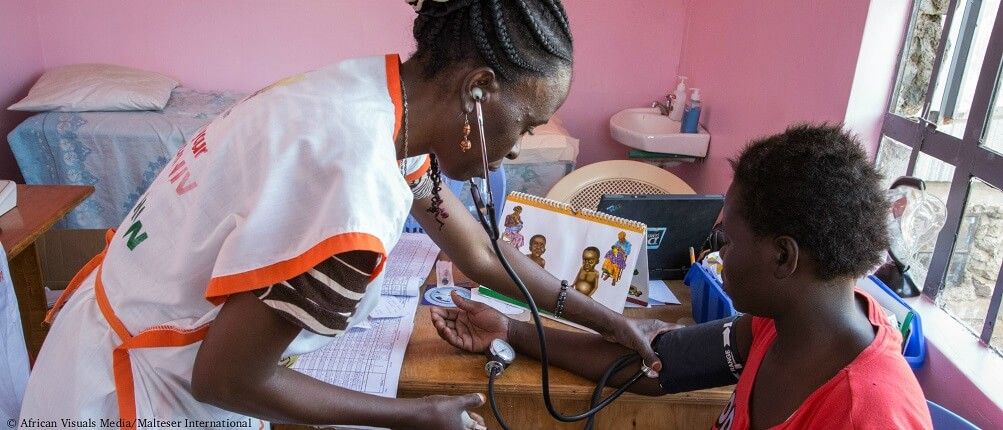
Fighting tuberculosis in the slums of Nairobi
In Nairobi, the capital of Kenya, over 60% of the people live in slums. Most of the residents who live here are day laborers with low, irregular incomes.
HIV/AIDS is a common disease among Nairobi's slum dwellers. As a result, their immune systems are very weak and susceptible to infectious diseases. An additional risk factor is the living situation of the people in the informal settlements: They usually live in overcrowded and poorly ventilated accommodation. Here, diseases such as tuberculosis are easy to spread from one person to the next through droplet infection.
Although tuberculosis is subject to compulsory registration by name, knowledge about this disease is very low here and at the same time the chance of being stigmatized as a tuberculosis patient by the community is very high. For this reason, less than 9% of tuberculosis cases, and even less than 8% in children, are actually reported.
Tuberculosis is not an incurable disease. Properly treated, patients recover within a few months. To do this, it is imperative to take antibiotics for a period of at least six months. If this is not done or not done continuously, the pathogens can become resistant and thus difficult or almost impossible to treat. For patients with weakened immune systems, the disease can then be fatal.
Malteser International has been working in the health sector in this region for over 20 years. The staff members know the living conditions of Nairobi's slum residents very well. Due to the poor infrastructure, access to medical care is a major challenge for many people. Here, many keep their heads above water with day labor constantly looking for the next job. There is no time to go to the clinic in case of illness. Therefore, many cases of tuberculosis simply remain untreated.
Malteser International staff are active here to educate the residents of the slums about the disease tuberculosis. Since the distances between the individual shelters are very short, they can reach many people with their work in a short time.
The project is intended to register the number of reported cases of tuberculosis in accordance with the compulsory reporting requirement. In this way, children infected with tuberculosis in particular are to be identified more easily and subsequently motivated to receive treatment at the health center. In addition, the success rate of the treatments is to be increased by encouraging the patients to carry out the respective therapy to the end.
In the long run, this should reduce the overall number of tuberculosis cases in the slums of Nairobi. Malteser International provides the necessary services for this, in accordance with the needs of the affected population.
- Create awareness of tuberculosis and reduce stigma through awareness-raising activities on the subject. For example, quarterly radio spots provide information on the subject. Furthermore, participation in global tuberculosis days will take place.
- Increased case notification with an increased focus on children
- Introduce a mechanism for continuing treatment for tuberculosis patients who stop treatment
- Health and nutrition counseling for tuberculosis patients and clients
- Capacity building for supervised treatment supported by community volunteers
Country info
Capital: Nairobi
Area: 582,650 km²
Population: c. 53.8 Million
Project data
Donors: The Global Fund
Partners: Kenyan Ministry of Health, City of Nairobi, Amref Health Africa, Health Centres in Urban Informal Settlements