Humanitarianism at a crossroads – Fragmented notes of the Humanitarian Congress 2026 in Berlin
For more than 20 years, the Humanitarian Congress Berlin has been debating, analysing, evaluating and developing the theory and practice of humanitarian action. It brings together leading experts from medical and humanitarian organisations, governments, and the media, as well as young professionals interested in humanitarian work. In 2026, the congress took place from 21 to 22 April in Berlin. Michael Steffen, Bid Manager at Malteser International, attended the event and shares a selection of reflections and insights from the panel discussions he followed during the conference.*
Day 1 of the Humanitarian Congress Berlin
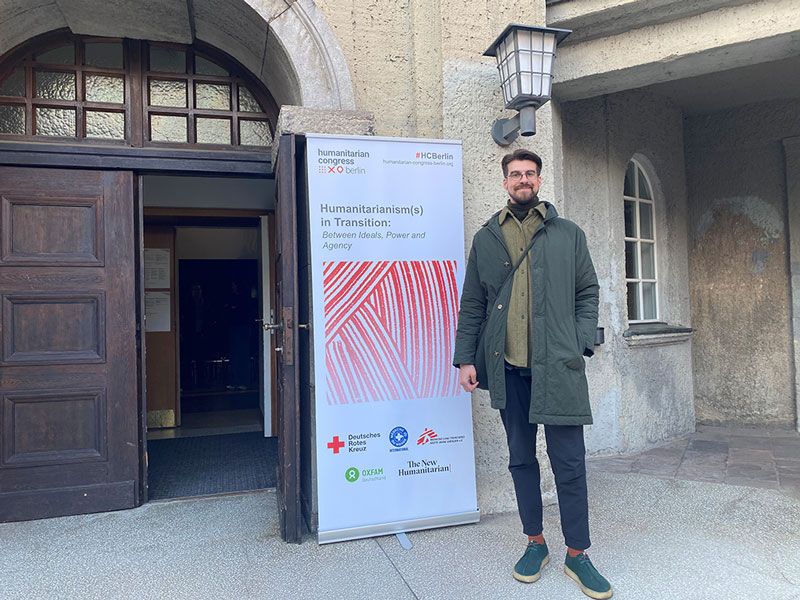
Day 1 of the Humanitarian Congress in Berlin made one thing unmistakably clear: humanitarianism is not facing a temporary crisis, but a profound transformation. Across sessions, speakers challenged the idea that pointing out atrocities is sufficient. Figures like Trump were framed not as causes, but as symptoms of deeper, long‑standing structural violence embedded in global systems. The erosion of norms, shrinking civic space, and massive aid cuts - tiny in comparison to spending on war - signal that there is no longer a “normal” to return to.
We heard that humanitarianism itself is in transition and that there are multiple humanitarianism(s). Before the current system existed, communities already supported one another - and they continue to do so today, often more effectively than formal actors. From Sudan to Lebanon, local solidarity operates independently of humanitarian labels, reminding us that international aid is neither the only nor the primary response mechanism in crises. A recurring theme was power - who holds it, who controls resources, and who sets agendas. The system remains highly vulnerable to money and donor conditionalities, often reducing international organisations to transactional implementers or subcontractors. This dynamic disempowers the very people humanitarian action is meant to support, eroding trust and agency.
Humanitarianism(s) is no longer just about saving lives. It is about power, voice, responsibility - and the courage to change.
Localisation emerged not as a technical fix, but as a political shift. Transferring power to local actors requires more than rhetoric - it demands real decision‑making authority, direct and flexible funding, risk‑sharing, and a willingness by international actors to relinquish control. Distrust toward local organisations persists despite evidence that their accountability - especially reputational accountability within their own communities - is often far higher than that of international actors. Accountability itself was deeply contested. Currently, it flows primarily upward - to donors and taxpayers - while accountability to affected people remains neglected. Participants questioned where legal, moral, and political accountability lies, particularly in contexts like Gaza, where funding conditions, restrictions, and silence create impossible ethical dilemmas. What is allowed in one crisis, many warned, sets precedents for the next.
Local networks and localisation labs were highlighted as powerful models of collective legitimacy, real‑time analysis, and truth‑telling. By working together, local actors can amplify voices, influence policy, and counter silencing - yet these networks remain chronically underfunded. “Nothing about us without us” was not a slogan, but a call for structural change. Another way of contesting the praise that international humanitarian organisations like to receive was through narratives and storytelling. Humanitarian communication still relies heavily on donor‑centric, English‑language narratives that frame people as passive recipients. Ethical storytelling, artistic expression, and local histories remain undervalued, while competition and fear of failure suppress honesty and learning.
The day concluded with an uncomfortable reflection: the humanitarian sector often speaks about change, but struggles to act on it. Local leadership, equitable partnerships, accountability to communities, and solidarity over competition are well‑known solutions. The challenge now is whether the system - and those who benefit most from it - are ready to follow through. Humanitarianism(s) is no longer just about saving lives. It is about power, voice, responsibility - and the courage to change.
Day 2 of the Humanitarian Congress Berlin
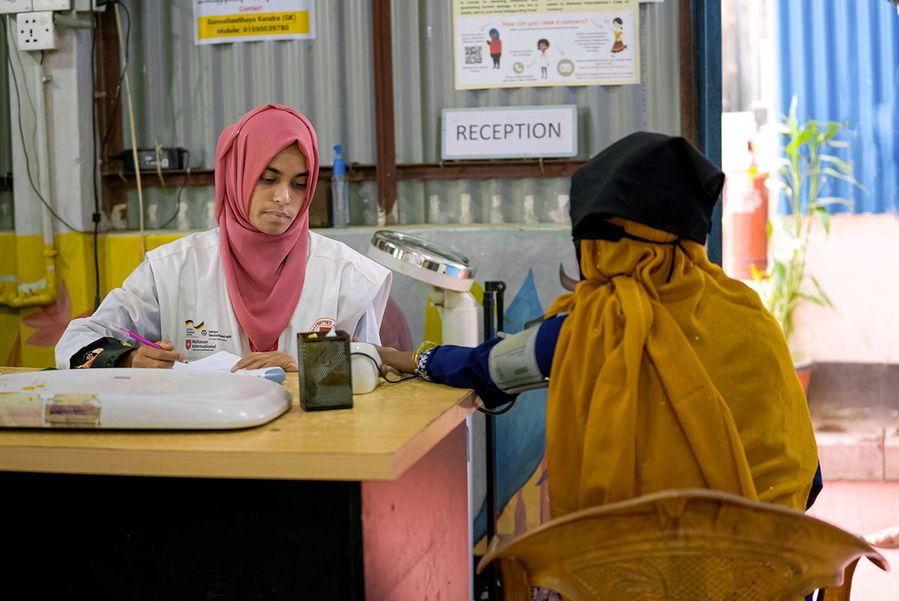
The second and final day of the Humanitarian Congress underscored how deeply the humanitarian system is being tested - not only by funding cuts, but by fundamental questions of power, legitimacy, and human dignity. What emerged was a stark picture of a sector confronting the limits of its own structures in a world marked by protracted conflict, political fracture, and systemic inequality.
Discussions on global health revealed how far current architectures are from the lived realities of affected populations. Health responses continue to follow economic and political logic rather than the directions of communities living in crises settings: medicines are available where diseases are not; priorities are set through donor preferences rather than community decision‑making. The consequences of recent funding cuts - in Somalia, Sudan, Ukraine, and elsewhere - have been immediate and severe, closing health facilities, disrupting nutrition services, and destabilising fragile systems almost overnight. “Functioning” health facilities, participants stressed, do not mean functioning health systems. Secondary care, mental health and psychosocial support, GBV survivor services, non‑communicable diseases, and the inclusion of people with disabilities are systematically underfunded or excluded. At the same time, humanitarian action itself can weaken national systems through short funding cycles, parallel structures, and salary distortions. Health systems are inherently political, and pretending otherwise obscures responsibility.
A recurring message was the need for longer time horizons, flexible and integrated funding, national ownership, and genuine community participation. Without transferring decision‑making power and gradual handovers to national and local actors, humanitarian health responses risk leaving systems weaker than before. For local actors, one of the strongest sources of power remains the ability to refuse conditions that do harm. This is undeniably an act of courage, often accompanied by the fear of losing future funding and donor relationships - yet it may be a vital step if local actors are to define their own conditions and reclaim genuine agency. The erosion of international humanitarian law (IHL) formed another central theme. While armed conflicts heighten and technologies of warfare evolve, the protection of civilians is increasingly treated as optional. Food, water, and infrastructure are weaponised; mass suffering is normalised; and legal norms exist more as rhetoric than restraint. Silence, access conditionalities, and political pressure have hollowed out accountability mechanisms.
Speakers emphasized that humanitarian action alone cannot - and must not - be expected to shoulder moral and legal responsibility for war. The obligation to protect civilians lies with states. Yet we increasingly witness serious violations committed by states themselves in the course of - or in direct contradiction to - their duties toward their populations. In this context, humanitarian actors do have a responsibility to document abuses, to speak out, and to resist the gradual normalisation of violations. Neutrality cannot mean abandoning the defence of human dignity, because neutrality was never truly neutral, but rather entangled with political dimensions as repeatedly underscored during the discussions on Day 1.
Without listening to communities, humanitarian action risks becoming extractive, technocratic, and ultimately dehumanising.
A third major strand focused on the power of narratives, media, and storytelling. Refugees and displaced people are still mainly represented through narrow frames of suffering and victimhood, excluded from shaping how their own stories are told. Stories are often extracted and instrumentalised - for fundraising, visibility, or policy influence - treated as products rather than lived experiences. This extractive logic does not merely distort realities; it actively contributes to dehumanisation. People are reduced to symbols of suffering, stripped of agency, complexity, and control over how their lives are represented. Speakers repeatedly underscored that such practices reproduce power imbalances and undermine dignity. Storytelling that is done about people, rather than with them, risks turning testimony into consumption and pain into currency. What was clearly demanded instead is co‑creation: affected communities must be involved from the very beginning in shaping narratives, deciding what is shared, how it is framed, and whether it should be shared at all. Co‑creation is not a communication add‑on, but an ethical imperative. Without it, storytelling - however well‑intentioned - can perpetuate the very dehumanisation humanitarian action seeks to address. Speaker and participants challenged the sector to move towards reporting and storytelling with communities rather than about them. Lived experience must be recognised as a form of knowledge equal to professional expertise. Ethical, trauma‑informed, and participatory approaches are required, alongside greater openness to artistic expression, oral histories, and non‑Western forms of narrative. Inclusion cannot be an add‑on; it must start at the very beginning.
The congress closed with a sober recognition: the humanitarian sector is facing a legitimacy crisis amid a wider multi-facetted polycrises. Documentation, reporting, and visibility alone are not stopping atrocities. Yet withdrawal, silence, or resignation would amount to complicity. At the heart of these reflections lies a simple but demanding requirement: listening. Not as a procedural step, but as a continuous, two‑way engagement grounded in respect and humility. Without listening to communities, to local actors, to lived experience, humanitarian action risks becoming extractive, technocratic, and ultimately dehumanising just as the system portraits itself through the multiple atrocities happening in front of us. If humanitarianism is to remain meaningful, listening must move from rhetoric to practice, because without it, even well‑intentioned action risks reinforcing the very injustices it seeks to address. The final question left hanging was simple and unsettling: Will these conversations lead to real change, or remain well‑articulated intentions? What is at stake is not an abstract reform, but the protection of people in crisis - and, ultimately, our collective humanity.
April, 2026
*This article reflects contributions and views shared during the discussions and does not necessarily represent the views of Malteser International or of Michael Steffen.