Malnutrition: The silent pandemic
Sufficient and nutritious food is one of the pillars of a healthy life. Access to healthy food is, however, limited for people in many countries – with serious consequences. In this interview, Jennifer Arlt, our Sector Advisor on Food and Nutrition Security, talks about the current state of affairs in her field, explains how she contributes to maintaining a high level of quality in our project work, and shares what motivates her to continue.
Hello Jennifer! As Sector Advisor on Food and Nutrition Security (FNS) for Malteser International, you provide technical advice to Malteser International's project managers in areas ranging from initial relief in humanitarian crises to strengthening resilience. From project planning to monitoring and evaluation, you are involved in projects in many different countries and contexts and therefore have a unique global overview in your field of work. What would you like to achieve or see change in the sector of FNS over the next five years?
Jennifer Arlt: If this were my personal wish list, I would hope that governments finally make binding commitments to slow global warming. The increasing frequency of extreme weather events has a profound impact on food security, nutrition, health and water resources. The climate crisis must be taken seriously by decision-makers. While we continue to wait for stronger climate action, the severity of the crisis is already evident. It is reflected in crop failures, soil degradation, water salinization, biodiversity loss and many other consequences. These are among the reasons why malnutrition has been a silent pandemic for decades, yet it still does not receive the attention it deserves.
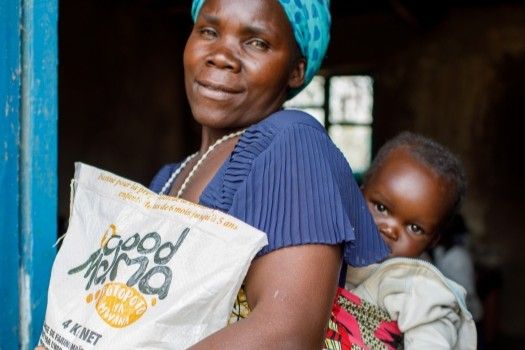
We must do more for children under the age of five who suffer from acute malnutrition. The technical term for this is wasting, which refers to acute undernutrition resulting from a period of insufficient food intake or illness and can become life-threatening. There has been little to no improvement in the prevalence of wasting among children under five over the past 11 years. This is happening in a world where many economies are growing and incomes are rising, which is a paradox and highlights that we still do not live in a child-friendly world. These children are the future, and they deserve access to adequate nutrition services and sufficient, nutritious food. There is a great need for basic but effective nutrition services integrated with health and WASH services. I would love to reach more children through such integrated programs and help provide them with a healthier start in life.
Globally, the proportion of people experiencing food insecurity is slowly declining, but it remains higher than it was a decade ago. This is concerning because it continues to fuel the silent pandemic of malnutrition, with little or no improvement in either wasting or childhood overweight compared with 2012. At the same time, overweight and obesity are becoming increasingly serious public health concerns. When we consider their long-term consequences, it becomes clear that overweight and obesity in children under the age of five are strong predictors of a growing burden of chronic diseases, or non-communicable diseases (NCDs), later in life. As a result, NCDs are expected to become an even greater public health challenge in the coming decades. It is well established that adults living with chronic diseases are generally less resilient. They are, for example, among the populations most vulnerable to extreme weather events – a risk that is becoming increasingly important in a world that continues to warm due to climate change. One of the factors driving overweight, and malnutrition more broadly, is that healthy foods such as fruits and vegetables are often unaffordable, while many families also lack the time or resources to prepare nutritious meals. I would like to contribute to a world where more people are food secure. I strive to develop context-specific and innovative food security programmes that make healthy diets more diverse, affordable and sustainable.
Alongside undernutrition and overweight, micronutrient deficiencies represent the third face of the silent malnutrition pandemic. Among these, I would highlight anaemia as one of the greatest barriers to achieving global nutrition goals. Anaemia impairs birth outcomes, productivity, and cognitive development and affected more than thirty percent of women of reproductive age in 2023. Its prevalence has increased since 2012 and is even higher among pregnant women, affecting around 35 percent. I hope we can achieve greater awareness of the importance of improving dietary quality and diversity for girls and women. I also hope it becomes more widely recognized that women have higher micronutrient requirements than men at certain stages of life, particularly during adolescence, pregnancy, and breastfeeding. Finally, I hope we reach a point where women and girls no longer eat last in the household or feel they must sacrifice the quality or quantity of their own diets for the benefit of other household members.
What is globally the most concerning development in your sector for you personally?
Jennifer Arlt: For me, the most concerning global development in my professional field is that we are witnessing a convergence of crises that are increasingly undermining food security and nutrition. Climate change, armed conflicts, and economic instability are no longer isolated challenges – they are interacting in ways that make healthy diets less accessible and nutrition outcomes more difficult to improve. The current crisis in the Middle East illustrates how regional conflicts can have global repercussions, affecting food and fertilizer markets and placing import-dependent countries under increasing pressure through rising food prices, inflation, and reduced purchasing power. These disruptions ultimately make nutritious foods less affordable for the populations who need them most.
Millions of children still do not receive the nutrition they need for healthy growth and development. Globally, fewer than one in three children aged 6 to 23 months consume a minimally diverse diet, and this has changed very little over the past decade. Among women of reproductive age, more than one third still do not consume diets that provide sufficient essential vitamins and minerals. This is reflected in the alarming prevalence of anaemia, which currently affects more than 600 million women worldwide and is projected to increase further if current trends continue. For me, this is particularly worrying because malnutrition is no longer only about hunger or insufficient calories. It is increasingly about access to diverse and nutritious diets throughout the life course. Poor nutrition in early childhood increases the risk of lifelong health consequences, while unhealthy diets also contribute to the growing burden of non-communicable diseases. Unless we strengthen resilient food systems, improve access to nutritious foods and invest in maternal and child nutrition, these interconnected crises will continue to widen global health inequalities and jeopardize progress towards Sustainable Development Goal 2.
How do you help ensure quality across projects in very different countries, regions, and contexts?
Jennifer Arlt: Being well connected with our project managers and advisors really helps with being informed about projects’ progress, problems and finding context-tailored solutions. I have regular calls with technical colleagues either bilateral or in our community practice meetings which we use to exchange lessons learned and good practices.
Preventive actions for obstacles in the implementation phase are a comprehensive needs assessment including a do-no harm analysis, gender, age and diversity analysis, environmental risks and mitigation aspects. Triangulating our own findings with secondary data helps us to receive a deeper understanding on existing capacities and needs. Exchanging with staff, conducting such analysis and providing input where needed, e.g. on questionnaire design, results interpretation and later one, supporting in reflecting the findings in the projects’ action and monitoring plans is a key step for good quality. For quality implementation itself I supported project managers in tailored monitoring checklists.
Another good way for supporting our project quality is real-time evaluations conducted by ourselves. Real-time evaluations are less time and cost consuming than external ones and have the huge advantage that the “snapshot like” data collection activities usually come to very similar, if not the same results as costly external evaluation. In addition to that, it is a good method to interact with colleagues and partner staff by involving them in learning initiatives.
What was your most memorable experience or moment in your work so far?
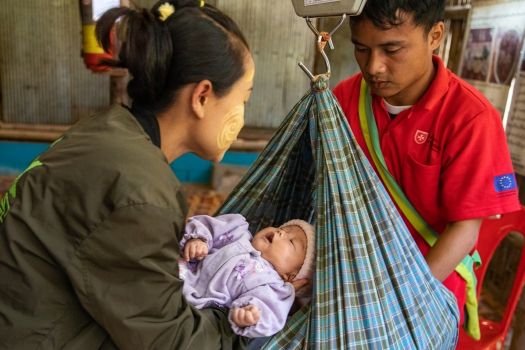
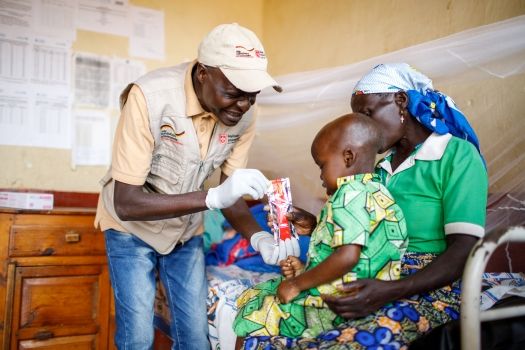
Jennifer Arlt: Working in health facilities that treat children under five with acute malnutrition is something I will always remember. Seeing the despair in children and their partners when they first come to the health unit and accompany them on this hard way of treatment, which is usually filled with even more despair, fear and frustration, shows the strong bonds that exist between parents and their children. It is the best thing ever seeing patients becoming better, stepping back into an active life and overcoming this horrible life-threatening experience. I find it most encouraging having witnessed severely acute malnourished children become better.
August 2026
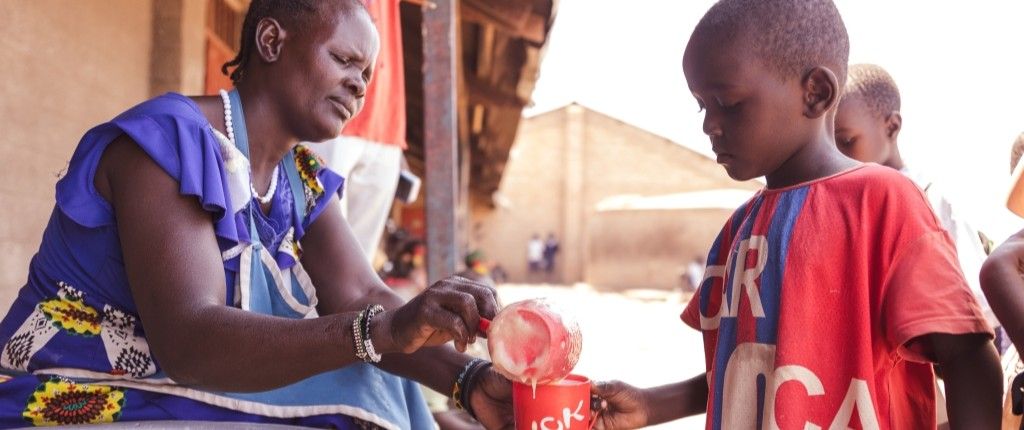
(Header picture: Malteser International supports children in Marsabit, Kenya, with healthy school meals. Photo: Tim Ayere Chawiyah)