Interview: Health in humanitarian crises
As the world marks World Health Day 2026 under the theme “Together for health. Stand with science,” the spotlight turns to the vital role of evidence, collaboration, and solidarity in protecting health in an increasingly complex world. From conflict and displacement to climate change and funding cuts, today’s health challenges rarely exist in isolation and neither can the solutions.
In this context, we spoke with Ludmila Lobkowicz, Global Health Advisor at Malteser International, about what drives her work in humanitarian health, the realities she encounters in crisis-affected settings, and why integrating physical and mental health is essential for dignified and effective care. She also shares how scientific cooperation and locally led approaches can help build more resilient health systems and what gives her hope for the future of global health.
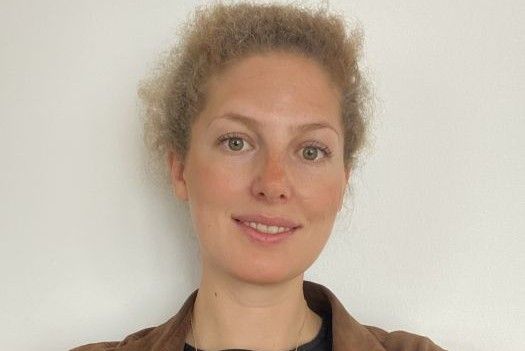
As a Global Health Advisor, what motivated you to work in the field of health, particularly in a humanitarian context?
Ludmila Lobkowicz: I was drawn to global public health through a deep interest in infectious diseases and their broader social determinants and impact. Over time, working in humanitarian settings has reinforced how profoundly health is shaped by inequality, access, and systemic vulnerability. What has stayed with me most are field experiences in crisis contexts—they reveal both the fragility of health systems and, at the same time, the tangible difference that timely, well-coordinated, and context-sensitive interventions can make in people’s lives. These moments continue to motivate my work.
Malteser International works in countries affected by crises and conflicts. What are the most common health challenges you encounter in these contexts?
Ludmila Lobkowicz: Common challenges include limited access to essential healthcare services, fragile health systems, and recurrent outbreaks of communicable diseases—often compounded by displacement, insecurity, and disrupted livelihoods. Funding constraints are putting even more strain on already overstretched health systems, limiting services, weakening workforce capacity, and deepening the crises for affected populations.
These challenges manifest differently depending on the context: in conflict settings, infrastructure and human resources are often severely disrupted, while in climate-affected areas, we see rising burdens of vector-borne diseases, food insecurity, and malnutrition. Responding effectively therefore requires context-specific, localized, adaptable approaches that strengthen resilience while addressing immediate needs.
Beyond medical care, mental health and psychosocial support have become increasingly important. Why is it essential to address physical and mental health together in humanitarian responses?
Ludmila Lobkowicz: Physical and mental health are intrinsically interconnected, particularly in crisis settings where individuals are exposed to trauma, loss, and prolonged stress. Focusing solely on physical health risks overlooking critical determinants of recovery, resilience, and overall well-being. Integrating mental health and psychosocial support into humanitarian responses enables more holistic, effective, and dignified care. At Malteser International, this is reflected in a comprehensive understanding of health that goes beyond the absence of disease—encompassing physical, psychological, social, and mental well-being as essential and interdependent dimensions of human health.
For Malteser International, close collaboration with research institutions, local partners, and global networks is key to strengthening the quality and relevance of our programmes and ensuring context-adapted responses.
- Ludmila Lobkowicz, Global Health Advisor at Malteser International
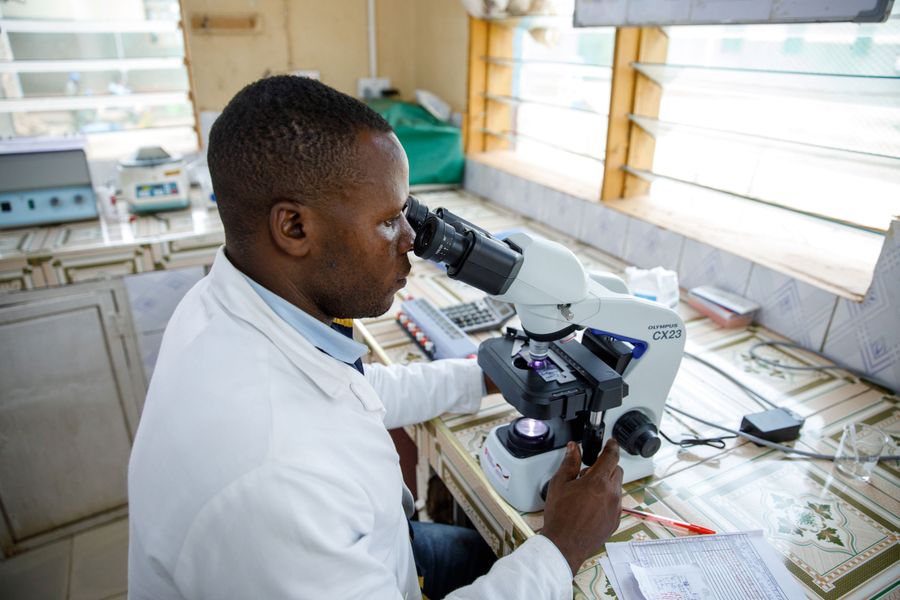
World Health Day 2026 is marked under the theme “Together for health. Stand with science.” The global campaign highlights the importance of scientific collaboration to protect the health of people, animals, plants, and our planet. How important is scientific cooperation in this context for Malteser International?
Ludmila Lobkowicz: Scientific cooperation is fundamental. Today’s health challenges are increasingly complex and interconnected across human, animal, and environmental systems, requiring coordinated, evidence-driven approaches. For Malteser International, close collaboration with research institutions, local partners, and global networks is key to strengthening the quality and relevance of our programmes and ensuring context-adapted responses.
This becomes even more critical in a context of shrinking resources, where strong scientific evidence and collaboration help ensure that limited funding is used strategically and directed towards interventions with the greatest and most sustainable impact.
In the face of persistent health challenges, what progress or innovations give you hope – whether at a global level or within Malteser International’s health programs?
Ludmila Lobkowicz: I am encouraged by advances in data use, digital health, and community-based approaches that strengthen both disease prevention and early detection, surveillance, and timely response. These innovations have significant potential to make health interventions more responsive, targeted, and efficient.
Within Malteser International, the growing emphasis on integrated, locally led health systems and sustained capacity building is particularly promising. Strengthening local ownership, supporting increased national investment in health systems, and building resilience are essential to achieving more sustainable, long-term health outcomes in fragile and crisis-affected settings.
April, 2026