Resilience in humanitarian aid - Interview with Director Program and Operations Kees Zevenbergen
Resilience has become a widely used concept. From a psychological perspective, it refers to the ability of individuals or communities to cope with crises, adapt to adversity and recover from disruption. This ability depends not only on personal strength, but also on the availability of external support systems such as community networks or access to health and social services.
In humanitarian aid, resilience goes beyond individual coping mechanisms. It is closely linked to how humanitarian organisations respond to crises in practice: how they adapt their work to rapidly changing realities, deliver life‑saving assistance while strengthening local systems, and remain effective under increasing pressure. In times of growing humanitarian needs and shrinking financial resources, resilience also means that organisations themselves must stay flexible, adaptable and capable of change.
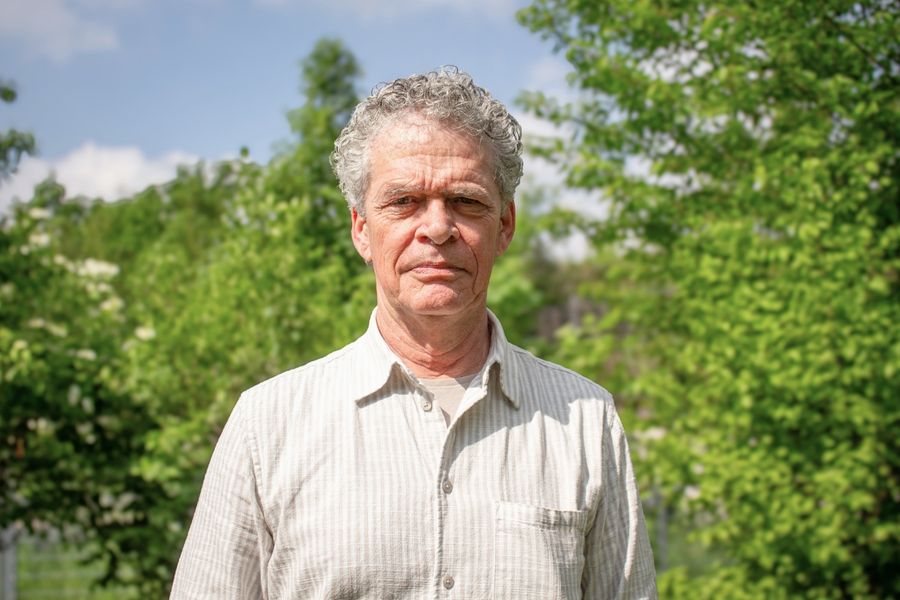
In this interview, Kees Zevenbergen, Director of Program and Operations at Malteser International, explains how resilience shapes Malteser International’s day‑to‑day humanitarian work. He also reflects on practical examples from different crisis contexts, as well as on opportunities, limitations and the constant need for adaptation, both in projects and within the organisation itself.
How do you define ‘resilience’ in humanitarian aid? What does it mean in practice for Malteser International – and when does the concept risk being reduced to a buzzword?
Kees Zevenbergen: For us, resilience means helping people and communities withstand crises without losing their ability to cope with future challenges. It is not only about surviving today, but also about being better prepared for what comes next. The term becomes a buzzword when it is used without clear measures or when people are expected to cope with crises on their own without real support.
Resilience also means that we as an organization must continually adapt to changing circumstances. Situations in countries are constantly evolving, as, for example, in Syria. After 13 years of war, hostilities were more or less halted and a new government took over. This raises the question of what impact that has on the people we support and therefore on our projects. We must continuously reassess the current situation and adapt our work accordingly.
At the same time, we have been restructuring our work for several years now, as the resources available to us are steadily decreasing. Here, too, resilience means continuously adapting to circumstances and changing our own structures so that we can continue working as an organization.
“For us, resilience means helping people and communities withstand crises without losing their ability to cope with future challenges. Resilience also means that we as an organization must continually adapt to changing circumstances.”
- Kees Zevenbergen, Director Program and Operations Malteser International
Humanitarian aid is often about immediate survival, while resilience-building takes time. How does Malteser International deliver life-saving support while also strengthening people, communities and systems for the long term, especially in acute crises?
Kees Zevenbergen: Saving lives always comes first. At the same time, we try to provide assistance in a way that does not weaken local structures. Even in emergencies, we look for ways to support local services and leave something useful behind once the acute crisis phase has passed. One example is our emergency response in Sudan. On the one hand, we have provided essential equipment such as stethoscopes, blood pressure monitors and other materials; on the other hand, we have trained medical staff in local health facilities so that they can treat patients even better in the future and become more resilient when it comes to supporting their own population during this war. This knowledge will remain, even once the war is over.
In some contexts, Malteser International has gradually developed its approach from emergency relief towards more integrated, resilience-oriented measures. What were the key lessons from this process – and where do we reach our limits?
Kees Zevenbergen: In contexts such as Ukraine, Bangladesh and Lebanon, Malteser International has learned that resilience works best when it is embedded in life-saving core areas such as health, water, sanitation, and hygiene (WASH) and mental health and psychosocial support (MHPSS), is led jointly with local partners, and is designed to keep essential services running even during protracted crises, rather than functioning as a separate add-on. At the same time, experience has revealed clear limitations: resilience cannot compensate for ongoing conflicts, political collapse or macroeconomic failure, nor can it replace state responsibility. Malteser International can help stabilize systems and strengthen local capacities, but lasting resilience ultimately depends on conditions and decisions that lie beyond the scope of humanitarian action.
What role do local partners, authorities and communities play in building resilience? And what should an international NGO do – or deliberately avoid – to ensure that self-reliance is genuinely strengthened?
Kees Zevenbergen: An important lesson is that short-term projects alone do not create lasting change. Long-term cooperation with the same partners and linking different types of support make a real difference. Our limitations are often set by insecurity, political conditions or short funding cycles that do not allow for long-term engagement. We try to counter this. Again, using Sudan as an example: we work closely with the local Ministry of Health and WHO structures on the ground to align our work with actual needs, because no one knows better what is really needed than the people on the ground. Through this close cooperation, we build mutual trust that goes beyond a short emergency response and allows us to build on this cooperation in future responses, further develop our work and adapt it to current circumstances. For me, this is resilience in this context.
Resilience does not only concern communities, but also the people delivering humanitarian aid. How does Malteser International ensure that the resilience of its staff, particularly field teams, is strengthened and sustained in the long term?
Kees Zevenbergen: Our top priority is always to ensure the safety of our staff, whether in Lebanon or South Sudan. When lives are at risk, staff are brought to safety. In addition, our colleagues have access to a network of psychologists, as the reality is that they are repeatedly exposed to situations that can cause trauma, for example after the 2023 earthquake in Türkiye and Syria.
(May 2026)