Interview: Why water access and equality matter
As the world marks World Water Day 2026 under the theme “Water and Gender”, the conversation around water is more urgent and more interconnected than ever. This year, the World Economic Forum has also declared 2026 the “Year of Water,” highlighting how water security, climate resilience, and gender equality are deeply linked global priorities. For millions of people - especially women and girls - access to safe water shapes daily life, protection, health, and opportunities. Against this backdrop, we spoke with Albert Gisore, WASH Advisor for Malteser International, to explore the challenges he sees on the ground, the inspiring changes he has witnessed, and his hopes for the breakthroughs the next decade might bring.
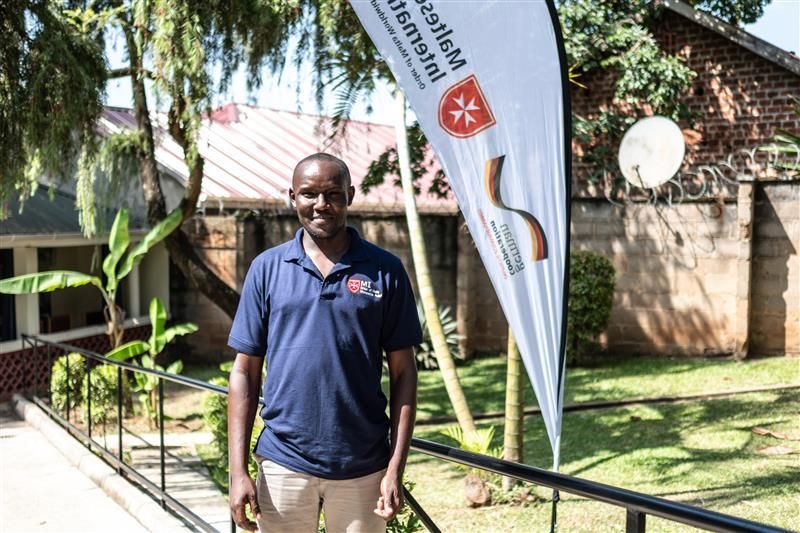
As WASH advisor at Malteser International, can you share what inspired you to pursue a career in this field?
Albert Gisore: Having observed water crisis headlines like the Horn of Africa drought from 2010-2011, and unforgotten impacts related to health, food security, among others, despite being a human right, I was inspired by understanding how water can be a lifeline for communities. And relatively small changes are needed to make it happen. My motivation lies in seeing and experiencing a well-functioning WASH system, where stakeholders take responsibility, access is meaningful, no one is left behind, and human dignity is respected. Working with Malteser International allows me to combine technical expertise with compassion, supporting vulnerable communities from emergencies to development phases.
From your perspective, what are the most pressing water-related challenges the world faces today – and how do these challenges manifest in the communities where Malteser International works?
Albert Gisore: The most pressing challenges today include water insecurity and scarcity, limited availability, the effects of climate change, and continued reliance on unsafe drinking water. These are compounded by unequal access, dilapidated infrastructure, weak governance structures, and limited capacity. Together, these challenges have weakened community resilience and encouraged negative coping mechanisms for survival, while exposing the affected population to significant public health risks.
Despite the challenges, what encouraging progress or innovations in water access and management have you observed in recent years – either globally or in Malteser International’s programs?
Albert Gisore: Despite the challenges, there has been encouraging progress in water access and management in recent years. This includes the upgrading of WASH systems to be more resilient, such as the use of solar‑powered water supply systems and remote monitoring technologies that improve reliability and efficiency. At the community level, stronger emphasis has been placed on capacity strengthening, particularly in the management, operation, and maintenance of water systems, helping to ensure long‑term functionality and local ownership. Integrated WASH and health approaches have also shown positive results by supporting disease prevention and strengthening health systems. Additionally, linking humanitarian response with longer‑term development programming has enhanced sustainability, while localization approaches have empowered communities and local actors to take greater responsibility for water services. Together, these innovations are contributing to more resilient and sustainable WASH outcomes in the communities where Malteser International works.
What is one misconception about water, sanitation, and hygiene that you wish more people understood?
Albert Gisore: A common misconception is that WASH can work in isolation. In reality, effective WASH outcomes have strong linkage with health, food and nutrition security, shelter, protection, and education, among other sectors. Therefore, conceited and integrated approaches, whenever feasible, are essential to achieve sustainable and meaningful impact.
Can you recall a moment when improved access to safe water brought about an unexpected or particularly inspiring change in a community’s daily life?
Albert Gisore: In 2025, in Ngolimbo B village in Wau County in South Sudan, a sparsely populated community affected by armed conflict and home to around 900 families, they had to travel nearly 20 kilometers to access safe water. When a new water source was finally established, it brought smiling faces to the community, especially women and children. This change meant that women and girls no longer had to walk long distances, which also reduced protection risks. Instead, they could use that time for other important livelihood acitivities. It was a simple intervention, but it brought a significant and inspiring change to daily life.
"Women and water are inseparable. Elevating the voices of women and girls in decision making, service provision, management and safeguarding of water is critical for the sustainability of WASH."
- Albert Gisore, Malteser International WASH advisor
The 2026 global World Water Day campaign – called ‘Where water flows, equality grows’ – focuses on safe water and sanitation as human rights and critical enablers of gender equality. Can you explain the relationship between water and gender?
Albert Gisore: Women and water are inseparable. In many communities, women and girls bear the primary responsibility for water collection, use, and management, which directly affects their time, safety, health, and opportunities. When women and girls have safe, reliable access to water and sanitation, it contributes significantly to gender equality by reducing their workload and protection risks, and by enabling greater participation in education, livelihoods, and community life. Equally, elevating the voices of women and girls in decision making, service provision, management and safeguarding of water is critical for the sustainability of WASH.
What breakthrough would you hope to see in the next decade related to water?
Albert Gisore: I hope that in the coming decade, safe and affordable water becomes reliably available even in crisis‑prone areas. This would mean having climate‑resilient systems that communities can manage themselves, supported by inclusive and locally led governance. If we get this right, no one would be left behind and we could reduce water insecurity, prevent disease, and protect the dignity of the most vulnerable communities.
March, 2026