Young mothers in need: A difficult birth with a happy ending
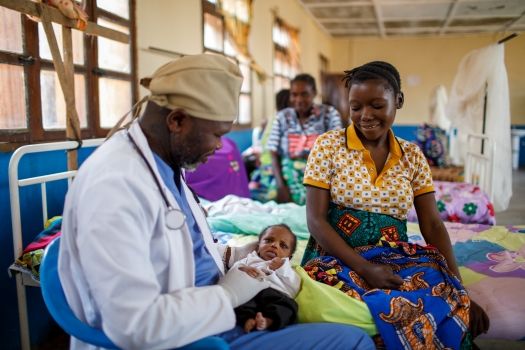
“It was night time when I went into labor", says 18-year old Munguryek Abedirwoth to begin her story. She lives in a village situated in the Ituri Province of the Democratic Republic of the Congo (DR Congo), approximately 45 km southwest of Mahagi. Her life, like that of many other young women here, is marked by poverty as a consequence of decades of violent conflict between armed groups in the region.
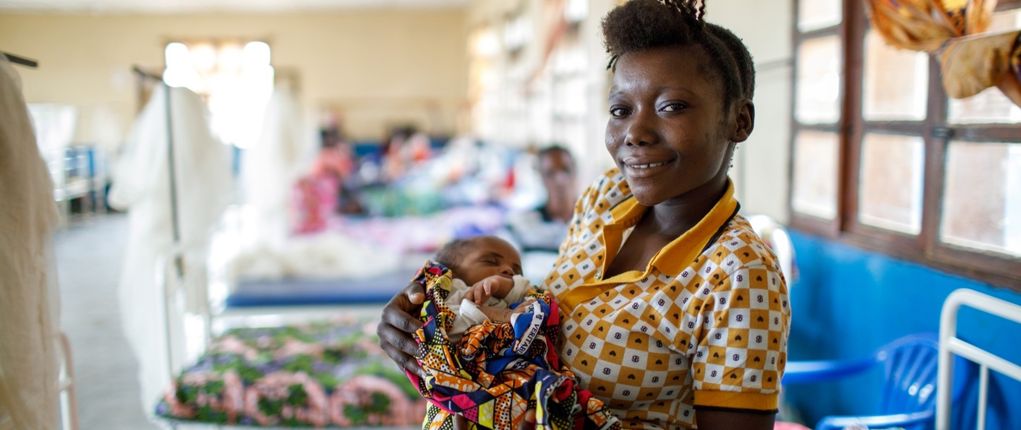
In the Alur community, children are given names that denote or reflect cultural traditions or messages about life. Munguryek named the girl she gave birth to in February 2026 Kwolonyo, which means ‘life’, and Victoire, French for ‘Victory’. Munguryek had deeply thought about this name for her little girl, in consideration of her circumstances as a single mother, and because of experiencing difficult childbirth twice.
When labor startet, Munguryek went to the Raa-Vache Health Center in her village. "After six hours, the midwife told me that it wouldn’t be possible to give birth at the health center, and my strength was starting to fade, so she immediately called an ambulance. I had been conscious and calm, but when the midwife told me that I was being transferred, I was suddenly overcome by a great fear when I remembered the difficult labor and caesarean section that I had with my first pregnancy.”
Poverty leads to dangerous early pregnancies
According to the World Health Organization (WHO), 18 is generally considered very early to give birth, with pregnancies before age twenty carrying significantly higher risks of complications like eclampsia, while the babies face higher risks of preterm delivery and low birth weight.
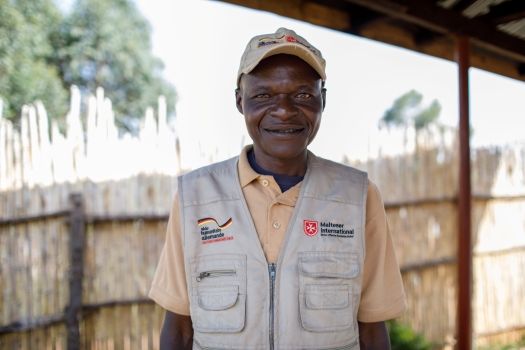
Michel Warom is a Project Assistant for Malteser International in Mahagi. “Early pregnancies are common here", he says. "Some girls as young as 15 years old get pregnant. The main reason for the early pregnancies is extreme poverty. Young girls sell their bodies for money, food, clothing or shoes – it is a matter of survival. A majority get pregnant – that is to say, a child gives birth to another child.”
In Eastern DR Congo, years of conflict have led to the destruction of healthcare facilities, lack of medical personnel, lack of medicines, and medical equipment. Part of Malteser International's work in the region focuses on constructing and improving maternity and health infrastructure to enhance maternal and child health; supplying essential and specialized medical equipment including ambulances; training and working with existing health facilities to ensure the provision of pre-natal care, ensure safe deliveries, and address high-risk early pregnancy complications.
A difficult birth with a happy ending
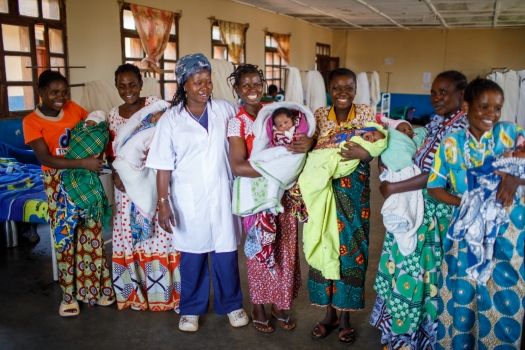
Thanks to the support Munguryek received in Ngote General Referral Hospital, her story ended with mother and baby in good health. However, little Kwolonyo Victoire's birth was not without challenges: “When I was in the ambulance, I was sure that I was going to die and that baby would not survive", says Munguryek. "Here at the hospital, the operating theatre staff quickly stepped in to help me. Afterwards, when I saw my baby in my arms, and realized that I was still alive, I was overjoyed and felt a sense of peace! After the caesarean section, the nurses took excellent care of me by giving me medicine and treating the wound, whilst for the baby, they administered eye drops, gave injections and oral medication. They care for uns still until this day.”