The displacement crisis in Sudan: Causes, numbers, and impact
Millions of people from Sudan are on the move—displaced both within the country and across its borders. Since the start of the armed power struggle between the Sudanese Armed Forces and the RSF militia in April 2023, around 14 million people have been forcibly displaced (source: UNHCR, status as of December 2025).
Ongoing violence, lack of basic services, and unsafe living conditions are forcing many people time and again to choose between fleeing, staying, or returning. Humanitarian assistance remains vital for survival. In 2026, 33.7 million people are in need of humanitarian aid—the highest number worldwide and an increase of 3.3 million compared to 2025 (source: UNOCHA, status as of March 2026). Malteser International therefore supports affected communities with medical assistance, measures to improve water, sanitation, and hygiene, and targeted support for particularly vulnerable people.
Displacement in Sudan at a glance
- The war between the Sudanese Armed Forces (SAF) and the RSF militia has led to the largest displacement crisis worldwide since April 2023 (source: UNHCR, status as of December 2025).
- Around 14 million people have been forced to flee their homes, including approximately 7.1 million internally displaced within Sudan and more than 4.4 million who have sought refuge in neighbouring countries (source: UNHCR, status as of December 2025).
- Children are particularly affected: more than 5 million children are displaced, exposed to violence, hunger, and exploitation (source: UNICEF, status as of January 2026).
- The humanitarian situation is dire: around 21 million people face acute food insecurity, and millions of children are malnourished (source: IPC, status as of October 2025).
- Humanitarian assistance remains crucial, including access to medical care and safe drinking water.
Why people are forced to flee Sudan
The trigger of the massive displacement is the armed power struggle that erupted on 15 April 2023 between the Sudanese Armed Forces (SAF) under General Burhan and the paramilitary Rapid Support Forces (RSF) under General Daglo. What began as a conflict over political and military dominance has since spread across large parts of the country, destabilising entire regions. The United Nations accuse the parties to the conflict of serious human rights violations.
Since then, several factors have been driving displacement in Sudan:
1. Violence and armed conflict
Many people are directly displaced by the war. They flee fighting, bombardments, and attacks on residential areas. Thousands of civilians have already been killed or injured. In some regions—such as Darfur—ethnic and sexualised violence has also escalated.
2. Sieges and attacks on infrastructure
In several cities and regions, people have been cut off from the outside world for extended periods. Shelling and attacks frequently hit civilian infrastructure, including hospitals, water points, and markets. As a result, many families lose access to even the most basic means of survival.
3. Hunger and the collapse of supply systems
The war has severely disrupted access to food. Famine was already declared in parts of the country in 2024, and today more than 20 areas face an acute risk of famine (source: IPC, status as of October 2025).
4. Collapse of health and education systems
Many people are also forced to flee because basic state structures have collapsed. Numerous hospitals are no longer functioning, and essential medicines are lacking. At the same time, nearly 19 million children are unable to attend school because school buildings have been destroyed or are being used as emergency shelters.
The world’s largest displacement crisis: How many people are fleeing Sudan?
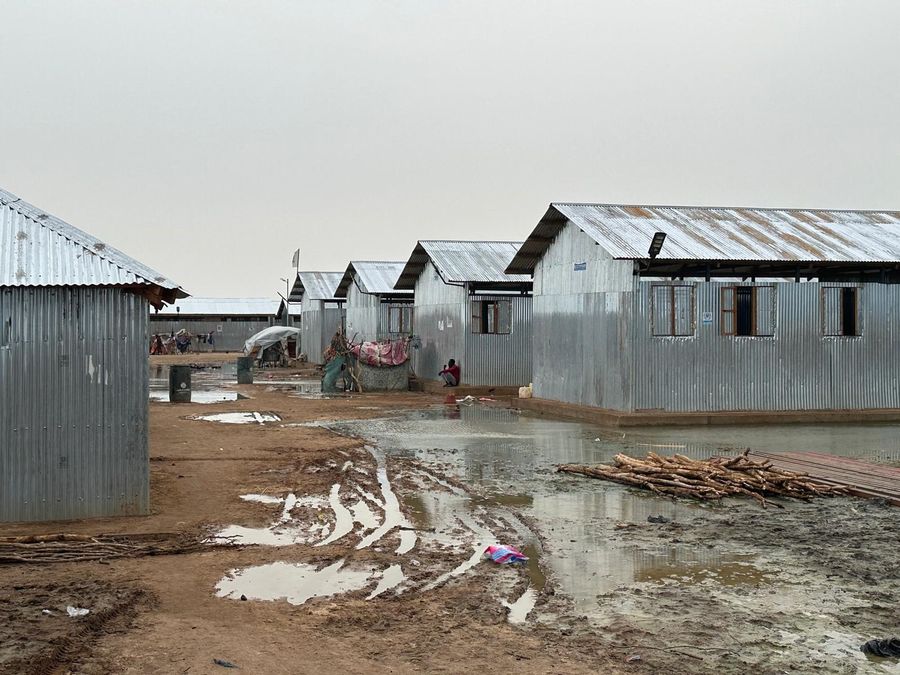
With around 14 million displaced people, the situation in Sudan is currently considered the world’s largest displacement crisis.
- Approximately 7.1 million people are displaced within the country.
- More than 4.4 million have sought refuge in neighbouring countries such as Chad, Egypt, or South Sudan (source: UNHCR, status as of December 2025).
Why are many refugees returning?
Living conditions in many camps for internally displaced people—and also in neighbouring countries such as Egypt or South Sudan—are extremely strained. Overstretched support systems, lack of prospects, and growing shortages are pushing people to return to their areas of origin—even though insecurity often persists there.
As a result, despite ongoing fighting and destruction, more than three million people have returned to their home regions, according to the International Organization for Migration (IOM) (source: IOM, status as of January 2026).
In some areas, such as eastern Sudan or the capital Khartoum, phases of relative stability have emerged, making return movements possible. International organisations, however, warn urgently: overall, the situation in Sudan remains neither safe nor stable. Many returnees encounter destroyed infrastructure and barely functioning basic services.
Children Bearing the Brunt of the Crisis
Children are particularly affected by displacement. According to UNICEF, more than 5 million girls and boys have been forced to flee their homes since the fighting began—many of them multiple times (source: UNICEF, status as of January 2026). Sudan is therefore currently also the setting of the world’s largest crisis for displaced children.
For the youngest, displacement means far more than the loss of their homes. Girls and boys are largely unprotected against violence; their safety and lives are under immediate threat. Many families flee in an attempt to protect their children from the dangers of war, including exploitation and traumatic experiences.
At the same time, the humanitarian situation for particularly vulnerable groups is worsening dramatically. In 2026, an estimated 4.2 million children under the age of five and pregnant or breastfeeding women are expected to suffer from acute malnutrition, including more than 800,000 affected by severe acute malnutrition, which can be life‑threatening without treatment (source: IPC, status as of February 2026).
Living conditions for people displaced by the war in Sudan
For many people displaced by the war in Sudan, daily life is marked by extreme insecurity, shortages, and overstretched resources. Whether within the country or in neighbouring states, accommodation is often provided in makeshift refugee camps, collective shelters, or with host families. In many places, infrastructure, sanitation facilities, and medical care are insufficient, creating conditions in which diseases such as cholera can easily spread.
Especially in border regions, overcrowded camps have emerged with only limited access to essential services, including healthcare, safe drinking water, and functioning sanitation facilities. Many people also lack access to information on safe hygiene practices. Overall, available support falls far short of meeting the minimum standards required for a healthy and dignified life.
The nutritional situation in Sudan has deteriorated dramatically. According to the Integrated Food Security Phase Classification (IPC), around 21 million people in Sudan were affected by acute food insecurity (IPC Phase 3 or higher) in October 2025—equivalent to about 45 per cent of the population. In the areas most severely affected, hunger and malnutrition have reached extreme levels: in the city of El Fasher, around 30 per cent of the population are facing the highest crisis level (Phase 5).
Experts from the IPC Famine Review Committee also warn that in many crisis‑affected areas, the collapse of essential services—such as healthcare, water, and sanitation—continues to worsen the hunger situation and increase mortality (source: IPC, status as of October 2025). Many families have no reliable access to food, while supply‑chain disruptions and the loss of livelihoods further exacerbate the crisis.
Sudan’s healthcare system has almost completely collapsed. The majority of medical personnel have already left the country. Those who remain are struggling with a severe lack of training opportunities, medicines, medical supplies, and technical equipment. Scarce resources mean that many hospitals are barely operational, allowing infections to spread rapidly. As a result, access to healthcare for the population is severely restricted. Even basic medical treatment can no longer be guaranteed in many areas. At the same time, the risk of disease outbreaks such as cholera is rising in overcrowded camps and emergency shelters due to poor hygiene conditions.
Access to safe drinking water is scarce in many areas. Overstretched sanitation facilities, the lack of wastewater systems, and limited access to soap for personal hygiene further exacerbate the situation. Children, breastfeeding mothers, and pregnant women are particularly exposed to risks under these conditions.
For millions of children, displacement also means an interruption of their education: nearly 19 million children are unable to attend school because school buildings have been destroyed or are being used as emergency shelters (source: Save the Children, status as of January 2026). Humanitarian organisations are trying to close at least part of the education and protection gap through temporary learning programmes and so‑called child‑friendly spaces. Nevertheless, the education crisis remains one of the most serious long‑term consequences of displacement.
How Malteser International is supporting displaced persons and people in need in Sudan
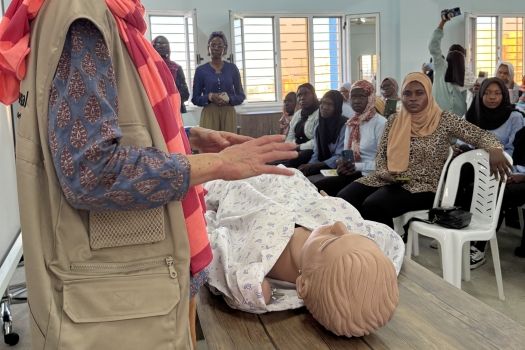
Malteser International supports people displaced by the war in Sudan with medical emergency relief as well as measures to improve water, sanitation, and hygiene (WASH). The aim of our support is to strengthen the severely strained healthcare system, prevent disease outbreaks, and improve living conditions for displaced people and their host communities.
Malteser International works at multiple levels: at the institutional level, for example by supporting health facilities; at the community level through awareness‑raising activities and the development of community infrastructure; and at the household level, in order to reach particularly vulnerable people in a targeted way.
To support medical care on the ground, for example, Malteser International deployed a team of health experts to Port Sudan at the end of 2025. The team trained hospital staff who, due to the ongoing violence, often have only limited access to professional training. The sessions focused on life‑saving measures, including resuscitation, the treatment of severe injuries, and the management of fractures.
In addition, Malteser International, together with our partner organisation LM Sudan, is implementing life‑saving humanitarian projects in the southern states of South Kordofan and Blue Nile, which border South Sudan. These programmes focus on improving water and sanitation services and promoting hygiene practices. Activities include the construction of latrines, hygiene awareness sessions for communities, the rehabilitation of critical water infrastructure, and measures to prevent and treat cholera. The aim is to reduce the risk of disease outbreaks and sustainably improve health conditions in the affected regions.
Frequently asked questions: Displacement and refugees in Sudan
Die meisten sudanesischen Flüchtlinge bleiben in der Region der Sahelzone und am Horn von Afrika. Länder wie der der Südsudan, Tschad oder Ägypten nehmen Hunderttausende bis Millionen Menschen auf, obwohl ihre eigenen Ressourcen begrenzt sind. Infrastruktur, Gesundheitsdienste und Versorgungssysteme geraten in diesen Aufnahmeländern dadurch stark unter Druck. Die internationale Unterstützung reicht vielerorts nicht aus, um diese Belastung auszugleichen.
No. Humanitarian assistance for displaced persons in and from Sudan is severely underfunded. The regional response plan for 2025, which outlines humanitarian needs in Sudan and estimates the funds required to meet them, is currently funded at only around 25 per cent (source: UNHCR, status as of February 2026). The lack of funding is forcing aid organisations to scale back programmes, with direct consequences for access to water, food, and medical care.
Legal access to the labour market varies from country to country. In some states, refugees are in principle allowed to work; however, bureaucratic obstacles, missing documents, and language barriers often make it difficult to access regular employment. As a result, many families remain dependent on humanitarian assistance.
The ongoing displacement is not only placing a heavy burden on Sudan itself, but also affecting stability, security, and peace across the wider region. Overstretched host countries, disrupted education pathways, and lack of economic opportunities can have long‑term social and economic consequences—both for refugees and for the communities hosting them.
Support is most effectively provided through donations. Humanitarian organisations such as Malteser International use these funds to deliver medical care, water, sanitation, and hygiene measures, as well as protection and support services for particularly vulnerable people. Donate now!