
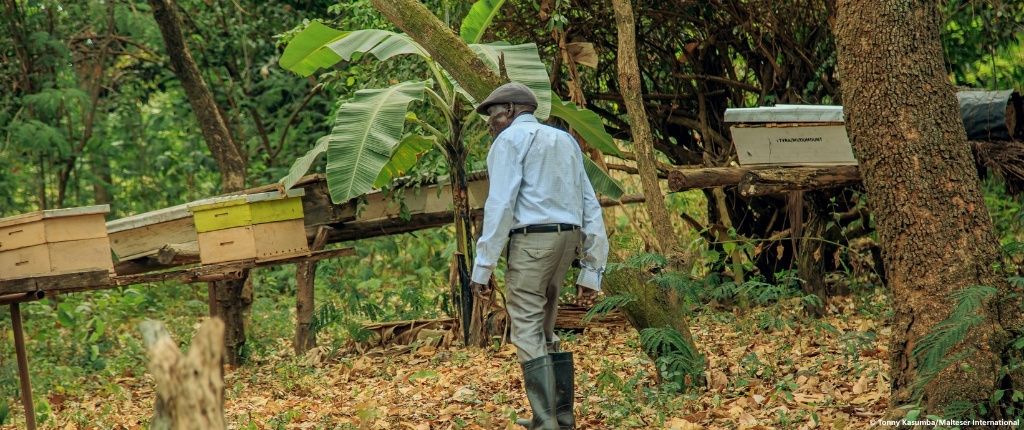
Adrole's story of the bees that changed everything
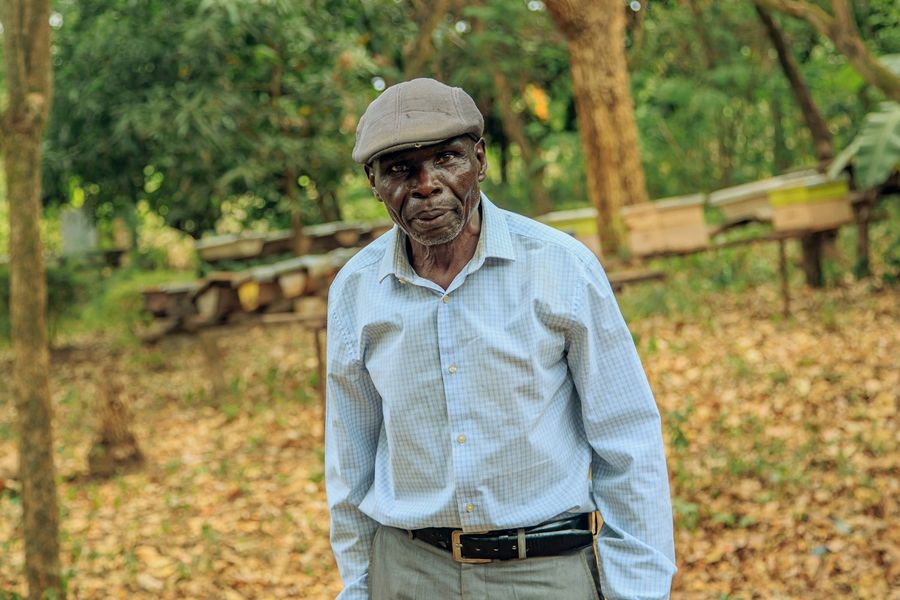
Adrole Eshcol Ajua spent twenty years working as a laboratory technician in a textile factory in Jinja in southern Uganda. He had a salary, a routine, and a life that looked, from the outside, like stability. But when he looks back on those two decades now, standing on his farm in Wandi, West Nile in northern Uganda, surrounded by hives and the low hum of bees, he calls them “20 wasted years.”
“Why do I call it wasted?” he says, with a quiet directness. “Because those 20 years I worked in the factory, I don’t even have an iron-roofed house to show for it.”
He came back to West Nile and started over. In 1999, he bought three traditional beehives from local people in his community. The bees colonized them. He harvested, reinvested, and bought ten more. Then ten more after that. Slowly, steadily, "Anavu Mixed Farm" began to take shape.
“When I came to this place and started beekeeping, after 10 years, those grass-thatched houses started phasing off,” he says, nodding toward the homes on his compound. “I’m replacing them now with good houses.”
Learning on the job
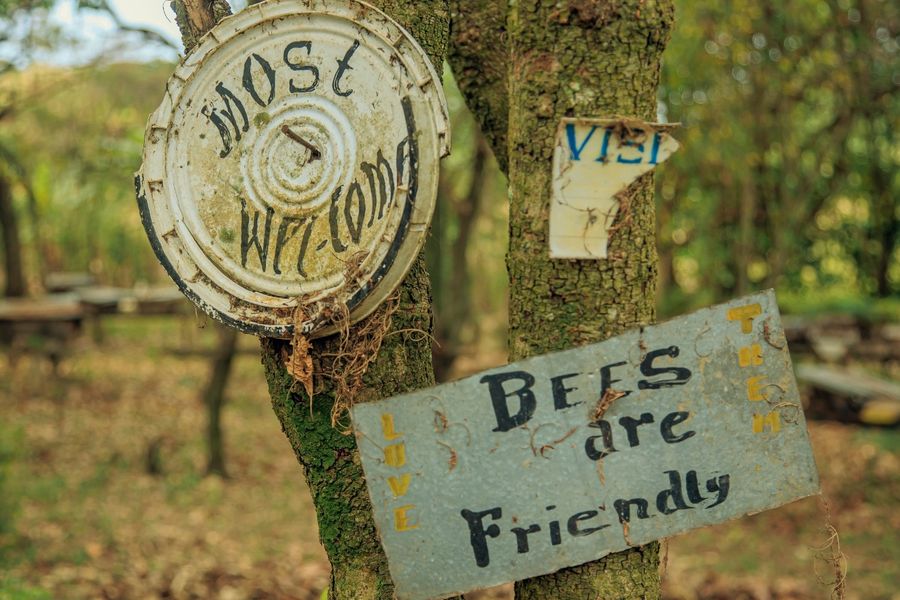
Adrole is honest that he did not start out with much knowledge. He began the traditional way, learning as he went, picking up skills wherever he could find them. But he had something that training alone cannot give: a genuine hunger to learn and improve.
That curiosity eventually led him to the Makerere University Agricultural Faculty in Kabanyoro, where he trained as a beekeeper, and then as a trainer of other beekeepers. In 2015, his apiary was rated the best in the entire West Nile region in a national competition. The prize was one million Ugandan Shillings. He invested it straight back into the apiary.
Today, Adrole does not just run his own farm. He is also the chairperson of a network of around 500 farmers in the district Terego many of whom he has trained himself. He runs collective collection centres where members bring their honey to be pooled and sold together at better market prices. He conducts farm visits for those still learning. His farm has become, in effect, a living classroom for the region.
“When we are together, we always have a bigger market,” he says simply. “And those who are not skilled, we do visitations and they come to learn from here, or they learn from one another.”
New support and new possibilities
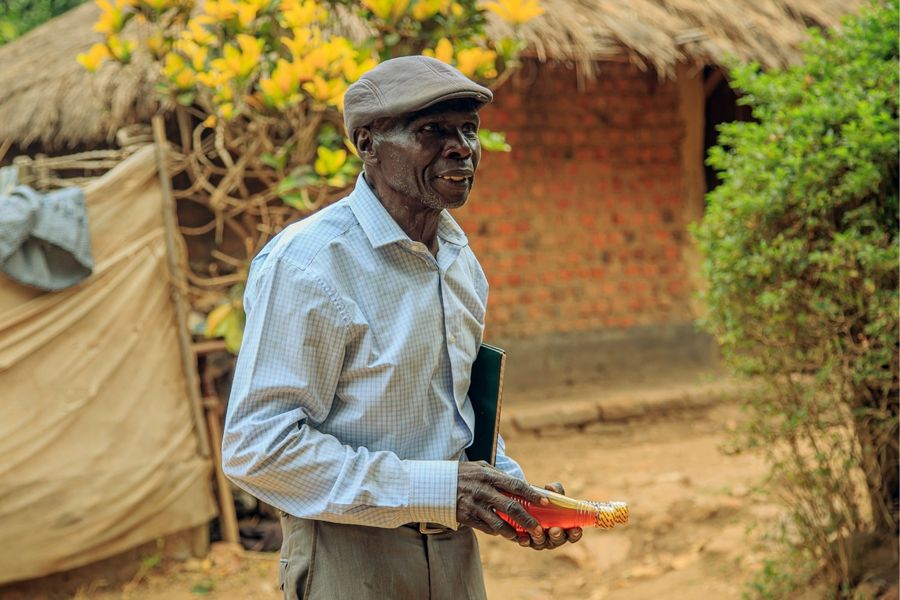
In early 2025, Malteser International and The Victim Relief Alliance (TVRA) came to Wandi. For a farmer who had already built so much on his own, the arrival of structured, targeted support marked a new chapter. The program, funded by the DuMont Foundation, brought hands-on training in hive handling and maintenance, honey harvesting and processing, pest control, and the commercial side of running an apiary. Each participant also received hives, smokers, and protective equipment.
For Adrole, much of the technical training was an addition to what he already knew. But two things mattered enormously to him. The first was the new hives: ten Kenya Top Bar hives, of which seven have already been colonized by bees. The other three suffered minor damage from wet materials, but he is already repairing them. The second was the cooperative structure that TVRA is helping to build to formalize the marketing of honey and connecting farmers to buyers far beyond West Nile.
“Now they are linking us to outsiders. They are bringing the market nearer.” he explains.
The numbers are already moving in the right direction. Adrole currently harvests between 500 and 700 kilograms of honey a year. With the new colonies settling in and the older hives being repaired, he expects production to climb to close to a tonne before the end of 2026. At current market rates of 6,000–8,000 Ugandan shillings per kilogram, the income from a well-managed apiary is significant, and it is renewable, season after season.
Educating the next generation
Perhaps the thing Adrole is most proud of is what beekeeping has done for his children. He came to West Nile when his eldest was in Primary Four. He was determined that things would be different here. Out of his six children, five have reached diploma level. Beekeeping paid for it. “This project of beekeeping has really helped me,” he says. “Especially in educating my children.” Now one of his sons has taken up beekeeping alongside him. The income from the son’s hives is helping to fund his own education. Adrole says, with a smile, that he thinks his son may turn out to be an even better beekeeper than he is. He does not seem to mind.
Across West Nile, this story is being repeated in different ways. Wandi sits in a region where tobacco was once a primary source of income for farming families. As demand for tobacco has declined, farmers have needed alternatives. Beekeeping has emerged as one of the most promising. A sustainable, profitable venture that communities can genuinely build on. More than 150 farmers have now completed training through the Malteser International and TVRA program, and previous graduates have gone on to form the Rhino Camp Bee Farmers’ Cooperative Society, a registered body handling processing, value addition, and marketing.
Back on Anavu Mixed Farm, Adrole walks between his hives with the ease of someone completely at home. He is one of the oldest beekeepers in this region, and one of the most experienced. The 20 years in the factory feel very far away. He has, by his own measure, more than made up for them.
“You have come at the right time,” he told his visitors, gesturing at the hives full of new colonies, the repaired frames, the honey that is coming. “The production will go up.”
And that’s exactly the kind of confidence we are proud to have instilled through this project.
(Text by Anita Acon, April 2026)