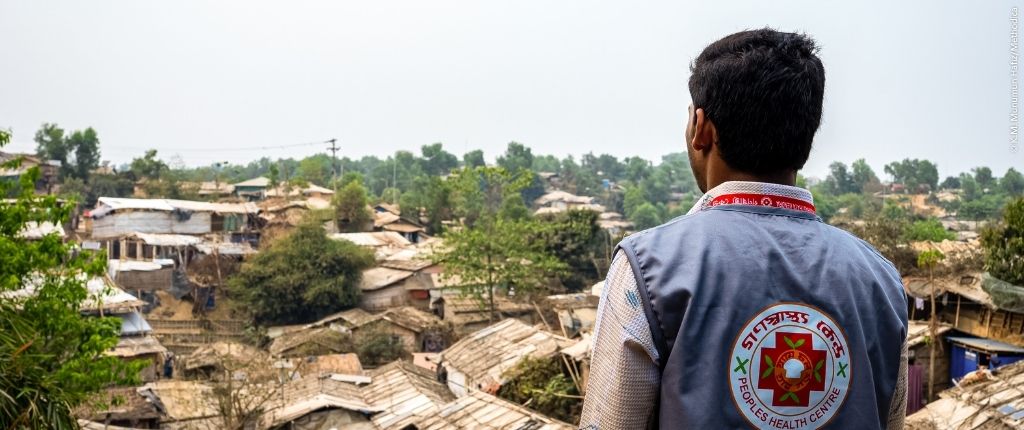
How Nurul bridges the gap between people and medical care
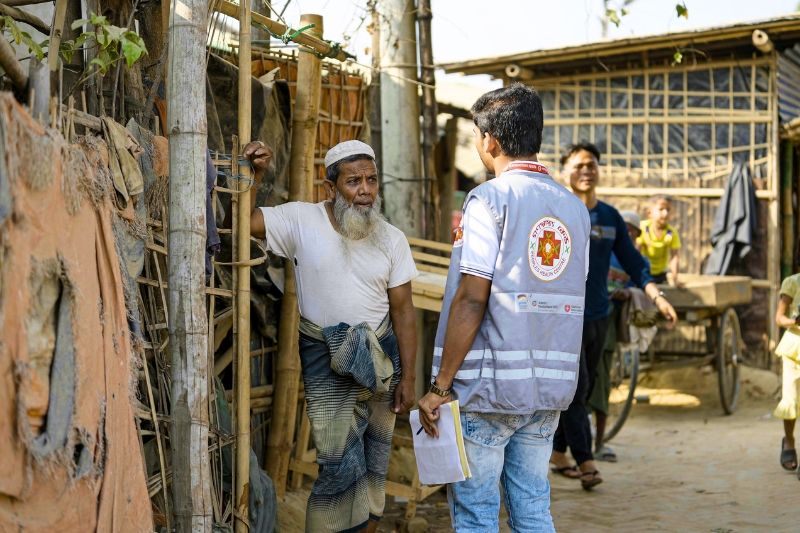
Nurul Amin is one in a million. One in a million refugees from Myanmar who live in overcrowded camps in Cox’s Bazar, Bangladesh. One in a million who do not know if they can ever return home again. And he is one of 27 Rohingya volunteers who contribute to the efficiency and sustainability of our health services in Cox’s Bazar despite ever-decreasing global humanitarian funding.
Nurul Amin was 17 years old when he fled Myanmar with his family, crossing into Bangladesh alongside thousands seeking safety. He remembers the journey in fragments. Heat. Fear. His mother’s hand gripping his so tightly that his fingers went numb. When they reached what is now Camp 11, he saw endless rows of bamboo and tarpaulin and wondered how life could continue in a place like this.
In those first months, Nurul was one of many. A teenager among tens of thousands, uncertain and unseen. When illness struck his family, he did not know where to go. Back then, health services existed, but information did not always reach those who needed it. Misinformation spread quickly and treatment was often delayed.
Dignified and sustainable health service delivery
With Gonoshasthaya Kendra (GK) as our partner, we provide respectful, confidential, and inclusive primary healthcare to a catchment population of approximately 57,000 refugees. To this end, we have supported health posts at three different Rohingya camps in Cox’s Bazar since since 2017.
For displaced communities, dignity in healthcare is not only about what services are provided, but how they are delivered. Particularly in a humanitarian environment increasingly affected by funding cuts, sustainability depends on strong local systems and community ownership. Our approach emphasizes collaboration with local health actors, Community Health Workers, and refugee volunteers to strengthen trust and continuity. This proximity to the community allows services to remain responsive to evolving needs while reinforcing accountability and trust.
Finding purpose in the camp
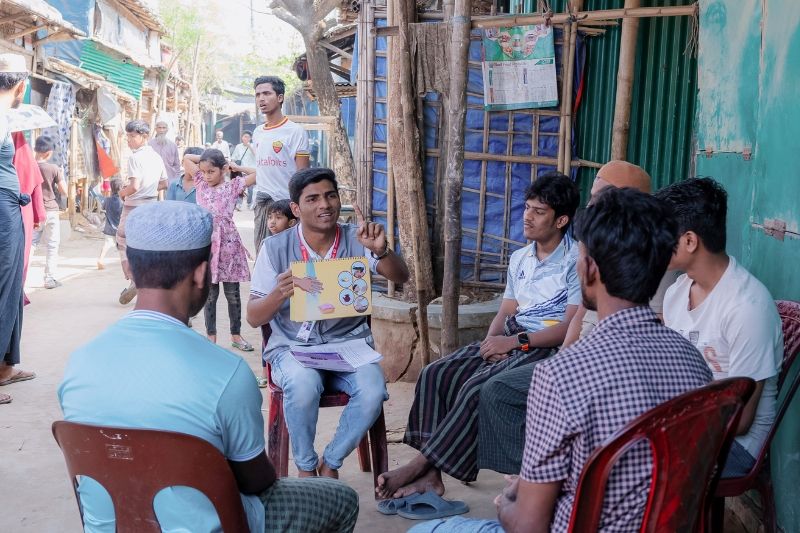
In September 2020, Nurul's life changed forever, when he saw a notice pinned to a community notice board. GK was hiring Community Health Workers. He completed the required process, and to his own surprise, he was selected to begin the training. That was nearly six years ago. Now, at 25 years of age, Nurul Amin is no longer lost in the crowd. He is known.
Each morning at 9 a.m., Nurul begins his work at the health post, receiving updates before heading out into the narrow pathways of the camp. He visits households one by one, speaking with families about their health, answering questions, and guiding them to the services available.
His role is simple, but essential: He explains when to seek care, why early treatment matters, and where to find it. If a child has a fever for several days, he encourages parents not to wait. If someone has diarrhea, he reminds families of the importance of oral rehydration solution. For pregnant women, he stresses the need for regular check-ups, even when there are no visible signs of concern.
Nurul speaks in the language people use at home. He listens as much as he talks and managed to build rapport over time. Because he is part of the same community, people do not see him as an outsider. He walks the same paths, faces the same challenges, and understands the same fears. That connection makes his work effective.
“Because you come to our homes and talk to us, we are much healthier than before,” community members tell him.
Health is a foundation for stability
The Rohingya crisis is often framed as a humanitarian burden, yet access to dignified healthcare is an investment in regional and global stability. “When displaced people can maintain their health, manage chronic conditions, and protect maternal and child wellbeing, they are better equipped to withstand uncertainty and contribute positively to their communities – whether in displacement, return, or future resettlement,” says Keerti Keerti, our Country Director in Bangladesh.
“I am not a doctor, but I take people to the doctor. I help them understand why they need to go. I go with them if they are scared. I follow up. That is what I can do.” Nurul Amin, Community Health Worker
Bringing healthcare closer to home
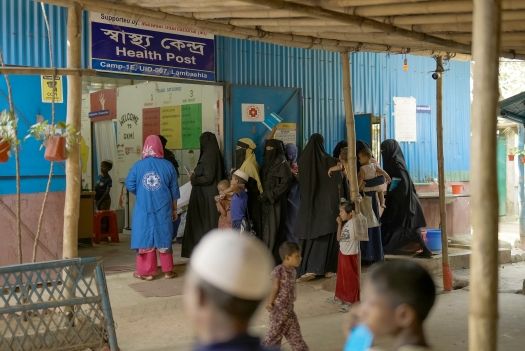
Through his training, Nurul gained knowledge he never had before. He learned about hygiene, maternal health, nutrition, mental health, and how to identify danger signs. Today, he shares that knowledge daily, helping families make informed decisions about their health. Our support services would not reach the people who need it most as well as they do without volunteers like Nurul. He builds the bridges that connect our healthcare services with the homes and people of his community.
During outbreaks of disease, he visits dozens of households in a single day, sharing prevention messages. When someone needs care, he accompanies them to the health post. When families hesitate, he sits with them, answers their questions, and eases their concerns. He connects people to the health system.
“If we cannot change where we live, at least we can change how we support each other,” he says.
A better future for the families in Cox's Bazar
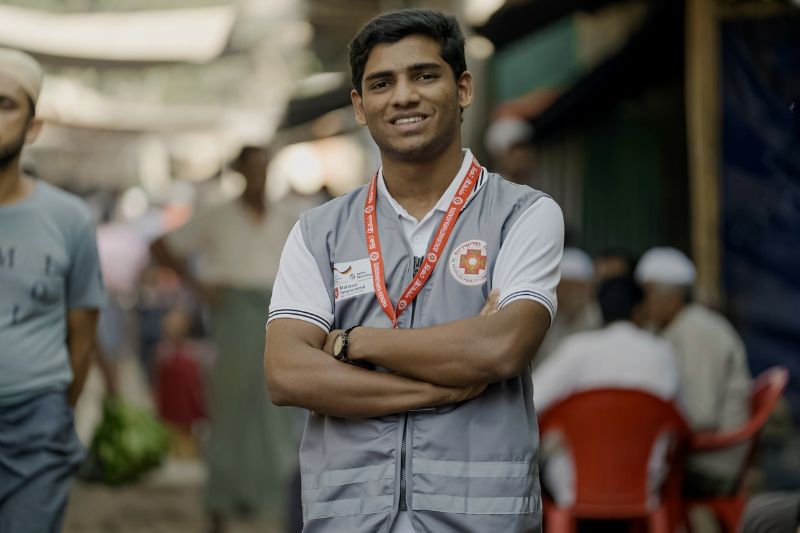
Nurul‘s work is not easy. The hours are long, the resources limited, the emotional weight heavy. Every day, he listens to painful stories. He carries those stories with him, and sometimes they sit heavy on his heart. But he keeps knocking. He keeps talking. He keeps walking. He is one in a million who wait and pray for a better future and that the world will not forget him: In 2025, not even half the global funding needs assessed by the UN for Cox's Bazar were met. “Continued and reliable funding is crucial to ensure that critical health services in Cox’s Bazar will continue uninterrupted to uphold wellbeing and basic human dignity,” says Keerti Keerti.
His own journey reflects Nurul's belief. The teenager who once felt lost in the camp has become a trusted figure, a source of knowledge, and a link between his community and essential healthcare services. He lives in Camp 11 with his family of eight. His father runs a small shop, and together they manage to meet their daily needs, although challenges remain. Access to higher education is limited, shelter conditions are fragile, and basic services are often stretched. Despite this, Nurul is focused on the future. He wants to support his community, advocate for their rights, and build a better life for his family.
Life-saving primary healthcare for almost 60,000 people at risk
In Cox’s Bazar, Malteser International has been working together with its local partner Gonoshasthaya Kendra since 2017, supporting several health posts across three camps that are home to around 57,000 people. These facilities provide essential primary healthcare, including treatment for common illnesses, maternal and child health services, mental health and psychosocial support services (MHPSS) and referrals for more specialized care.
Due to lack of funding, this cooperative project is forced to end in September 2026, which will leave thousands of people without reliable healthcare services.
(June 2026)