A difficult decision: How trusted healthcare saved a mother and her baby in Bangladesh
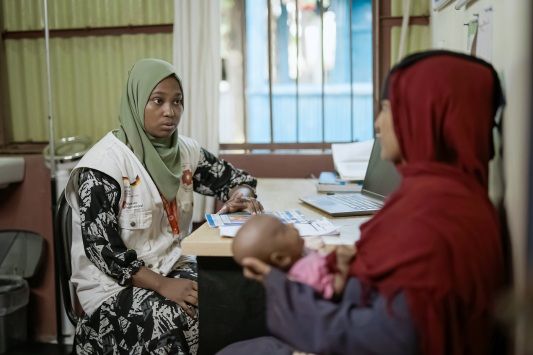
Life in a refugee camp is defined by uncertainty. In Cox’s Bazar in Bangladesh, displaced families face food and nutrition insecurity, inadequate water, hygiene and sanitation conditions, and limited access to healthcare. For 34‑year‑old Minuara, our small health post became something rare in this fragile setting: a place of trust.
During her pregnancy, Minuara regularly visited our GK‑MI Health Post for check‑ups, which are offered free of charge. The facility is located inside the refugee camp and is run by Gonoshasthaya Kendra (GK) with support from Malteser International, the German Federal Foreign Office and Aktion Deutschland Hilft. Over time, Minuara grew familiar with the place and soon knew every midwife by name - that familiarity would prove vital.
At 37 weeks pregnant, Minuara fell critically ill one night. Her body began to shake uncontrollably, her vision faded, and her condition worsened rapidly. The nearest health facility could not treat pregnancy emergencies and told her family to bring her back in the morning. But the lack of urgency left the family with little reassurance. As Minuara’s condition deteriorated, her family made a decisive choice. They bypassed the closer center and went straight to our GK‑MI Health Post instead, which was the place they trusted most.
“Even though it was closed, we waited at the gate until morning because we knew if we came here, we would be in good hands,” Minuara says.
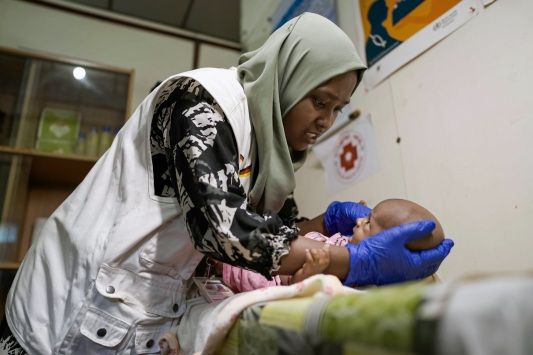
When the health post opened, the medical staff immediately recognized the danger. Minuara was diagnosed with eclampsia, a life‑threatening condition for both mother and baby. “When the doctors told me that my baby’s life and my life were at risk, my family and I broke down,” she recalls. “I was so afraid I would die.”
The health post does not have its own ambulance, but the team acted without delay. They mobilized referrals, arranged transport, and ensured blood was available. Minuara was transferred first to a field hospital and then to a larger hospital outside the camp in Cox’s Bazar, where doctors performed an emergency surgery to deliver her baby.
Her son was born prematurely and remained in hospital for seven days. Hearing him cry, Minuara says, made all her fear and pain disappear.
Care that continues at home
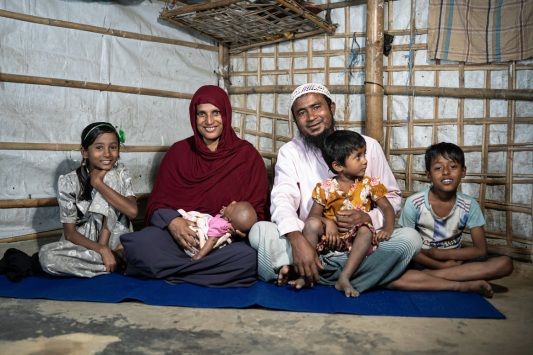
The care did not end there. After returning to the camp, Minuara continued her follow‑up visits at our GK‑MI Health Post. Because eclampsia can cause complications even after birth, midwives monitored her closely. Her baby received special follow‑up care, and a community health worker continued to call and visit the family.
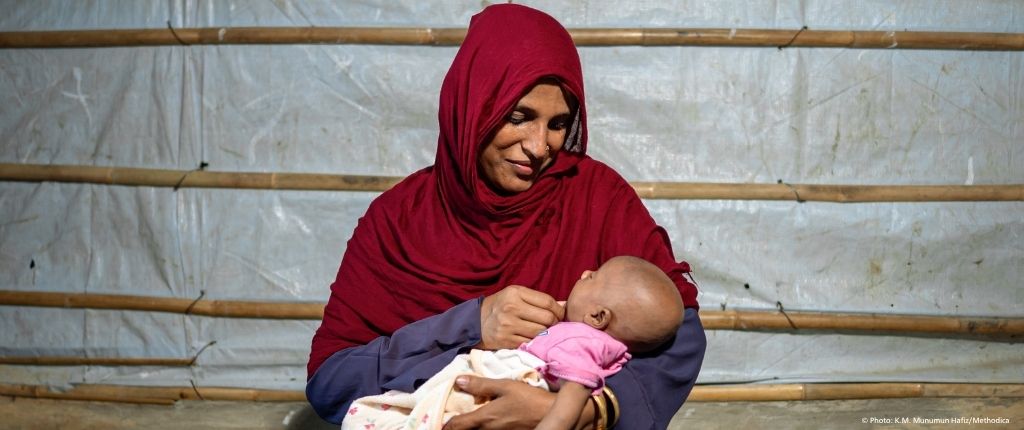
“Even now, the GK‑MI volunteers and midwives ask about us,” Minuara says with a smile. “That is my biggest support. They are the reason I am alive.”
Today, Minuara is healthy, and her son is growing stronger every day. She lives with her family of seven in a temporary shelter in a refugee camp in Cox’s Bazar, home to around 1.1 million Rohingya refugees who fled violence in Myanmar. Like many others, Minuara hopes that one day, she and her family will be able to return home.
(April, 2026)