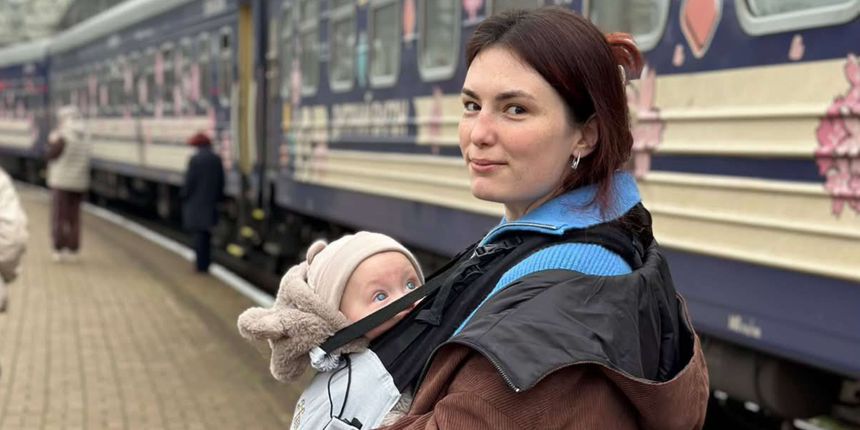
Holding on to hope when everything feels uncertain: Viktoria’s story
Arsen was born three months early, weighing just 1,180 grams. His first months were marked by intensive care, uncertainty and small steps forward. For his mother, Viktoria, the months since his birth have brought one challenge after another. Alongside caring for her son and supporting his development, she is also living with the uncertainty of her husband’s disappearance. Through it all, psychological support has helped Viktoria cope with what she has experienced, manage difficult emotions and find ways to keep moving forward.
"I believe in you. You can do this."
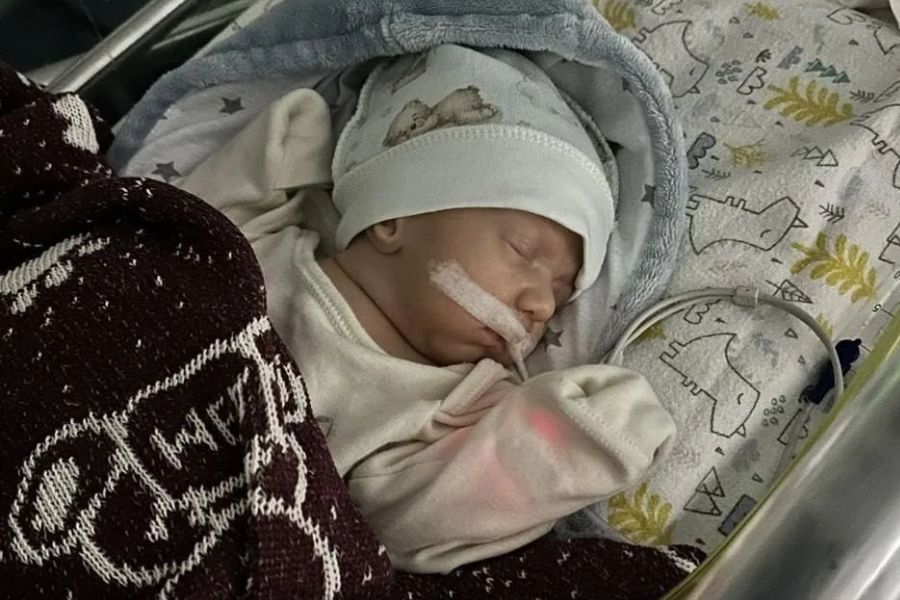
When Arsen wakes up, he starts “talking” to his mother. He looks at her, babbles and waits for her response. Viktoria happily plays along, turning their everyday routines into little conversations. These ordinary moments are precious to Viktoria. Not long ago, she did not know whether she would ever experience them. Arsen was born at just 28 weeks. Viktoria had been preparing for maternity leave when her waters suddenly broke. At the hospital, doctors discovered an infection and had to induce labour. Having previously lost a pregnancy, Viktoria was terrified. When Arsen was born, weighing just 1,180 grams, doctors could not tell her what would happen next. He needed help breathing, specialised feeding and constant medical care.
For Viktoria, even the word “stable” became something to hold on to. She spent as much time as she could beside Arsen’s incubator. When she was allowed to touch him, she would gently put her hand on his tiny body and tell him: “I believe in you. You can do this.” At the same time, Viktoria was struggling physically herself. Two weeks after giving birth, she suffered severe bleeding and needed urgent treatment. Her parents stayed close, taking turns by Arsen’s side and helping their daughter recover. Arsen’s father could not be there, as he was serving on the front line and had very little contact with his family. Months passed before he saw the first photograph of his son.
After several attempts, Viktoria eventually managed to send him pictures together with Arsen’s tiny handprints and footprints. Later, Viktoria heard that when the parcel arrived, he had proudly shown the photographs of his son to those around him. He was hoping to reunite with his family soon.
Finding joy in the ordinary

Little by little, Arsen became stronger. He began breathing independently. He learned to feed without assistance. “Our greatest victory was coming off oxygen,” Viktoria remembers. But even then, the fear did not disappear immediately. On Arsen’s first night without oxygen support, Viktoria barely slept. She listened to every sound and watched the monitor, afraid that something might happen if she closed her eyes. After almost two months, mother and son were finally able to leave hospital. Suddenly, the most ordinary things felt extraordinary: making tea in her own kitchen, taking a shower at home, simply spending an evening with her baby.
But Arsen’s journey did not end when they left hospital. Because he was born so prematurely, he continues to need regular check-ups and rehabilitation. Viktoria takes him to specialists and supports him with physical therapy and swimming. And there is progress. A recent examination brought encouraging news about Arsen’s development.
“I work with him constantly. Whether it's swimming or physical therapy. It gives me such strong motivation to keep going," says Viktoria.
In June, Viktoria received news that changed her life once again: her husband was missing. After months of worrying about whether her son would survive and how he would develop, she was faced with another painful uncertainty. Viktoria now searches for information about her husband while continuing to care for Arsen. There are medical appointments to attend, rehabilitation exercises to do and everyday routines to maintain. She keeps going, but that does not mean every day is easy. Sometimes difficult thoughts and sadness become overwhelming. Viktoria describes days when she manages well, followed by days when everything she is carrying seems to catch up with her. It was during this period that psychological support became particularly important.
Support for the person who has to keep going
Through Early Birds, a partner of Malteser International in Ukraine, Viktoria receives psychological support from Iryna. Viktoria had first encountered the organisation when Arsen was still in hospital. She came across information for parents of premature babies and later received small care packages. She still remembers how much Arsen loved a little toy octopus from one of them, reaching for its tentacles while he was still receiving oxygen. Over time, this practical support was joined by something equally important: support for Viktoria herself.
When she first reached out for psychological help, she was overwhelmed by everything she had experienced and unsure where to turn. Together with Iryna, she began to process those experiences and find practical ways to manage her everyday life. They worked on creating more structure in her days and identifying people and services she could turn to when things became too much. For Viktoria, having a psychologist does not mean that the sadness or uncertainty simply disappears. Her husband is still missing. Arsen still needs care and rehabilitation. There are still days when she struggles. But she no longer has to carry all of it alone.
“One day is fine, but on the second, third or fourth day, it can be hard. I'm holding it together." Having a space where these feelings can exist is an important part of helping Viktoria cope.
“That ongoing support means so much to me, because I don’t know how I would have managed to get through all of this emotionally on my own," Viktoria says.
A photograph of Viktoria’s husband hangs on the wall opposite Arsen’s changing table. She put it there so her son can see his father and become familiar with his face. Viktoria hopes they will be reunited. She wants Arsen to continue making progress, learn new skills and have every opportunity possible as he grows. For now, she takes things step by step. She has learned that hope does not always come in dramatic moments. Sometimes, it is in the small things. It is Arsen taking his first breath without assistance. It is good news after a medical examination. It is a little boy babbling while his mother answers as though they are discussing the most important things in the world. And sometimes, it is knowing that when everything becomes too much, there is someone there to listen.
This Christmas, give the gift of hope and health
Viktoria has carried more uncertainty in the past year than most people face in a lifetime. Psychological support cannot provide the answers she is waiting for. But it can help her cope with the uncertainty, find stability in everyday life and continue to be there for her son.
This Christmas, be an angel for families like Viktoria and Arsen. Give hope and health to people facing extraordinary circumstances and help ensure they do not have to face them alone. With your donation, you can help Malteser International and our local partners continue providing mental health and psychosocial support, alongside other essential assistance, to people affected by the war in Ukraine.