Ukraine: „Strong and sustainable for what lies ahead“
In line with the principle of subsidiarity, we have strengthened the operational responsibility of our Country Offices in 2025. We asked Mohammed El Hajj, our Country Director in Ukraine, how this changed his work and how the support needed in Ukraine changed during the last year. Originally from Lebanon, El Hajj has lived in Ukraine for 10 years and has been our Country Director since 2024.
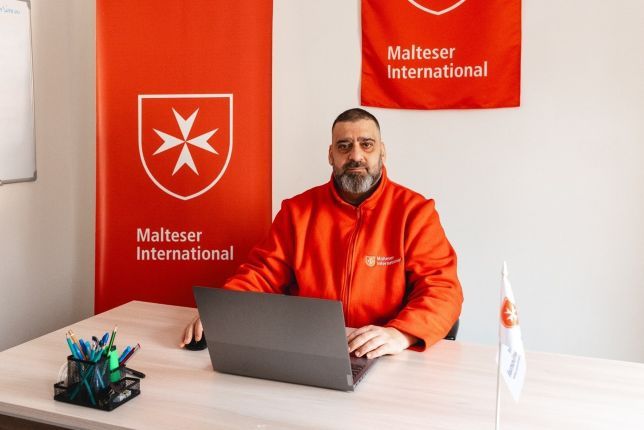
Since January 2025, Malteser International's country office in Kyiv has a much larger team of thirty staff members, most of whom are Ukrainian. Has this changed your role?
El Hajj: Yes, the growth marked a transition for me from being very operationally involved to focusing more on leadership, structure, and long-term direction. We moved from an emergency-style presence to a more established country program. I need to make sure we keep the balance between the flexibility needed in a crisis and the stability required for a team of this size. Helping local colleagues to take on more responsibility and leadership is something I see as both necessary and positive. Overall, I make sure that the office is delivering today and is also strong and sustainable for what lies ahead.
Although our Country Office in Ukraine was already established in 2023, the scale-up in January 2025 – when the team grew to around 30 staff – really changed the nature of my role. Earlier, I was directly involved in program troubleshooting, partner follow-up, and many practical decisions. As the office grew, my role naturally shifted away from managing individual issues toward making sure the overall structure works well. Today, I spend much more time ensuring that managers are confident in their roles, that departments coordinate effectively, and that decisions are taken at the right level. My focus is increasingly on mentoring, team cohesion, and creating an environment where people feel ownership of the work, not just responsibility for tasks.
At the same time, the external side of the role has grown. With a larger program and greater visibility, I now spend more time engaging with donors, authorities, and coordination platforms. This helps us stay aligned with evolving needs and ensures that our work in Ukraine is well positioned within the broader humanitarian response.
What has been the focus of Malteser International’s health work in Ukraine in 2025?
El Hajj: In 2025, our health work in Ukraine has mainly focused on supporting people whose wellbeing has been heavily affected by long-term stress, displacement, and the continued pressure on public services.
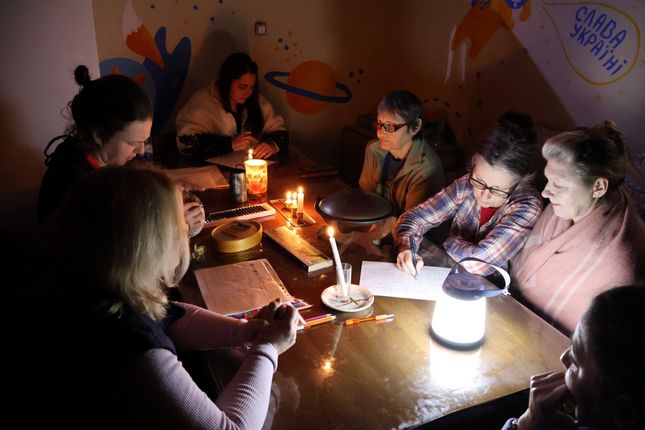
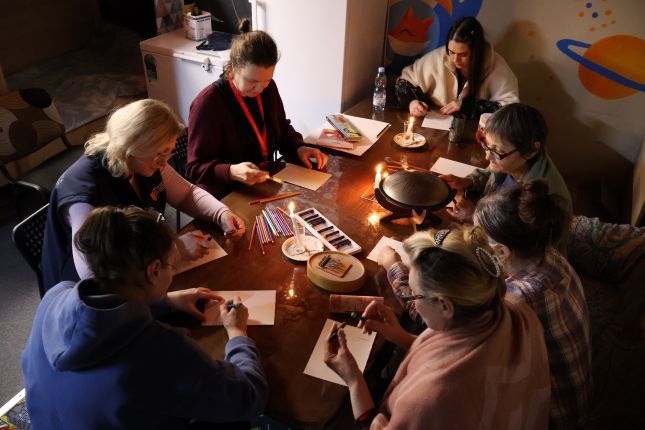
A big part of our work has been mental health and psychosocial support. After years of war, emotional strain is something we see everywhere – among children, parents, older people, and frontline communities. We therefore strengthened community-based psychosocial activities, group sessions, and safe spaces for children. Places like community centers are important because they are not only about services, but about helping people reconnect, regain routine, and feel part of a community again. That sense of normality is a key part of mental health.
We have also supported people with specific health-related vulnerabilities, particularly those who need rehabilitation or mobility support. Helping someone regain mobility or function is not just a medical issue – it affects dignity, independence, and the ability to participate in daily life again.
Another focus has been making sure support is available close to where people live. Many families choose to stay near their homes, even in difficult conditions. By working at community level and linking people with existing services, we help ensure they can access care without being forced to move further away from their support networks.
Overall, our health work this year has been about protecting wellbeing in a broad sense – mental, physical, and social – while easing some of the pressure on the national system and helping people stay connected to their communities, which is essential for recovery.
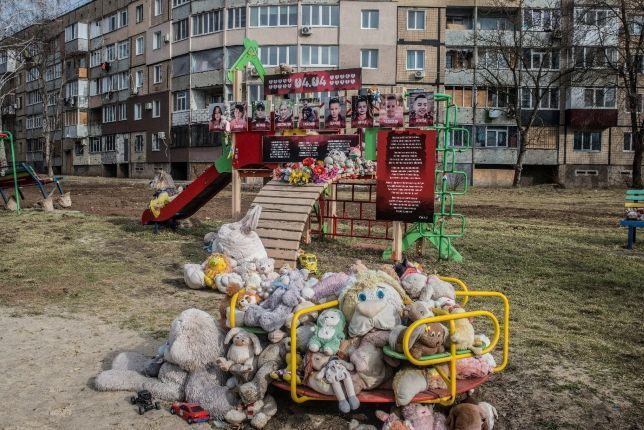
2025 was the fourth year of war on the whole country. Have you and your team witnessed further deterioration of the mental health of the war-affected population during the last year? If yes, in what way?
El Hajj: Yes, we have. And to understand it properly, you really have to look beyond just the last four years. For many people in eastern Ukraine, the war didn’t start in 2022 – it started in 2014. So, what we’re seeing now is the result of very long-term, accumulated strain.
Over the past year in particular, we’ve noticed a kind of deep fatigue. Earlier, especially at the beginning of the full-scale invasion, people were in survival mode. There was fear, but also a lot of solidarity and a sense of urgency that helped people keep going. Now, after years of uncertainty, displacement for some families more than once, and no clear sense of when things might stabilize, many people just seem emotionally exhausted. We hear more people talking about feeling numb, constantly anxious, or unable to think about the future at all.
With children and teenagers, it’s especially worrying. Some of them have spent most of their childhood with conflict in the background. We see concentration problems, sleep issues, fear linked to sirens or loud noises, and difficulties in social behavior. For them, instability has become normal, and that has a long-term effect on their sense of safety.
Adults, particularly parents and caregivers, are also under huge pressure. They’re trying to keep families functioning while dealing with financial stress, displacement, and worry about relatives, all while carrying their own emotional burden. That often shows up as withdrawal, irritability, or just feeling overwhelmed.
So yes, we do see deterioration – not always in dramatic ways, but in this slow, cumulative wearing down of people’s capacity to cope. It’s less about single traumatic events now and more about the impact of living under constant stress for years. That’s why longer-term, community-based psychosocial support is so important. People need space and support that help them regain some stability and rebuild resilience over time.
„Our Community Center is meant to be a simple but very important kind of space: somewhere people can come without feeling like they are entering a formal institution. It offers psychosocial support activities, group sessions, and individual support, as well as structured activities for children and teenagers. Just as important, it gives people a place to meet, talk, and not feel alone."
– Mohammed El Hajj, Country Director for Malteser International in Ukraine
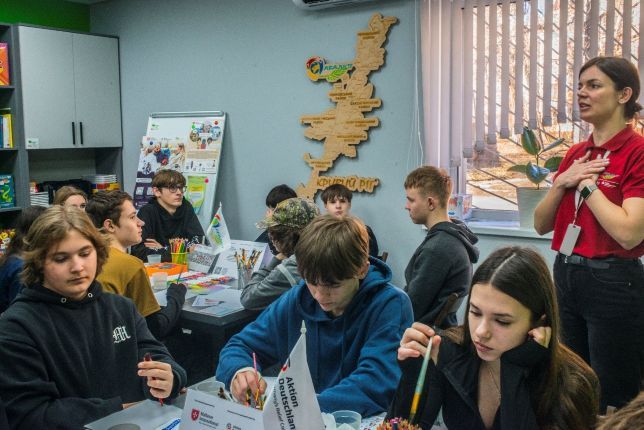
In June 2025, our partner Avalyst – with support from us and Aktion Deutschland Hilft – opened a Community Center in a town called Kryvyi Rih. What does the Community Center offer and why is Kryvyi Rih a good location for such support?
El Hajj: The Community Center in Kryvyi Rih is meant to be a simple but very important kind of space: somewhere people can come without feeling like they are entering a formal institution. It offers psychosocial support activities, group sessions, and individual support, as well as structured activities for children and teenagers. Just as important, it gives people a place to meet, talk, and not feel alone. Staff also help visitors connect with other services if they need more specialized support, so the center acts as both a support space and an entry point to further assistance.
A big part of its value is that it brings back routine and social contact. Many displaced families, and also local residents affected by the war, live with constant stress and uncertainty. Having a place where children can play safely and adults can sit, talk, and take part in activities helps reduce isolation and supports emotional stability in a very practical way.
Kryvyi Rih is a good location because it hosts many people who have fled from more heavily affected areas, while the city itself has also been under regular pressure. This means there is a mix of displaced families and local communities who are all dealing with long-term strain. Services are stretched, and not everyone will turn to formal mental health care, even if they need support. A community-based center is easier to access and feels less intimidating.
In that sense, the center is not just about activities. It helps people rebuild daily life, social ties, and a sense of belonging in a situation that has lasted for years. That is a key part of protecting mental wellbeing in a prolonged crisis.
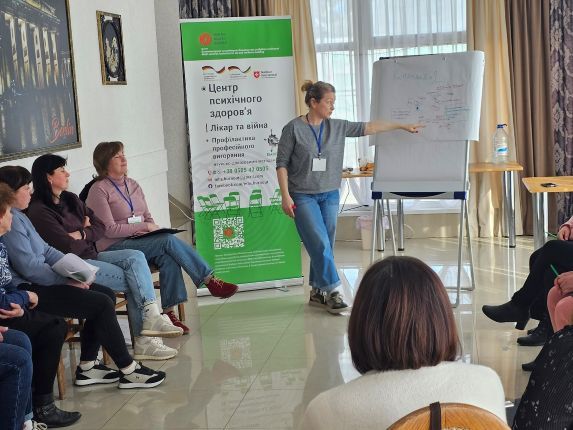
In 2024, Malteser International’s partner Mental Health Service won a prize for their work to support medical staff in hospitals in Sumy with training in, e.g., stress relief. How do our overall health activities complement or relieve pressure on the national health system?
El Hajj: Our health activities are designed to directly ease pressure on the national health system, especially in regions where services are overstretched. In cities such as Sumy, Kyiv, and Mykolaiv where we and our partners work, support to medical staff – including stress-relief training and psychosocial skills provided through partners like Mental Health Service – helps hospital teams cope with the emotional burden of working in a prolonged crisis. This reduces burnout and helps staff remain able to provide care, which is critical in a system under constant strain.
At the same time, our community-based psychosocial activities reduce the load on formal services. Many people experiencing stress, anxiety, or trauma-related difficulties do not immediately need specialized psychiatric care but still require support. Through group sessions, individual counseling, and community center activities, people can access help much earlier and closer to where they live. This means fewer cases escalate to the point where hospital-based services are the only option.
In practical terms, this has made access to support easier. In several of the areas where our partners are active, people who might otherwise have waited months for an appointment with a psychologist are able to receive basic psychosocial support much sooner through community services. Our teams also help identify those who do need more specialized care and support them with referrals, which makes the pathway into the formal system smoother and more efficient.
So overall, our work both strengthens the resilience of health staff and reduces the demand on specialized services, while making it easier and faster for conflict-affected people to receive the kind of support they need.
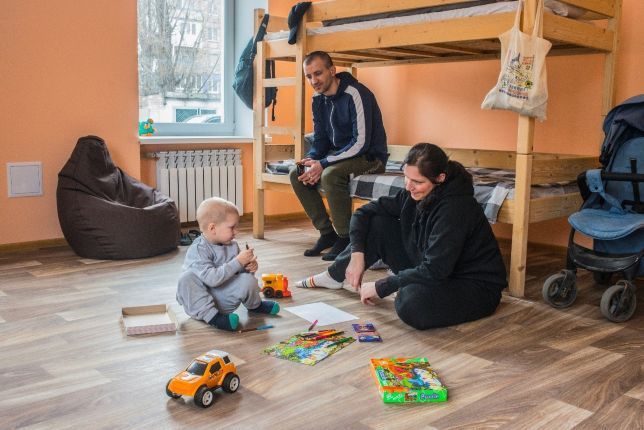
The psychologists of the team in Kryvyi Rih also offer consultations and therapy especially for internally displaced people (IDPs). What special needs do IDPs have?
El Hajj: People who have been displaced often carry a very specific mix of stress factors. They have experienced conflict or insecurity as well as the loss of home, routine, and social networks. Many have left behind jobs, property, and familiar support systems, and they are trying to rebuild daily life in an unfamiliar place, often with limited resources.
One common issue is a constant sense of uncertainty. IDPs frequently do not know how long they will stay, whether they can return, or what the future will look like. That makes it hard to plan, which increases anxiety and emotional strain. At the same time, they may feel guilty about relatives who stayed behind, or grief over what they have lost.
There are also practical pressures that affect mental health: crowded living conditions, financial difficulties, and the challenge of integrating into a new community. Some people feel isolated or unwelcome, which can deepen feelings of loneliness or depression.
For children in displaced families, the loss of familiar surroundings, schools, and friends can be particularly destabilizing. Parents, meanwhile, are often under extra pressure, trying to stay strong for their children while dealing with their own stress.
So, support for IDPs often needs to go beyond addressing a single traumatic event. It’s about helping people regain a sense of stability, rebuild social connections, and find ways to cope with long-term uncertainty.
„Support for IDPs often needs to go beyond addressing a single traumatic event. It’s about helping people regain a sense of stability, rebuild social connections, and find ways to cope with long-term uncertainty."
– Mohammed El Hajj, Country Director for Malteser International in Ukraine
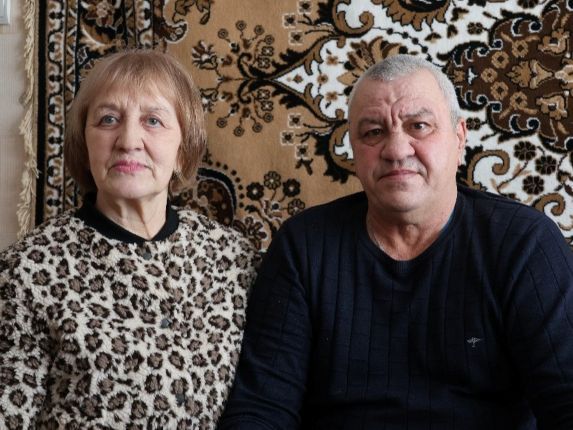
Some civilians – often elderly people, sometimes whole families – stay despite extremely dangerous living situations, flee only as far as absolutely necessary, or return home as early as possible, even if it is not safe. And many NGO staff – including our own – risk their lives to support those who stay. Why does staying close to home play such an important role for the health and dignity of a person, especially in crises situations?
El Hajj: This is something we see very often, and from the outside it can be hard to understand. But when you speak with people, it becomes very clear that “home” is not just a physical place – it is identity, memories, social ties, and a sense of control in a situation where almost everything else feels uncertain.
For many older people especially, leaving home can feel like losing the last piece of stability they have. Their daily routines, neighbors, familiar streets, even small things like tending to a garden or knowing where everything is – these are all part of how they cope. When those are gone, the emotional impact can be as severe as the physical risks they are trying to avoid.
From a health perspective, staying close to home often means staying connected to social networks. Family members, neighbors, and community ties are major protective factors for mental wellbeing. People who feel connected and supported cope better with stress and trauma. Displacement, on the other hand, often brings isolation, loss of role, and a feeling of dependency, which can seriously affect both mental and physical health.
Dignity is also a key aspect. Being able to make one’s own decisions – even in difficult circumstances – is part of maintaining a sense of agency. Many people do not want to feel like passive recipients of help. They want to remain in a place where they know how to manage daily life, where they feel they still have a role and some control.
This is why support close to where people live is so important. It is not about encouraging risk, but about respecting people’s choices and helping them stay as safe and healthy as possible in the places that still give them a sense of belonging. In a long crisis, preserving that connection to home can make a real difference for both mental health and dignity.
In Ukraine the link between health and home has become very visible for us in daily work. Health is not only about medical treatment. It is also about stability, routine, social ties, and the feeling of belonging somewhere. When people lose their homes or live for years under threat, their health – especially mental health – is directly affected. Supporting people to stay connected to their communities, or to rebuild a sense of normal life where they are now, is therefore part of protecting health.
I would like to raise one question that feels important in this context: How do we, as humanitarian actors, continue supporting people’s need for safety while also respecting their strong desire to remain close to home, even in difficult and sometimes dangerous conditions? In Ukraine, we see every day that “home” is not just a place, but a source of identity, dignity, and resilience. Understanding that better can help shape how we design support in long-lasting crises like this one.
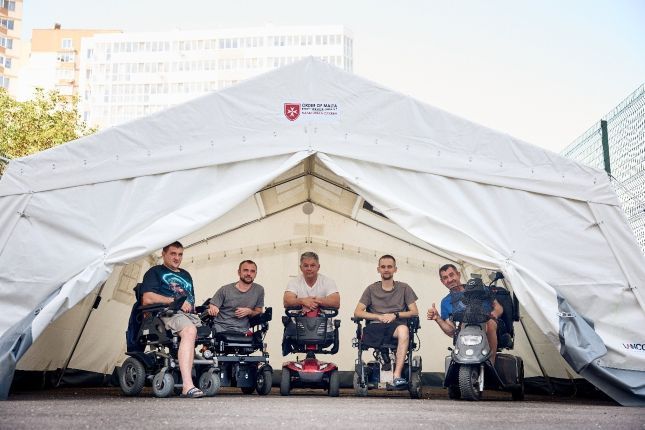
What support do the people in Ukraine need more of right now?
El Hajj: Right now, one of the biggest needs is support that goes beyond immediate emergency relief. People have been living with war for years, and what we see every day is a growing need for longer-term, consistent support – especially in mental health, rehabilitation, and services that help people maintain daily life close to where they live.
Mental health and psychosocial support remain a major gap. The emotional impact of this prolonged crisis is deep, but funding often focuses on short-term interventions. What communities really need are stable, community-based services that can continue over time, not just short project cycles. The same applies to support for people with injuries or reduced mobility – rehabilitation and assistive devices make a huge difference in people’s independence, but they require sustained attention and resources.
Another area is support to local systems and community-level services. Many families are trying to stay near their homes or in the communities where they have settled. That means local services – health, social support, community spaces – carry a heavy load. Funding, however, is increasingly limited, and there is a risk that exactly these stabilizing services are reduced at a time when they are needed most.
The funding crisis in humanitarian work has consequences for people in need everywhere. What funding issues do you see in our work in Ukraine? And what will our work focus on in the coming months?
In day-to-day work, we feel the funding gap particularly in activities that are less visible but essential: psychosocial support, community centers, case management, and services that prevent problems from becoming more severe. Emergency aid is still necessary, but without continued support for these areas, the long-term impact on people and on the social fabric will grow.
Looking toward 2026, our focus will likely continue to balance emergency needs with more sustainable, community-based support. Strengthening local capacity, maintaining access to psychosocial and health-related services, and helping people remain connected to their communities will remain central. The situation is no longer only about immediate survival – it is about helping people endure, recover, and keep a sense of normal life despite the ongoing crisis.
(March 2026 – An article from our 2025 Annual Report)