Supporting those who support others: Why caring for mental health professionals is key to resilience in Ukraine
Imagine working constantly overtime, for over four years and without a real break. Not because you have to, but because without you, others will suffer. Because the mental health of an entire population depends on people like you. Now imagine living under the constant threat of bombs and drones. At times, there is no electricity, no heating, and barely any sleep. Displaced multiple times, you find yourself in yet another unfamiliar city. Now imagine: you’re a psychologist in Ukraine.
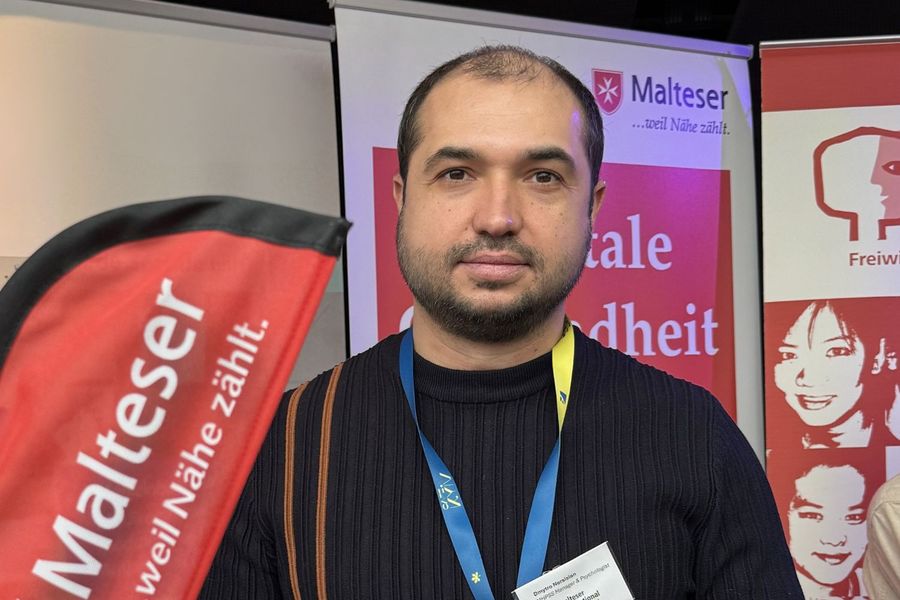
“Mental health workers [in Ukraine] are not people who come from a safe place to help others. They are directly affected by the war themselves.”
– Dmytro Nersisian, Mental Health and Psychosocial Support (MHPSS) Manager at Malteser International in Ukraine
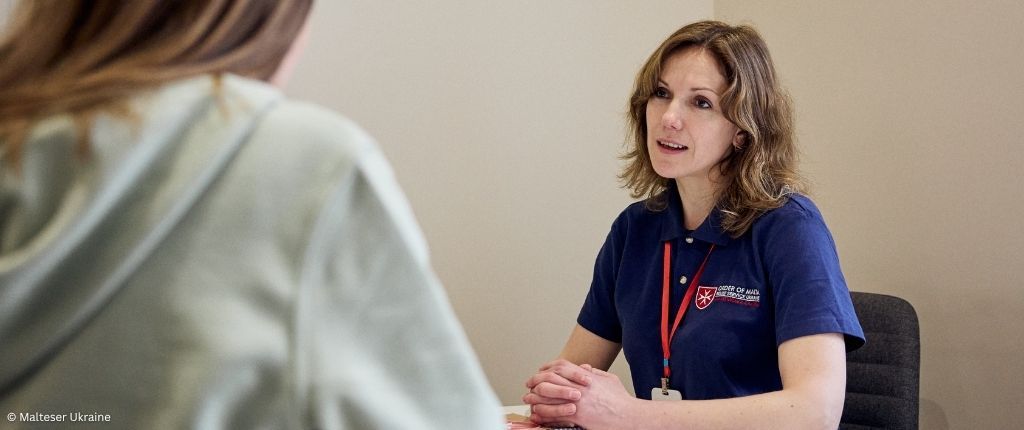
More than four years into Russia’s full‑scale invasion, the mental health crisis in Ukraine continues to deepen. Prolonged exposure to violence, displacement, loss, and uncertainty has left more than 15 million people in need of psychological support. Behind every counselling session, community activity, or emergency response is a person providing that support – often while living through the same hardships.
This experience is shared by many mental health professionals across Ukraine. Viktoriia Soloviova, psychologist and team leader at the Mental Health Center of our partner organization Words Help, describes what this means in practice: “The line between professional and personal life becomes blurred. Clients’ stories often resonate painfully with my own experiences: evacuation, destruction, loss,” she says. “My personal resilience begins with acknowledging my own exhaustion, vulnerability, and need for support.” Many mental health professionals, social workers, and humanitarian staff have themselves been displaced or lost loved ones; almost all live under the threat of constant shelling, endure power cuts and heating shortages. Many have been working without pause under these extreme conditions for years. “This prolonged pressure is taking a toll on their own mental health and resilience”, says Dmytro.
From mobilization to exhaustion
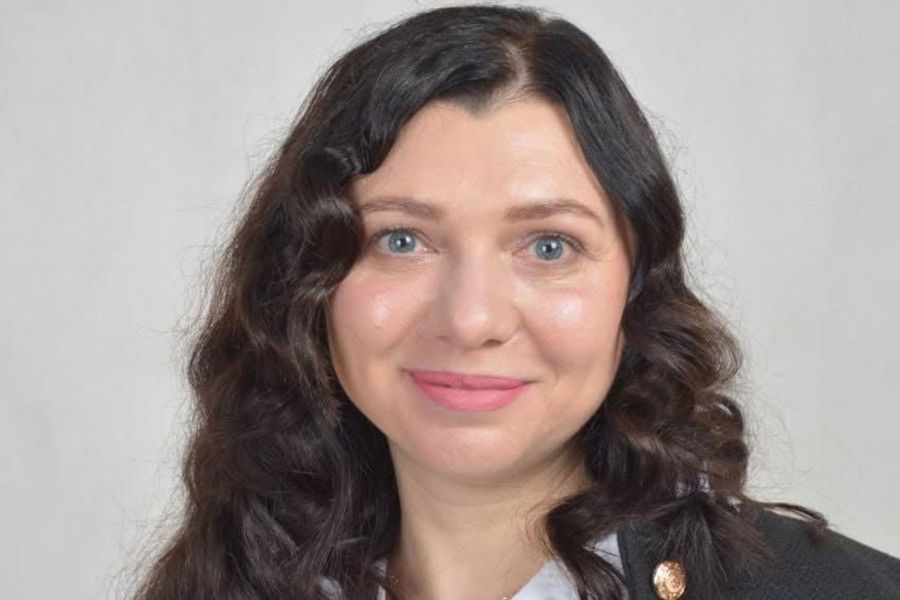
Dmytro describes a clear shift since the early months of 2022. At the beginning of the full‑scale invasion, Ukrainian society mobilized quickly. Communities supported one another, volunteers stepped in, and professionals worked with extraordinary intensity. “There was an incredible sense of resilience and solidarity in 2022,” says Dmytro. Four years later, the picture looks different. Accumulated stress, chronic fatigue, and burnout are increasingly visible, both among civilians and humanitarian and mental health professionals.
This has serious implications: if those who provide care are overwhelmed, the quality and availability of support for affected communities is at risk. Burnout among healthcare workers rarely happens suddenly, Viktoriia notes. “Burnout begins very quietly. I saw colleagues becoming more exhausted, losing interest in their work and developing emotional detachment. Sometimes specialists started working even more, as if trying to overcome exhaustion with an even heavier workload. In some cases, people resign because they felt completely drained. At the same time, the number of highly complex clients has increased, intensifying the emotional burden.
“For me, regular supervision, the opportunity to discuss difficult cases with colleagues, and spaces for mutual support have been especially important.”
– Viktoriia Soloviova, psychologist and team leader at Words Help
For Malteser International, supporting MHPSS personnel and other frontline workers is therefore essential for effective humanitarian assistance in a prolonged crisis. “For me, regular supervision, the opportunity to discuss difficult cases with colleagues, and spaces for mutual support have been especially important,” says Viktoriia. “Places where you don’t have to be ‘the expert’ all the time but can simply be a human being.” Also based on Dmytro’s experience, the quality of mental health support depends heavily on the wellbeing of professionals. “If we don’t pay attention to this, the quality will be compromised,” he says.
Resilient systems, resilient care
Malteser International works with local partner organizations that ensure that projects include dedicated components for staff care. This includes supervision, burnout prevention measures and strategies such as balanced workloads, as well as opportunities for peer exchange.
Another key aspect of Malteser International’s approach to ensuring long-term access to mental healthcare is strengthening national and local systems rather than creating parallel structures. In Ukraine, this means working closely with local partner organizations and public institutions. International organizations will eventually leave, a normal process in humanitarian response. Local professionals and institutions, however, will remain and continue their work. Supporting them is therefore an investment in the country’s long-term resilience.
In this context, resilience does not mean asking people to endure unlimited pressure. Rather, it is about enabling them to sustain their work over time. As the war continues, the need for mental health support in Ukraine will remain high. Ensuring that those who provide this care are protected, supported, and valued is a prerequisite for recovery. It is a strategic investment in resilience – for individuals, communities and the whole country.
May, 2026