
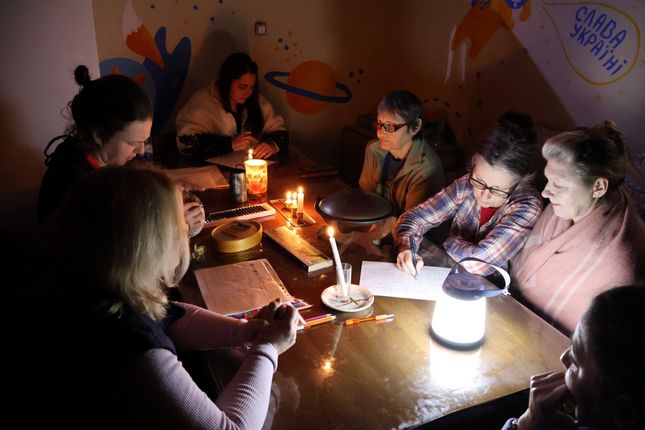
Where fear meets care: A journey through the east and south of Ukraine
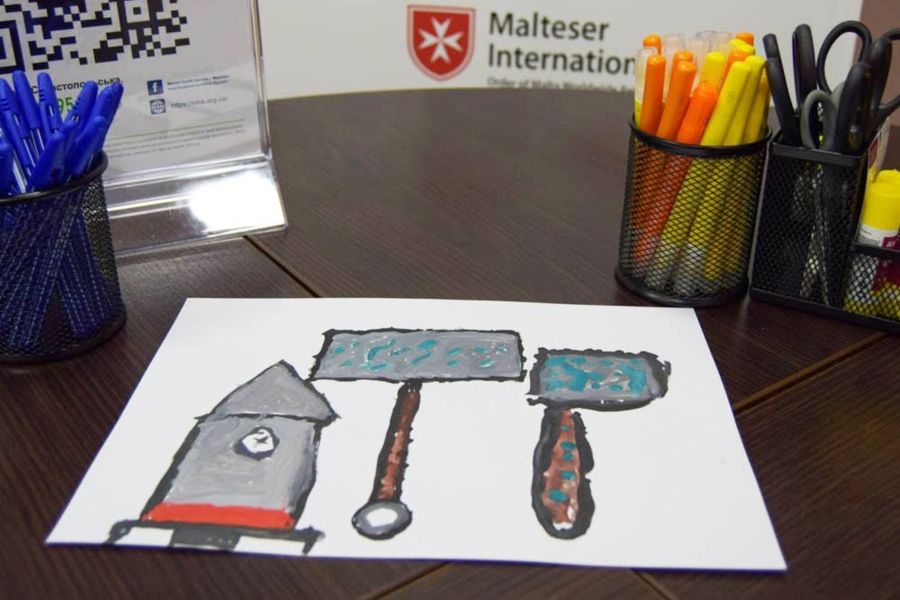
“Thor will protect us. He will stop all the rockets.” That is how Oleksandr (name changed for security reasons) from the Kherson region explained his drawing during a session with a psychologist from a mobile psychosocial support team. On paper, his favorite superhero stood between the sky and the earth, raising his hammer against incoming rockets.
What may appear to an adult as a child’s imagination can mean something deeper to a psychologist – a way of reclaiming a sense of control in a world where war has made uncertainty a daily reality. This story stayed with the Malteser International team throughout our journey across eastern and southern Ukraine – from Dnipro to Kamianske, from Kryvyi Rih to the Mykolaiv region. In every community, we met people finding their own ways to navigate fear and uncertainty. In every place, we witnessed how timely support can help them regain stability, resilience, and hope for the future. In moments like these, support helps people find ways to face fear, give it shape, and begin to move beyond it.
A road through a country that continues to live
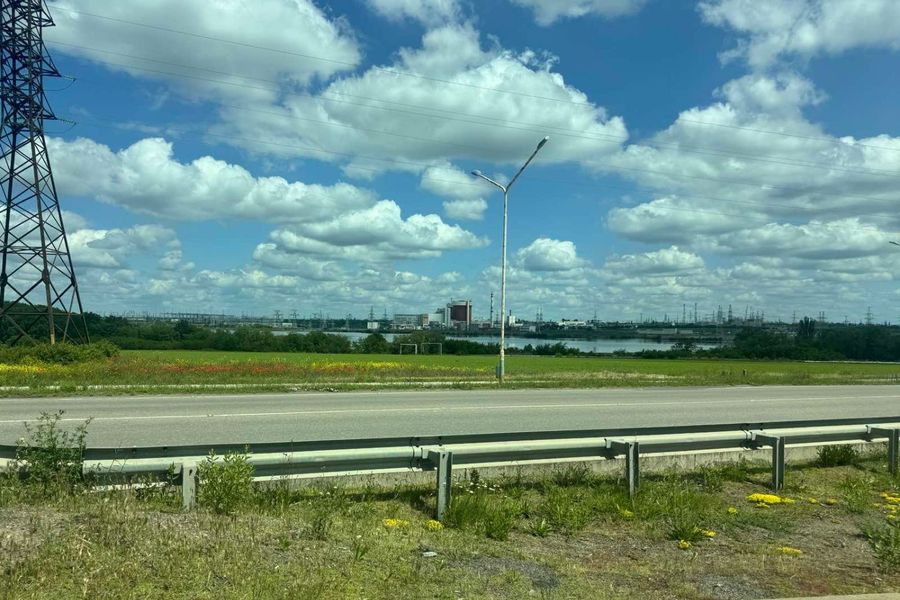
If you ever travel through Ukraine, one of the first things that will catch your eye is the endless fields stretching between towns and villages. In areas close to the frontline, these landscapes are often scarred by the marks of war – craters, shrapnel, and hidden landmines. Further away, however, the land tells a different story, blanketed with wheat, sunflowers, and young crops that color the horizon in shades of green and gold. Together, these contrasting scenes reflect both the hardships of war and the enduring resilience of the country and its people. This contrast can be felt across the entire country. War is present everywhere, yet life continues.
Today, these roads are travelled not only by residents but also by humanitarian teams. They bring more than material assistance. They create spaces where people can talk, be heard, and find support when their own resilience is being tested.Together with our partners Avalist and Mental Health Service, and with the support of the German Federal Foreign Office, Malteser International delivers psychosocial support to people affected by the war. The program includes mobile outreach teams, community-based support centers, and capacity-building initiatives for professionals working daily with those experiencing the consequences of war. The reach of this support can be expressed in numbers. Yet its true value is found in the stories of the people behind those numbers.
Kamianske: When a community finds itself again
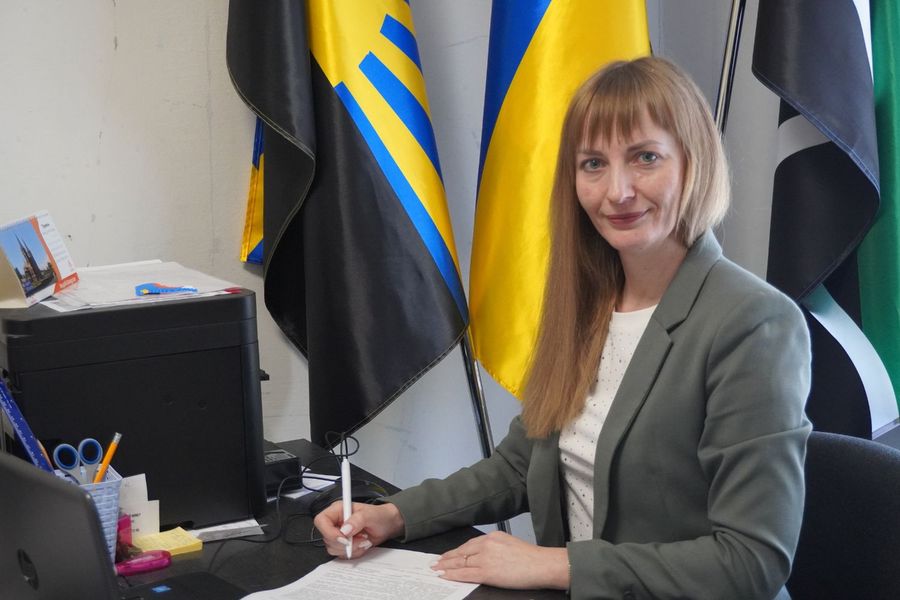
Our first stop is the humanitarian hub of the Dobropillia community in Kamianske in eastern Ukraine. Amid the challenges of displacement and uncertainty, it has become a place where connections are rebuilt, support is accessible, and a sense of community begins to return. The hub is full of activity. People gather around tables to complete paperwork, receive consultations, participate in group activities, or simply share a conversation. Among them is Tetiana. Until recently, she headed a local council in her community in the Donetsk region. Today, she is an internally displaced person herself. “You can live anywhere,” she says, “but your heart remains where your home is.” Tetiana stayed in her community until the very last moment, continuing to serve its residents. When the frontline drew too close, evacuation became unavoidable. Now, she dedicates her time to helping other people face the same reality. This is one of the hub’s most important roles: helping people rebuild a sense of belonging. Here, people receive information, practical assistance, and emotional support. Yet often, the greatest value lies in something much simpler: seeing familiar faces and realizing they are not alone.
War touches everyone
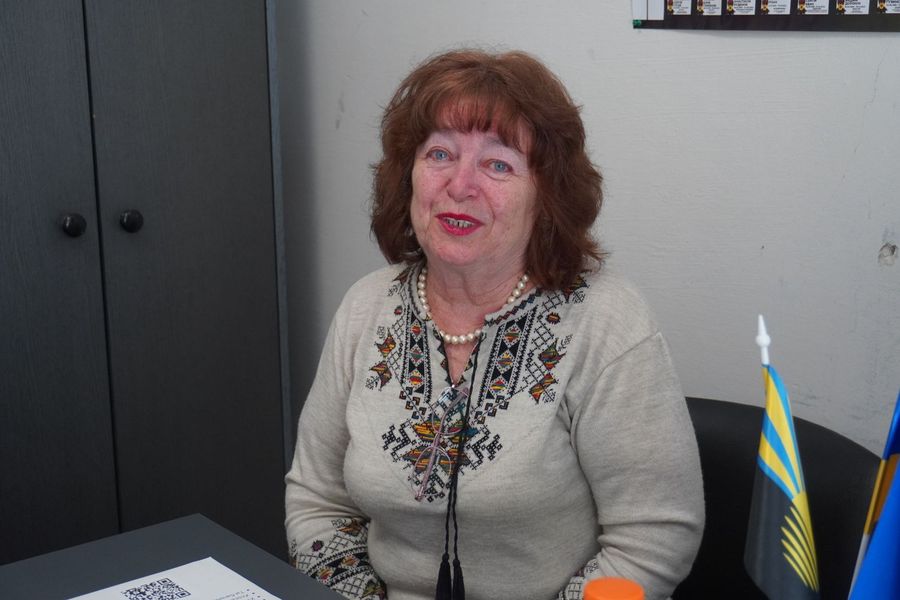
At the hub, we met Liudmyla, a 69-year-old resident of Kamianske. She has never left her city, yet the war has reached her doorstep as well. Liudmyla cares for her 90-year-old mother and for Ladka, a dog she adopted after animals were evacuated from the Zaporizhzhia region in the south of Ukraine. “Every time something flies in our direction, she stands on her hind legs and cries at the sky. She simply cries from fear. When I bring her inside, she hides under my legs, or beneath the table until she calms down.” To manage her own anxiety, Liudmyla memorises poems and humorous stories. She uses them to heal wounded hearts, including those of people who, like her, come to the hub for support.
She recites a poem for us before heading to a psychosocial support session, where she and others decorate tote bags and exchange funny stories. “Because laughter heals too,” she says. In those simple words lies a truth that psychologists know well: recovery often begins with the ability to smile again.
Kryvyi Rih: A piece of home on a windowsill
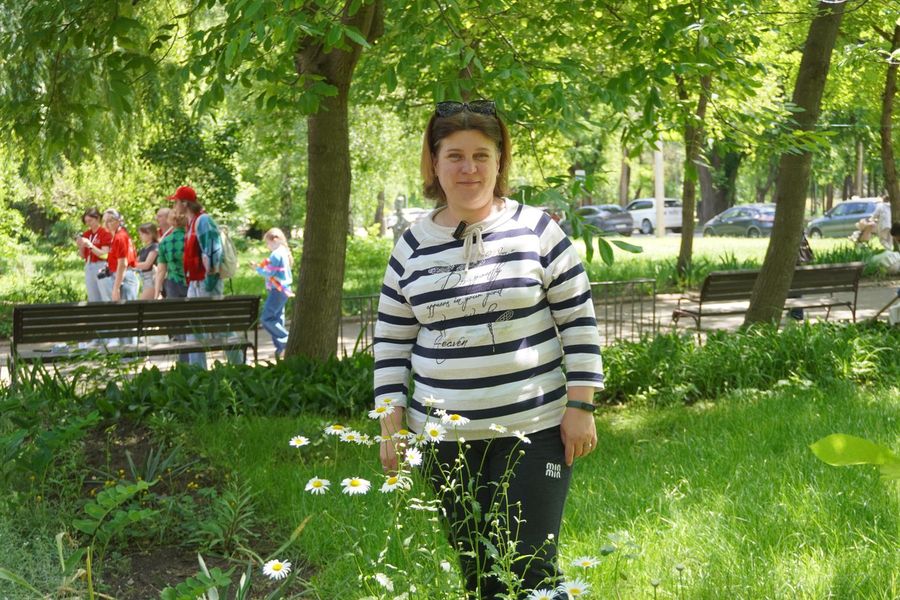
Our next stop is a community center in Kryvyi Rih in central Ukraine. Here we meet Maryna, who relocated from Sloviansk (Donetsk Oblast) a year ago. “We still run to shelters whenever there is danger,” she says, “but compared to where we came from, it feels safe.” Maryna has gradually rebuilt her life. She found a flat to rent, secured a job that helps her stay afloat, and rediscovered her favorite hobby – gardening. The losses, of course, remain. Her apartment in Sloviansk was destroyed. She left her cat behind with a neighbor when she fled, only to return later and bring it with her. She worries constantly about her daughter, who continues to work near the frontline. To cope with stress, a psychologist encouraged Maryna to find an activity that would bring her joy and routine. And she did. She chose gardening. “I’ve planted flowers all around the center, and now they are blooming,” she says with a smile. “On my balcony, I grow cucumbers, tomatoes, and strawberries. It’s my way of preserving a normal life in abnormal circumstances.” At first glance, it may seem like a small thing. But after losing your home, nurturing something and watching it grow becomes a powerful act of resilience.
Mykolaiv: Where fear does not disappear
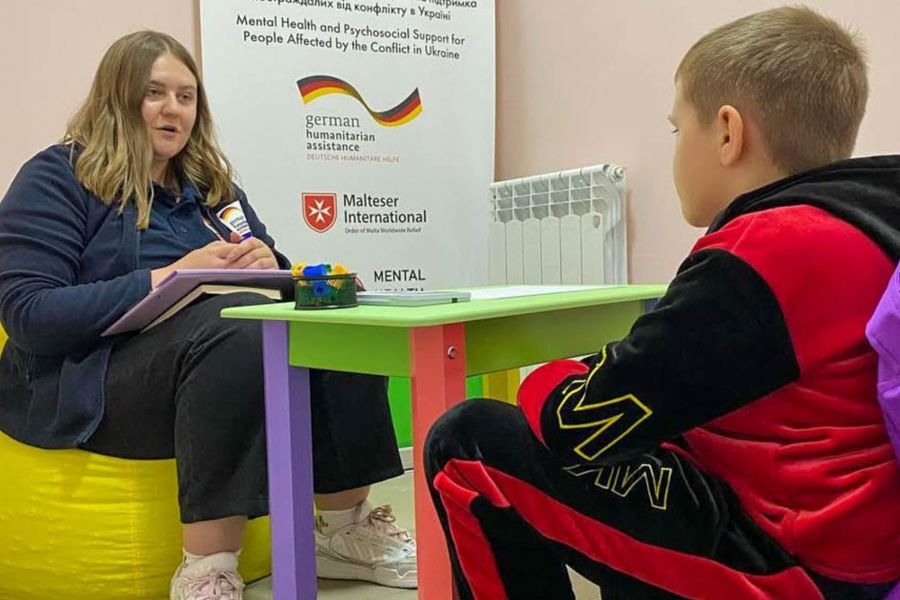
The further south we travel, the more frequently people speak about exhaustion. Psychologists from mobile teams work across communities in the Mykolaiv region, reaching even the most remote settlements. “The needs vary greatly and differ from one community to another,” explains Olena, coordinator of the mobile teams of our partner MHS (Mental Health Service). “In Kherson, people are still living in survival mode because of daily shelling. In Mykolaiv, we are already seeing a different challenge – the effects of prolonged stress, accumulated fatigue, and emotional exhaustion.” It is here that we return to the story of Oleksandr (name changed for security reasons), a young boy from the Kherson region. After evacuation, he could barely sleep. Every air raid siren triggered panic. Every loud noise made him fear the worst. He became convinced that one day a rocket would kill his family.
During sessions with a psychologist, he began drawing Thor, his favorite superhero. Thor stood with his hammer raised, protecting his family from incoming rockets. “Thor will protect them,” the boy explains simply. “Thor will stop all the rockets.” It was more than a child’s fantasy. It was an attempt to regain control in a world where control had vanished. The drawing became a bridge between fear and safety, between trauma and imagination. Gradually, sleep returned. The fear did not disappear, but it loosened its grip.
In humanitarian work, impact is often measured in numbers: sessions completed, consultations delivered, or people reached. But sometimes impact is much simpler: a child falls asleep without waiting for explosions. This is where recovery begins.
“Doctor in War”: Supporting those who support others
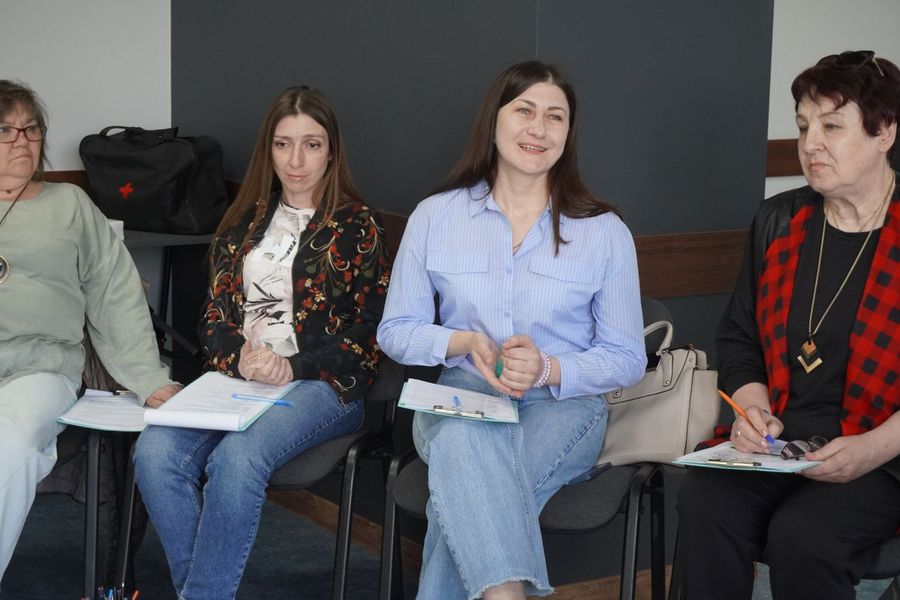
Our final stop takes us to Mykolaiv, in southern Ukraine. Here, Malteser International supports healthcare professionals through the “Doctor in War” program, helping them strengthen both their clinical skills and their ability to cope with the immense pressures of working in a country at war. For more than four years, Ukrainian medical workers have been on the frontlines of the humanitarian response. They treat the wounded, care for displaced families, and continue providing essential services despite power outages, air raid alerts, and the constant uncertainty of war. Yet behind every white coat is a person carrying their own burdens. People who worry about the safety of their children. People whose homes and communities may have been affected by the war. People who are exhausted, but who continue to show up every day to care for others. “We are all holding ourselves together right now. It only adds to the burden,” says one of the training participants. The training courses provide more than technical knowledge. They create spaces for healthcare professionals to reflect, connect with peers, and develop practical tools to maintain their own wellbeing and resilience. Because caring for others becomes increasingly difficult when your own reserves of strength are running low.
„Support for IDPs often needs to go beyond addressing a single traumatic event. It’s about helping people regain a sense of stability, rebuild social connections, and find ways to cope with long-term uncertainty."
– Mohammed El Hajj, Country Director for Malteser International in Ukraine
We cannot stop the rockets. But we can help people live beyond their consequences
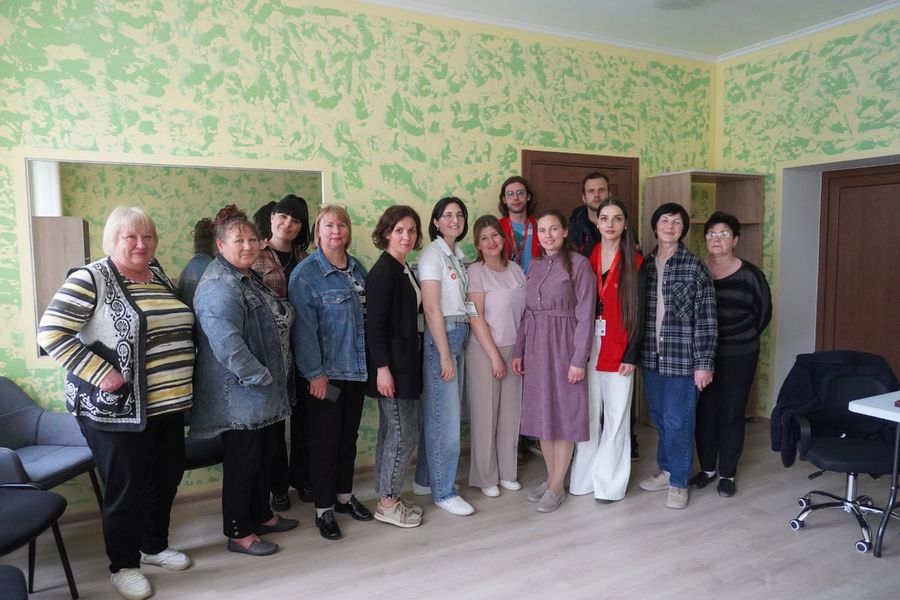
As we leave Mykolaiv and drive back across the open steppes, we find ourselves thinking about Oleksandr and his drawing of Thor once again. As humanitarians, we cannot stop rockets. We cannot erase what people have lived through. But we can help a child sleep without fear. We can help displaced people rebuild a sense of community. We can support a woman starting over after losing everything. We can help healthcare workers preserve the strength they need to care for others. That is why this work remains essential. And that is why support for programs like these is needed today just as much as it was at the beginning of the war. Because sometimes the most meaningful assistance is helping people find the strength to keep moving forward.
This article was written by Halyna Bilak, Communications Manager for Malteser International Ukraine, following several partner visits across Ukraine in May 2026