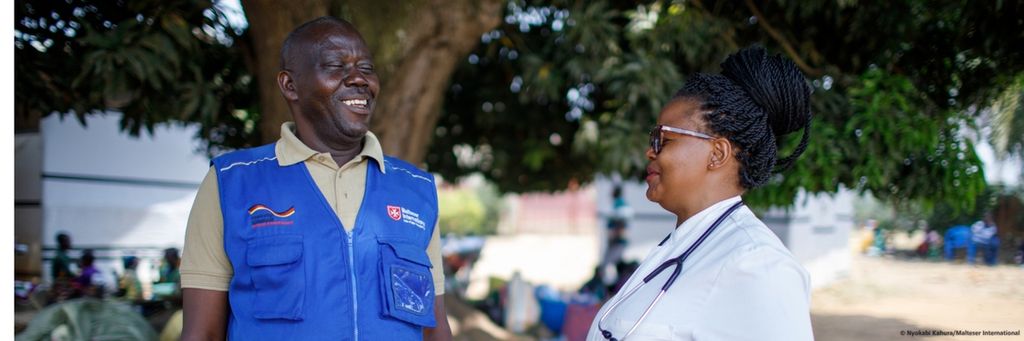
Health. Care. Dignity.
Reliable healthcare systems strengthen displaced people and crisis regions
The vast majority of people who are forced to flee look for safety close to their point of origin. Remaining as close to home as possible offers a greater chance of returning soon. The familiar culture and environment provide important psychological support for those who have had to leave everything behind. For many families, there is also a pressing need to return to their homes, livestock, and fields as quickly as possible.
Providing the best possible assistance to displaced people is often a challenge for humanitarian organizations. It is comparatively difficult to work and gain access to regions affected by conflict, epidemics, and/or economic instability; or subject to widespread destruction following natural disasters. In addition, cuts to public funding limit the scope of assistance, especially in protracted or “forgotten” crises.
Rapid assistance, long-term stability
Providing effective help is a crucial contribution to preserving the health and dignity of displaced people, as well as to maintaining stability in regions where they live. “Where there is reliable access to health and emergency medical services, drinking water, and food, fewer new conflict dynamics emerge. Where people have perspectives for the future, the pressure to flee or radicalize decreases. And where there are strong local structures, the foundations for dialogue and long-term stability grow,” says Clemens Graf von Mirbach-Harff, our Executive Director and Secretary General.
Over the past year, we further expanded programmatic responsibilities entrusted to the teams in our fourteen country offices. “Many decisions can be made more effectively on site than from our headquarters in Cologne,” says Kees Zevenbergen, our Director of Programs. “We have also intensified our collaboration with partner organizations and institutions in the countries where we operate.”
DR Congo: Improved healthcare access, less epidemics
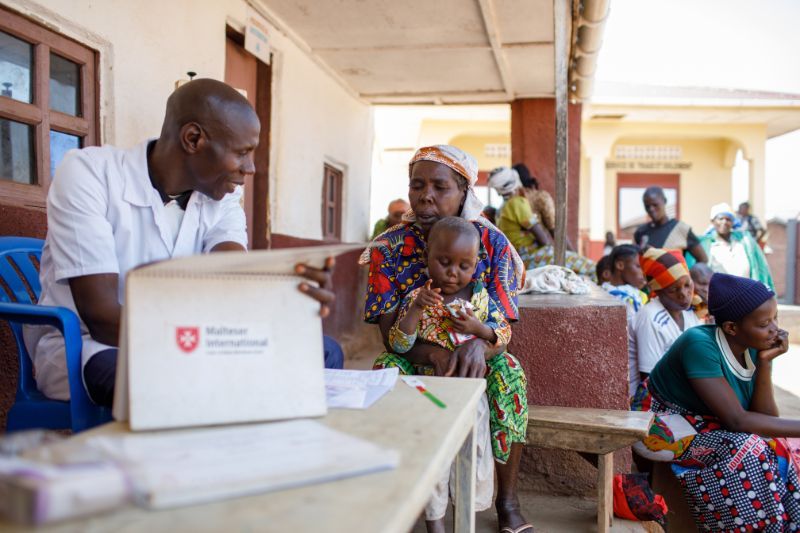
This approach guides our work in the Democratic Republic of the Congo (DR Congo), one of our largest project regions where we have supported 3.5 million people on average over the last three years – most of them through health measures. We have supported the development of the public health system together with four partner organizations, government health authorities, local health centers and referral hospitals in Ituri, Haut-Uélé, Bas-Uélé, and Kasaï Central provinces since 1996. Our services range from providing medical materials and equipment to delivering training and improving communication and coordination among health facilities. The goal: to improve people’s health and stabilize their living conditions.
A key focus of our work is infection prevention, preparedness, and control (IPC). In 2025, our efforts in this area focused on the infectious disease Mpox. “Our project significantly benefits displaced populations living in the health zones we support. Many of the internally displaced people (IDPs) live in overcrowded settlements or with host families. Due to these conditions, they face heightened vulnerability to infectious diseases such as Mpox”, says Macalister Usongo, our Program Coordinator in the DR Congo.
To curb the spread of MPox, we have been working with our partner organizations MEMISA and ULB-Coopération since early 2025 to train healthcare workers, improve laboratory capacity, set up treatment centers, and strengthen communication and coordination in 40 health zones – thereby serving a catchment population of nearly 14 million people. In 28 health zones identified as Mpox hotspots, we also supply medicines, support vaccinations, and enable free treatment for affected communities.
Through these and other health measures, we reached a total of 4.3 million people in the DR Congo in 2025 – including 22,196 refugees and 111,427 IDPs. Additionally, the residents of the wider catchment areas benefit indirectly from improved health and stability across the region.
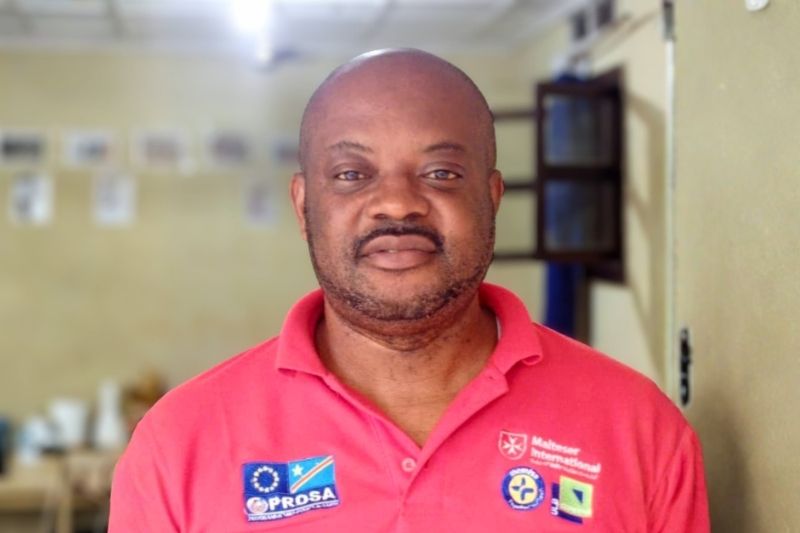
“Our project improves access to life-saving health services for displaced families and enhances epidemic preparedness“
- Macalister Usongo, Program Coordinator in the DR Congo.
Lebanon: Flexible healthcare for refugees and IDPs
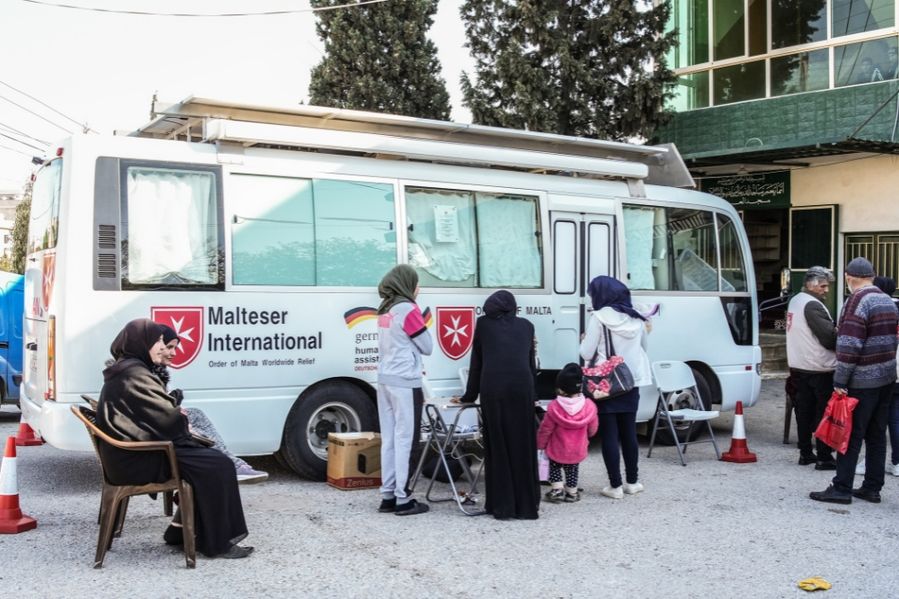
An estimated 2.9 million of the 5.3 million people in Lebanon are classified as in need of humanitarian assistance, and more than one-quarter of households lack adequate access to health services. Lebanon hosts displaced people from Syria and Palestine and has repeatedly had to deal with waves of internal displacement. By the end of 2024, one million people were displaced inside Lebanon. By May 2025, all but 80,000 of these had returned home. Then, directly following the renewed escalation of conflict in March 2026, 500,000 IDPs were newly registered within 24 hours. In a matter of weeks, their number again surpassed one million. These significant fluctuations require a high degree of flexibility and rapid response in humanitarian action, for example through frequent route adjustments for mobile teams or swift relocation of health center staff from high-risk areas to safer operational sites.
In Lebanon, we support the Order of Malta Lebanon (OML) in operating eleven communal health centers (CHCs) and twelve mobile clinics. Through the CHCs, vulnerable population groups can access medical care, participate in awareness sessions, and receive medicines and other relief items. The CHCs play a key role in supporting IDPs: “In the Ain El Rummanah CHC, an on-site clinic inside a shelter was established to offer medical and social support and refer complex cases. Displaced people continue to access CHC services even after leaving shelters,” says Nayla El-Khoury, our then Country Director in Lebanon.
OML’s mobile clinics help close gaps in healthcare access for rural populations. They serve large numbers of refugees living in informal settlements and isolated regions close to the border with Syria, as well as the local host communities. Eight of the mobile clinics provide general medical services, which have been supplemented since 2025 by four units specializing in gynecology, cardiology, pediatrics, and dentistry.
In 2025, together with OML, we supported a total of 85,524 people across Lebanon with health services, including 205,996 medical consultations. In the coming years, this support will be significantly expanded. El-Khoury explains: “OML and MI’s shared mission to serve the poor and the sick regardless of background or nationality is a key foundation to peace and coexistence in Lebanon. Despite the country’s instability and the resulting operational challenges, we stay aligned with our values of serving our communities with compassion and commitment to quality and excellence, and not allow operational con-straints to distract or discourage us from our mission.”
(June 2026 - An article from our Annual Report 2025)