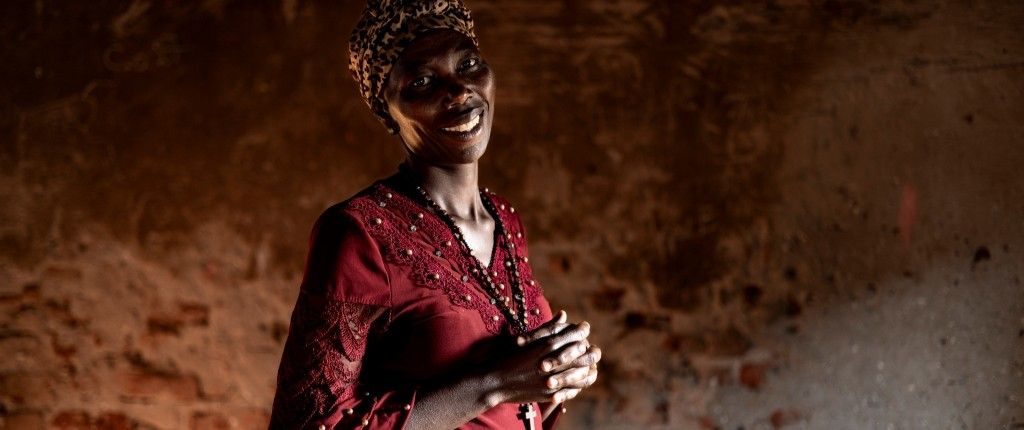
“Ebola has changed everything here”
Since the spring of 2026, people in the Democratic Republic of the Congo have been battling the most devastating Ebola outbreak in their country’s history. The virus is highly contagious through bodily fluids and has claimed more than 5,000 lives to date (as of November 2026). As of now, there is neither a suitable vaccine nor medication available. The epicenter of the epidemic is in Ituri Province, a region marked by armed conflict and displacement, where Malteser International has long been supporting people in need.
“Life has become more difficult”
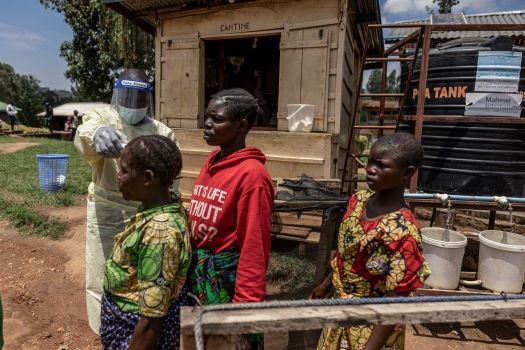
Florence Akello, a 48-year-old elementary school teacher, lives with her five children in Ndrelé, a town in Ituri Province. Her life has changed significantly because of Ebola. Her school was temporarily closed. Her daily life is shaped by measures to protect against the deadly virus. Looking back on the COVID-19 pandemic, many of us will understand exactly how Florence feels: “Before Ebola, we could move about freely. Now, because of the disease, there are many restrictions. Life has become more difficult.”
Florence’s school has since reopened under strict conditions. No one is allowed to enter without using the new handwashing station. Physical contact should be avoided. Despite all the precautions, school life still feels unsafe to Florence: “If a child falls, for example, you can’t just leave them lying there. You help them up, lift them, or maybe even pick them up.” Her biggest concern is for her children: “I’m afraid of bringing Ebola home.”
Good preparation saves lives
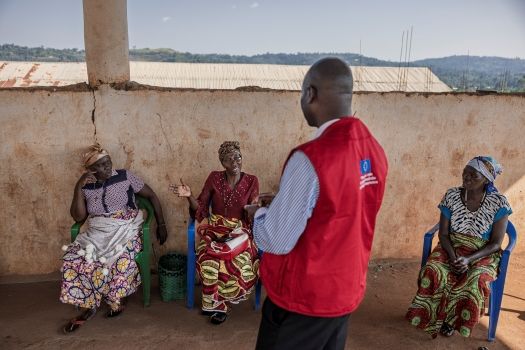
To protect Florence and her family, Malteser International teams are working in Ndrelé and other communities in the epidemic-affected areas. They are conducting comprehensive awareness campaigns, training health care workers, distributing hygiene supplies, and improving the water supply. They have also converted two health facilities into treatment centers.
“Our efforts didn’t start from scratch,” explains Dr. Jean-Paul Uvoyo-Ulangi, 49, health advisor for Africa at Malteser International. “We have been active in the health sector in the DRC for decades and have very strong ties with government authorities. That’s why we were prepared for an outbreak.” When the first case of Ebola was confirmed, staff activated emergency plans and were able to immediately begin isolating suspected cases. A treatment center that was not yet completed was made operational in less than seven days. These immediately available measures saved many lives, as the mortality rate for Ebola depends largely on the quality of (supportive) medical care (RKI, 2026).
Help that has a widespread impact
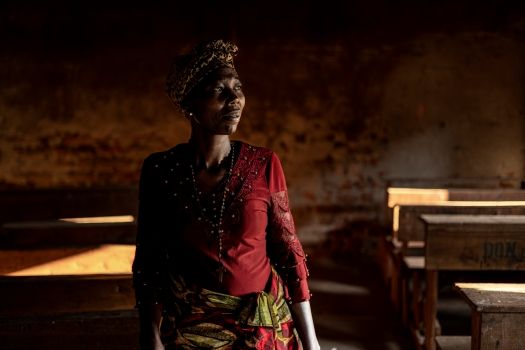
“Sometimes we go to the hospital to see what the Maltese have set up, and then we talk about it,” Florence says. “We also know the Maltese from the informational events.” For her, the fight against Ebola is about more than just what happens inside a hospital. The success of these measures also affects whether people feel safe again in their daily lives.
Unfortunately, the epidemic is not over yet. But the hygiene and awareness measures are having an effect: Knowing how to protect oneself has become part of everyday life—even for the youngest children. Florence recalls how her youngest daughter once stopped her at the front door: “Mom, you were around a lot of people. I can’t say hello to you. Wash your hands first, then I’ll say hello.”
(August 2026)
Our support amidst the epidemic
Since Mai 2026, Ebola is spreading fast in northeastern DR Congo. On May 17, the WHO declared a Public Health Emergency of International Concern. There are currently no approved vaccines, specific treatments, or reliable rapid tests for the current virus variant. Activities by armed rebel groups are hampering relief efforts. Malteser International supports treatment centers by providing, among other things, protective equipment and hygiene supplies, trains healthcare workers, and offers psychosocial and psychological support to those affected. In at-risk communities, teams educate residents about the dangers of Ebola and protective measures and improve the water supply.