Ebola in the Democratic Republic of the Congo: Causes, hotspots, and our aid
The Democratic Republic of the Congo (DRC) is one of the regions around the world where the life-threatening Ebola virus repeatedly breaks out. For the people affected there, this poses an acute threat to their lives. Containing the virus—an already difficult task—poses particular challenges in the DRC: a weakened healthcare system, insufficient public education, conflicts, and commuter traffic all complicate the provision of medical care on the ground.
This makes sustainable prevention, preparedness, and rapid medical assistance directly in the communities all the more crucial. Malteser International supports vulnerable regions in the Democratic Republic of the Congo in protecting themselves against infectious diseases, detecting and containing outbreaks early, and ensuring the survival of families.
The Current 2026 Ebola Outbreak in the DR Congo
Since mid-May 2026, Ebola has been spreading rapidly in the northeast of the DR Congo, prompting the World Health Organization (WHO) to declare a Public Health Emergency of International Concern (PHEIC) on 17 May 2026. The outbreak is caused by the rare Bundibugyo virus, which is estimated to have a fatality rate of 30 to 40 percent (source: Robert Koch Institute, as of May 2026). To date, the DR Congo has reported 2,344 confirmed cases and 930 confirmed deaths (source: WHO, as of 18 July 2026).
One of the main challenges in containing the outbreak is that there are currently no approved vaccines, specific treatments, or reliable rapid diagnostic tests for the Bundibugyo virus, a species within the genus Orthoebolavirus. In addition, rebel groups are blocking access for humanitarian aid workers, while the health system remains severely underfunded.
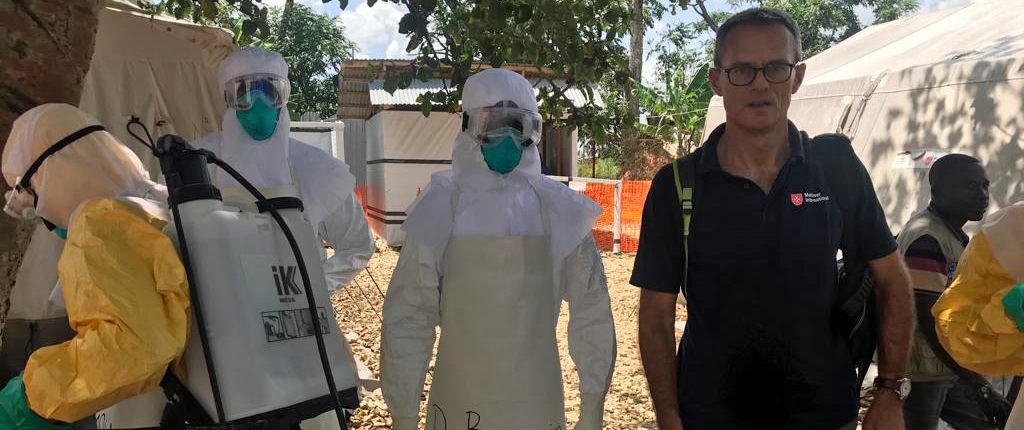
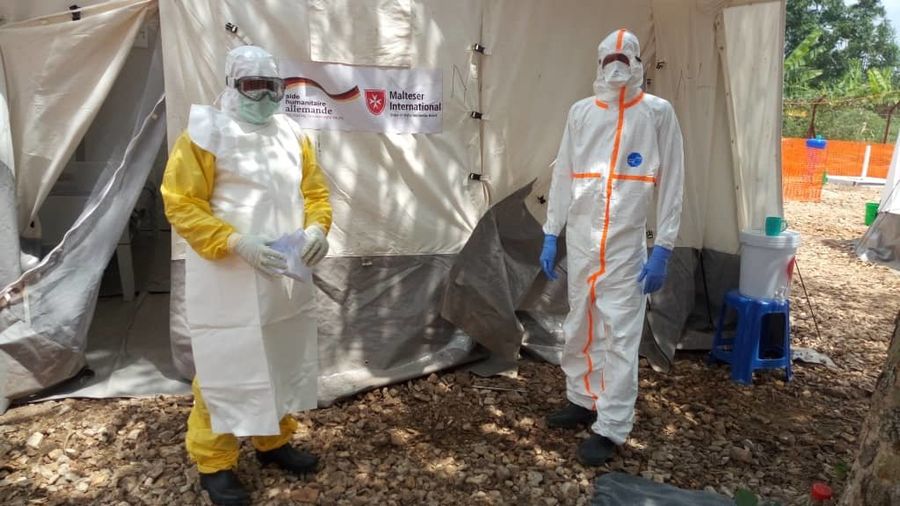
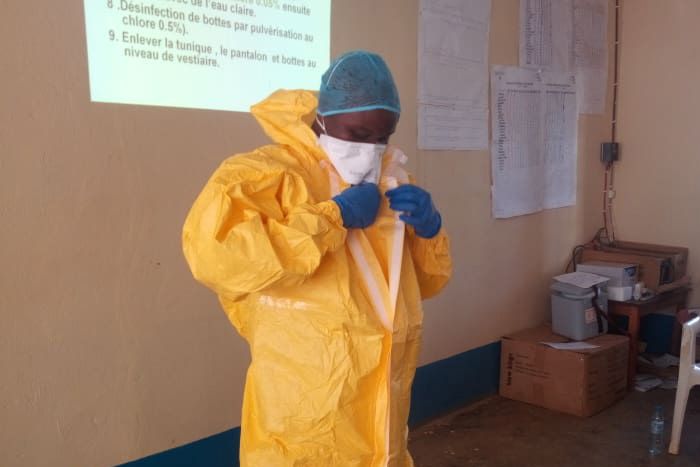
Due to frequent cross-border movement, the virus has already reached Uganda, and other neighbouring African countries are at risk, particularly neighbouring South Sudan. Malteser International is responding in the affected regions: Our teams support health facilities treating Ebola patients and operating isolation units. We train healthcare workers in infection prevention and control, provide facilities with protective equipment and hygiene supplies, and strengthen measures in these areas. In addition, we provide psychosocial and psychological support to Ebola patients, suspected cases, healthcare workers, and family members of affected individuals. In communities with Ebola cases, as well as in communities at risk, our teams also conduct Ebola risk communication with close community engagement and improve water supplies to ensure adequate hygiene.
Key facts about Ebola outbreaks in the DR Congo
- Recurring threat: The Democratic Republic of the Congo has a long history of outbreaks caused by the virus and has recorded 17 epidemics to date (source: WHO).
- Challenging environment: Armed conflicts in the affected provinces block safe access to patients and disrupt the provision of healthcare services.
- Community-centred approach: The outbreak can only be contained if local authorities and communities are actively involved to build trust and awareness while addressing misinformation and myths.
Content overview
Why is the Democratic Republic of the Congo one of the areas hardest hit by Ebola?
1. Biological risk factors
The country is home to vast tropical rainforest areas with exceptionally high biodiversity. Within these ecosystems, numerous pathogens circulate in animal reservoirs. In the case of Ebola, fruit bats are believed to play a key role as natural reservoir hosts.
The close interaction between humans and wildlife increases the risk of so-called zoonotic spillover events, during which pathogens are transmitted from animals to humans. Such contact can occur through hunting, agricultural activities, or the use of forest resources. In addition, population growth, environmental change, and the expansion of human settlements into previously untouched ecosystems increase contact with potential sources of infection. These recurring spillover events have led to the DR Congo being considered one of the main hotspots for the emergence of Ebola outbreaks for decades.
2. Challenges in the health sector
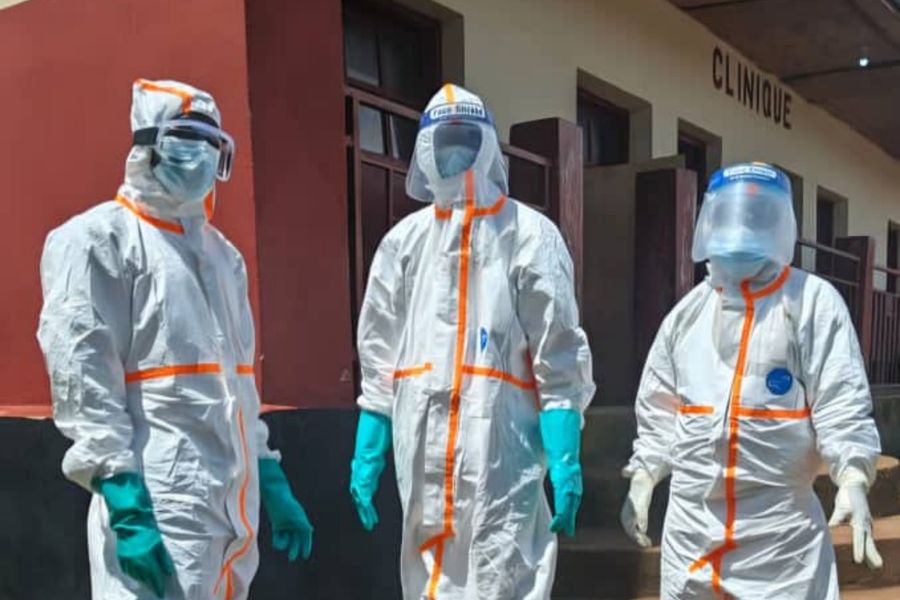
The biological risk factors are compounded by significant challenges within the health sector. In many regions, health facilities are inadequately equipped, diagnostic capacities are limited, and epidemiological surveillance systems function only to a limited extent. As a result, suspected cases often cannot be identified, tested, and isolated quickly enough. This delays outbreak containment efforts and increases the risk of further transmission.
3. Logistical barriers
Many Ebola outbreaks occur in remote areas with poor transport infrastructure that are difficult to access, particularly during the rainy season. These logistical challenges hinder the transport of medical supplies, access to healthcare facilities, and the safe delivery of services to affected populations. Public awareness activities are also difficult to implement under such conditions.
4. Political instability and armed conflict
Ongoing armed conflicts, population displacement, and political instability complicate the implementation of public health measures and delay outbreak containment.
The provinces most affected by the current Bundibugyo virus outbreak in eastern DR Congo, such as Ituri and North Kivu, are longstanding conflict zones. Ongoing violence prevents medical teams from reaching all affected communities. In addition, population movements triggered by insecurity make it extremely difficult to trace chains of transmission comprehensively. Limited coordination between the central government and humanitarian organisations on the ground can further hinder containment efforts.
5. Social factors that facilitate outbreaks
High levels of cross-border movement and active trade routes, for example with Uganda, contribute to the rapid spread of the virus. Another challenge is that containment measures are not always accepted by local communities due to distrust, which can limit their long-term effectiveness.
The largest Ebola outbreaks in the DR Congo
| Jahr | Region/Provinz | Fälle/Todesfälle | Anmerkungen |
| 1976 | Yambuku | 318/280 | first known outbreak of the Ebola virus |
| 1995 | Kikwit | 315/250 | major outbreak in the city of Kikwit |
| 2007 | formerly Kasaï-Occidental | 264/187 | Identification of the Zaire ebolavirus |
| 2018–2020 | Nord-Kivu, Ituri | 3,470/2.280 | second-largest outbreak in history worldwide |
| 2025 | Kasaï | 53/45 | Outbreak of the Zaire ebolavirus |
| 2026 | Ituri | 2,344/930 | Current Bundibugyo ebolavirus outbreak |
The largest Ebola outbreak in history
The largest Ebola outbreak since the discovery of the virus occurred in West Africa between 2014 and 2016. It began in Guinea and rapidly spread to the neighbouring countries of Liberia and Sierra Leone. In total, more than 28,600 cases and 11,325 deaths were recorded, resulting in more fatalities than all other Ebola outbreaks combined (source: WHO, as of 06/2026).
What makes the Ebola virus so dangerous?
The immense danger posed by the Ebola virus lies in its extremely high fatality rate: According to the WHO, on average, around half of all infected individuals die from the disease (source: WHO, as of 04/2025).
The virus causes a form of viral haemorrhagic fever that attacks the blood vessels. A severe course of the disease is typically marked by the sudden onset of high fever, muscle pain, and severe diarrhoea, followed by internal and external bleeding.
As there are currently no approved treatments available, particularly for the Bundibugyo virus, combating the disease becomes a race against time, with healthcare workers and laboratories on the ground facing logistical and biological challenges on a daily basis.
Early supportive care, such as intensive fluid replacement, is therefore the most important measure for significantly improving patients' chances of survival.
Together against humanitarian crises: Help now!
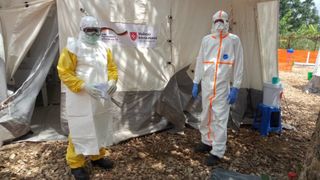

What is hindering the fight against Ebola in the DR Congo?
The containment of Ebola in the Democratic Republic of the Congo is being significantly hampered by insufficient international support and an unequal distribution of aid supplies. In affected and at-risk regions, there are shortages of essential resources such as protective equipment, laboratory supplies, and medical care, as well as food and accommodation for aid workers. At the same time, funding cuts are forcing programmes to scale back operations, preventing humanitarian organisations from reaching all vulnerable areas.
In addition, international assistance is not always delivered effectively, evenly, or in a timely manner. In conflict-affected areas such as Ituri, political instability and poor accessibility prevent aid supplies and medical personnel from reaching the communities most in need. As a result, some regions remain underserved, significantly delaying contact tracing, the treatment of patients, and efforts to break chains of transmission.
Ebola outbreak in the DR Congo: Social impacts and the role of community
The containment of the virus depends largely on the behaviour of and trust among local communities. Limited awareness and understanding can lead many infected individuals to avoid isolation units out of fear and remain in their villages, allowing the virus to spread further. It is therefore essential to engage traditional village leaders, teachers, and local radio stations in order to share information and dispel myths.
The impact on children and families is particularly severe. Many children lose their parents within a matter of days or are forced to spend weeks in strict quarantine. At the same time, affected families are often ostracised by their communities. School closures further deprive children of any remaining sense of routine and stability.
People who have survived the disease also play an important role. Thanks to their long-lasting biological immunity to the same virus strain, they can continue caring for isolated and sick children without becoming infected again. In doing so, they help strengthen trust in protective measures within their communities.
Measures against Ebola in the DR Congo
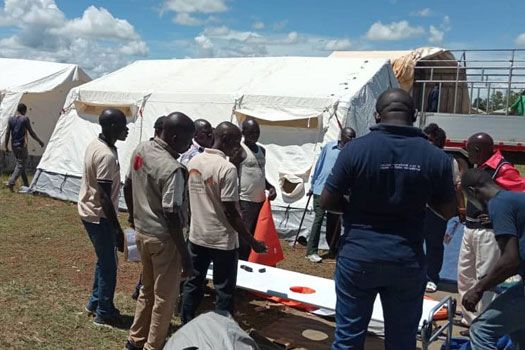
The containment of an Ebola outbreak requires the rapid interruption of transmission chains. Key measures include:
- comprehensive contact tracing
- isolating suspected cases in dedicated treatment units
- ring vaccination, in which only the close contacts of an infected person are vaccinated (where a vaccine is available)
- supportive treatment (including intravenous fluids to maintain hydration, fever-reducing medication, and pain relief)
Help on the ground: How Malteser International supports people in the DR Congo
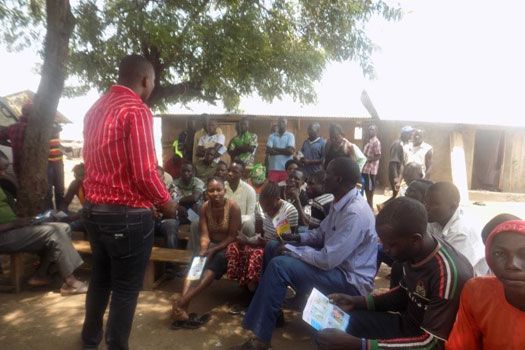
Malteser International has been working for years to prevent the spread of Ebola in DR Congo. At the heart of our response are comprehensive awareness-raising and sensitisation campaigns, context-sensitive risk communication, and strong community engagement. To support these efforts, we use the People First Impact Method (P-FIM), which places local communities at the centre of the response: Our teams listen carefully to people in the affected communities. Only by understanding their daily realities and practices can we build trust, address concerns, and develop hygiene measures that are practical and sustainable. Awareness of infection risks and hygiene measures is further strengthened through radio broadcasts, information leaflets, and door-to-door outreach activities.
As part of our medical prevention efforts, Malteser International provides regular training for local healthcare workers to strengthen early detection and infection prevention and control. A key component of our integrated approach is improving water and sanitation infrastructure, supporting health facilities, and equipping health zones with emergency stockpiles of essential supplies, including specialised testing materials, medicines, and protective equipment. In addition, we deploy mobile isolation units in our areas of operation and supply local health centres with protective suits and personal protective equipment to help safeguard healthcare workers from infection.
Frequently Asked Questions about Ebola in the DR Congo
The virus is not transmitted through the air in everyday life (as is the case with the flu, for example). Infection occurs exclusively through direct contact with the bodily fluids (such as blood, saliva, or sweat) of an infected person or by touching objects contaminated with these fluids (such as needles or clothing).
In the early stages, Ebola usually manifests only through nonspecific symptoms such as fever, headache, and body aches. These symptoms overlap, for example, with those of malaria, an infectious disease that is widespread in the region. Highly specialized laboratories and tests are required for definitive diagnosis. This expensive infrastructure is virtually nonexistent in rural areas and requires laboratories with the highest safety standards.
That depends heavily on the specific strain of the virus. While effective vaccines now exist for the widespread Zaire strain, there are currently no approved vaccines for rarer mutations—such as the Bundibugyo strain. In these cases, medical care focuses on intensive, supportive treatment (fluid and electrolyte replacement), which can significantly increase the chances of survival if treatment is started in a timely manner.
The severe Ebola outbreak of 2020 (more precisely, from 2018 to 2020) is considered a historic turning point in the fight against the virus. During this epidemic, innovative medical interventions were deployed and scientifically evaluated on a large scale for the first time. Key achievements included:
- The use of the Ervebo vaccine in more than 300,000 people, demonstrating very high effectiveness against the Ebola virus (source: WHO, as of 04/2019).
- The testing of highly effective antibody treatments that improve the survival chances of infected patients.
- The recognition that epidemics cannot be contained or prevented in the long term without sustained awareness-raising, trust-building, and the provision of clean water and isolation facilities.
As local health systems in crisis-affected areas remain chronically underfunded, supporting experienced humanitarian organisations is one of the most sustainable ways to help. By donating to Malteser International, you support our work on the ground. Your contribution helps fund the procurement of medical protective equipment, the training of healthcare workers, and psychosocial support for affected individuals, among other essential activities.