Emergency care protects the dignity of refugees in Nakivale
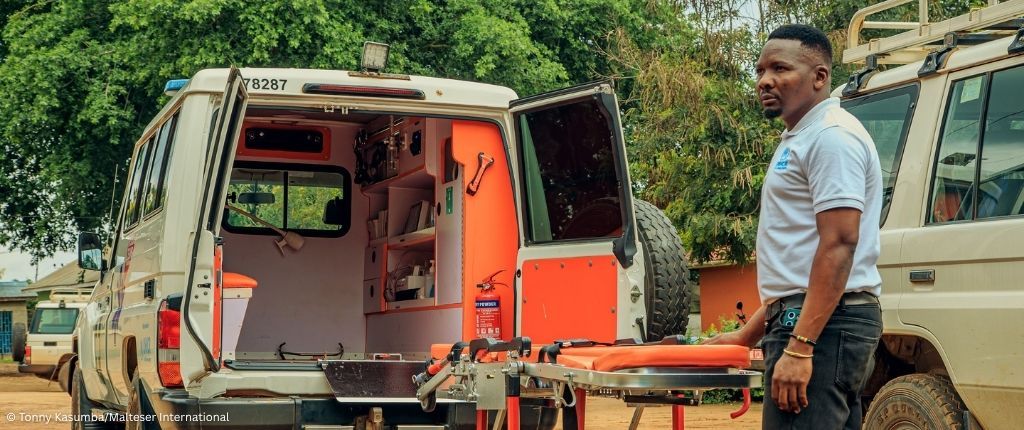
We have been working since 2018 to strengthen Uganda’s Emergency Medical System (EMS) in close partnership with the Ugandan Ministry of Health. In 2025, we expanded the EMS to Nakivale Refugee Settlement in south-western Uganda, providing improved and dignified emergency care for almost 270,000 refugees.
Uganda is at the center of one of the world’s most complex displacement crises. It is currently the country with the largest number of refugees in Africa. People fleeing conflict in South Sudan, the Democratic Republic of the Congo (DR Congo), and Sudan continue to arrive, seeking safety close to home and hoping for a more stable future. Uganda’s progressive refugee policy allows refugees to live alongside host communities, work, access land, and use national services. Yet, even with this inclusive approach, the pressure on public systems and especially healthcare, is immense.
Video: "Everything changed": Upgraded ambulances save lives in Uganda
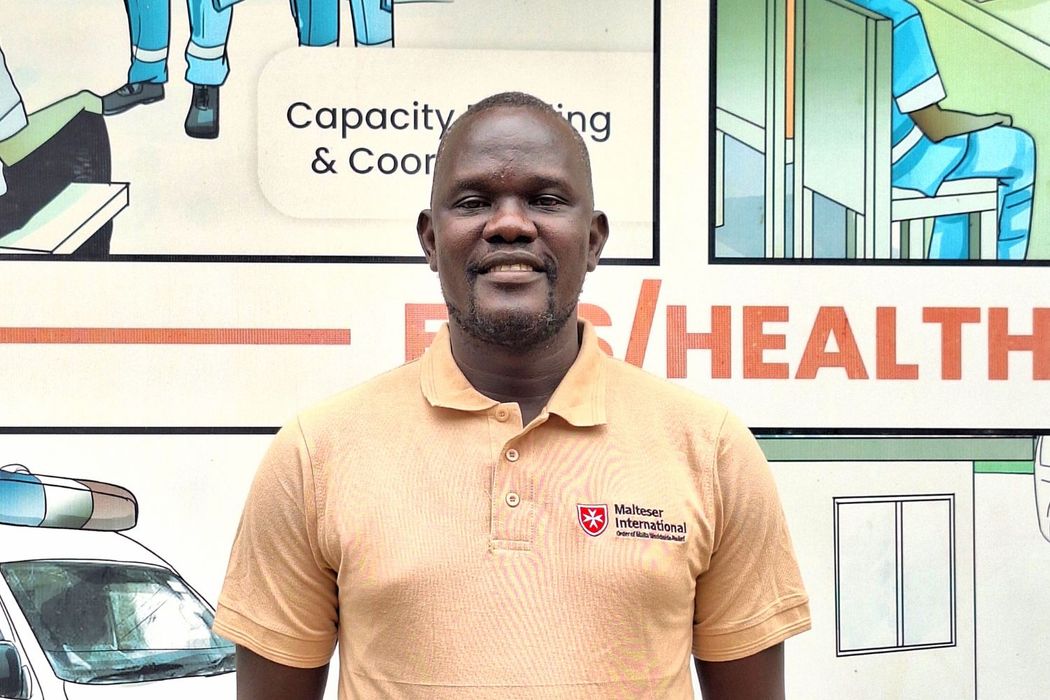
“By equipping ambulances and empowering local health workers, we are both saving lives and restoring dignity and confidence to those who have already lost so much.”
- Benson Odong, Project Manager EMS at Malteser International Uganda
Thousands of lives can be saved yearly
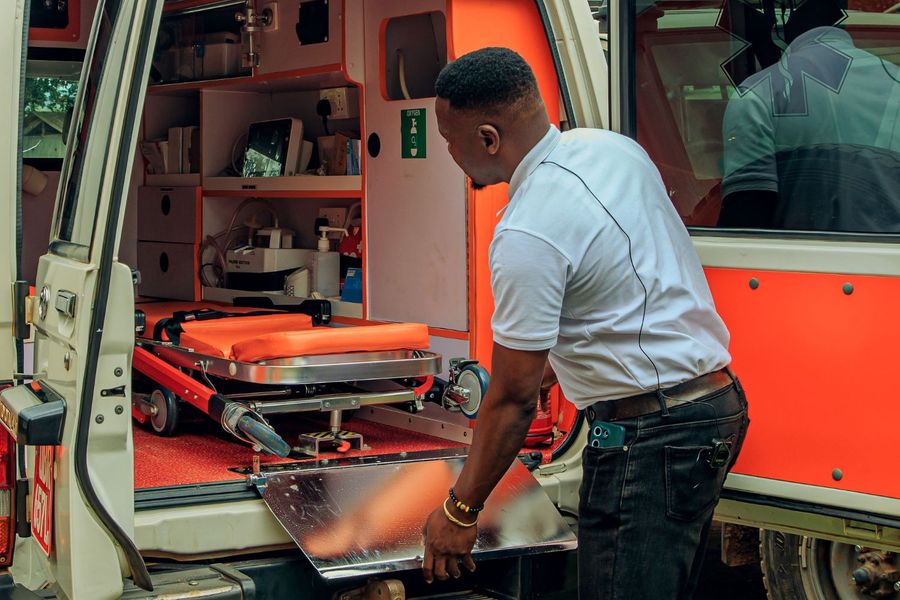
Uganda’s public healthcare system is required to reach people in often remote and under-resourced settings. While needs continue to grow, humanitarian funding has decreased sharply in recent years. Health facilities face chronic shortages of trained staff, essential medicines, and equipment. In many parts of Uganda, ambulances are few, poorly equipped, and staffed by drivers without medical training. Transport times are long, and patients often travel without oxygen, monitoring, or lifesaving interventions along the way. For refugees living far from referral hospitals, the journey time itself can mean the difference between life and death.
Statistically, more than half of emergency related deaths in low- and middle-income countries like Uganda could be prevented by stronger emergency care systems (WHO, 2024). Recognizing this, we have worked together with the Ugandan Ministry of Health to lay the foundation for sustainable, high-quality nationwide emergency care by supporting national policies, standards, and training frameworks. In 2025, we continued to build on this foundation to enhance the EMS for Nakivale Refugee Settlement in south-western Uganda. The majority of the almost 270,000 Nakivale residents are women and children, many of them newly displaced from the eastern DR Congo.
Healthcare is a stabilizing factor
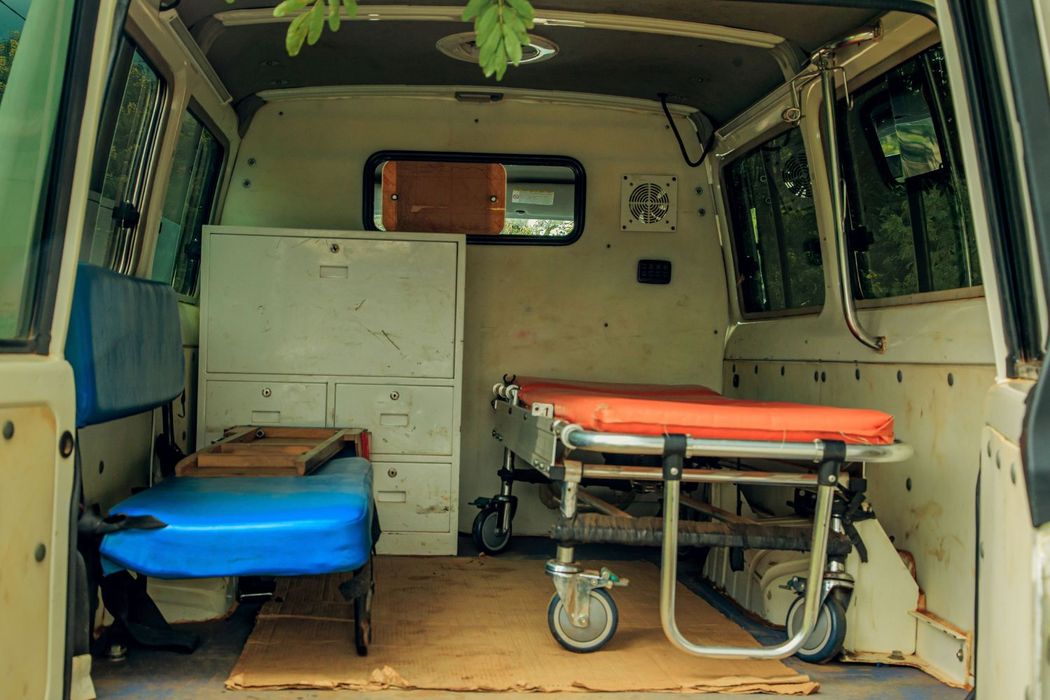
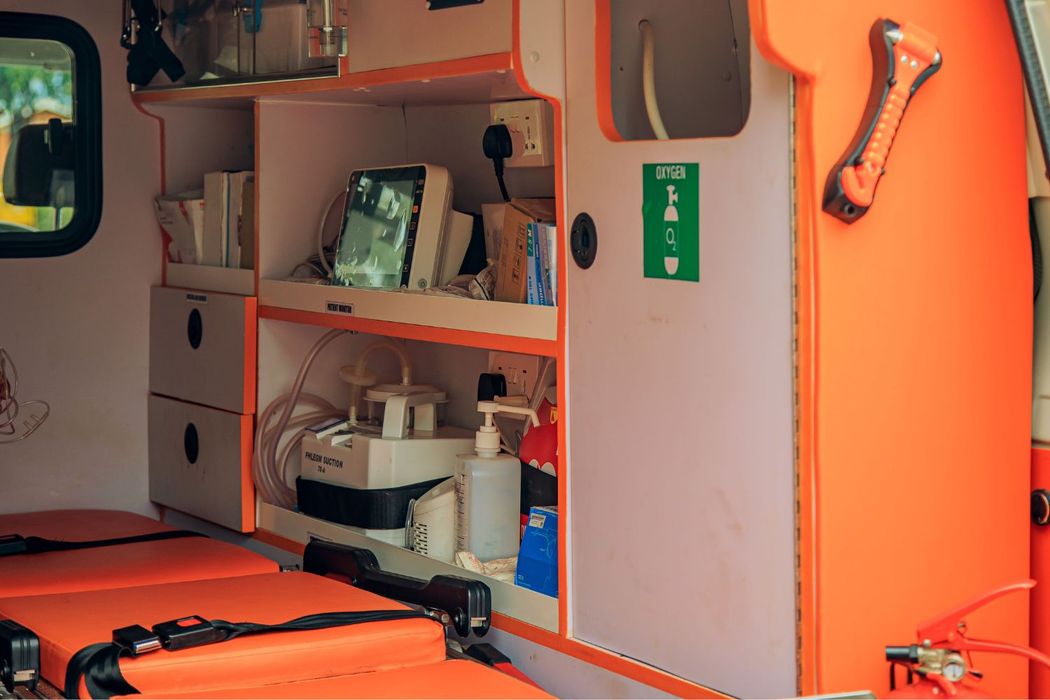
To improve the EMS for the refugees in Nakivale, we focused on one critical link in the care chain: safe, dignified transport. Working closely with various expert partners, another three ambulances were upgraded to national Type B standards. These ambulances are now equipped with oxygen, monitoring tools, and essential emergency equipment. Equally important was investing in people. Sixteen healthcare workers were trained in the WHO-accredited Basic Emergency Care course, strengthening their ability to recognize and manage emergencies. Ten ambulance drivers received Emergency Vehicle Operators training.
As displacement continues and funding becomes more uncertain, investing in local capacity is critical. When people can access care close to where they live, even in displacement, they retain a sense of agency and belonging. By working through national systems and strengthening local professional bodies, we are supporting the development of an EMS model that can be replicated. The experiences gained in Nakivale are already being incorporated into plans to modernize ambulances in neighboring settlements and host communities. We remain committed to ensuring that “home” – be it old, new or temporary – includes close access to lifesaving care. With strong partnerships, local expertise, and sustained support, emergency care can become a pillar of dignity and hope for displaced communities in Uganda and beyond.
(June 2026 – An article from our 2025 Annual Report)