Nurul builds bridges
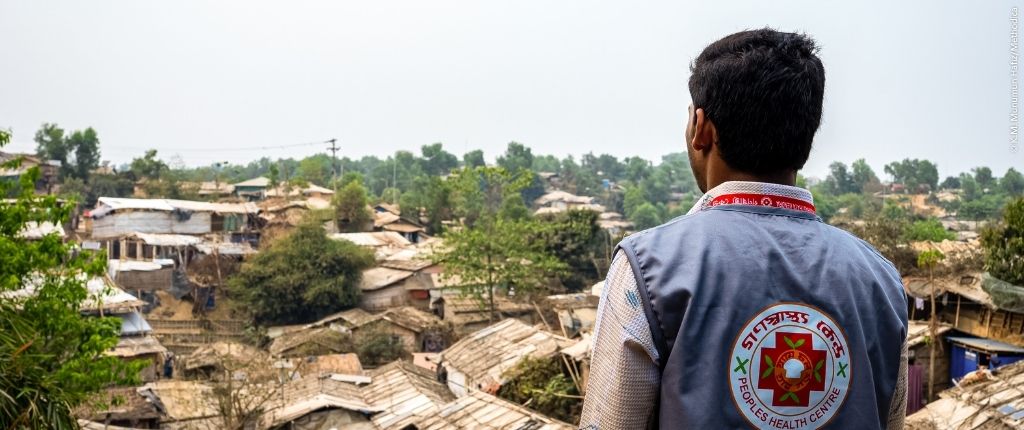
Nurul Amin is one in a million. One in a million refugees from Myanmar who live in overcrowded camps in Cox’s Bazar, Bangladesh. One in a million who do not know if they can ever return home again. And he is one of 27 Rohingya volunteers who contribute to the efficiency and sustainability of our health services in Cox’s Bazar despite ever-decreasing global humanitarian funding.
Nurul Amin was seventeen years old when he arrived in Bangladesh, crossing the border with thousands of others fleeing violence in Myanmar. He remembers arriving in what would become Refugee Camp 11 and, looking around at endless rows of bamboo and tarpaulin, wondering how anyone could build a life here.
Dignified and sustainable health service delivery
With Gonoshasthaya Kendra (GK) as our partner, we provide respectful, confidential, and inclusive primary healthcare to a catchment population of approximately 57,000 refugees. To this end, we have supported health posts at three different Rohingya camps in Cox’s Bazar since since 2017.
For displaced communities, dignity in healthcare is not only about what services are provided, but how they are delivered. Particularly in a humanitarian environment increasingly affected by funding cuts, sustainability depends on strong local systems and community ownership. Our approach emphasizes collaboration with local health actors, Community Health Workers, and refugee volunteers to strengthen trust and continuity. This proximity to the community allows services to remain responsive to evolving needs while reinforcing accountability and trust.
A fateful notice
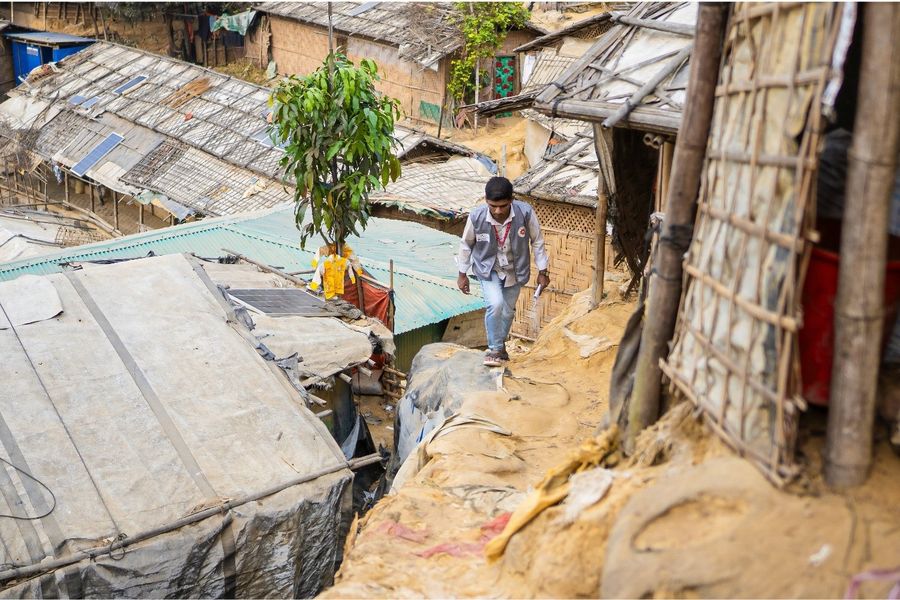
For months after his arrival, Nurul was lost in the crowd. A teenager among tens of thousands, he was invisible, uncertain: surviving but not living. Then, in September 2020, he saw a notice pinned to a community notice board. GK was hiring Community Health Workers. He completed the required process, and to his surprise, he was selected to begin the training.
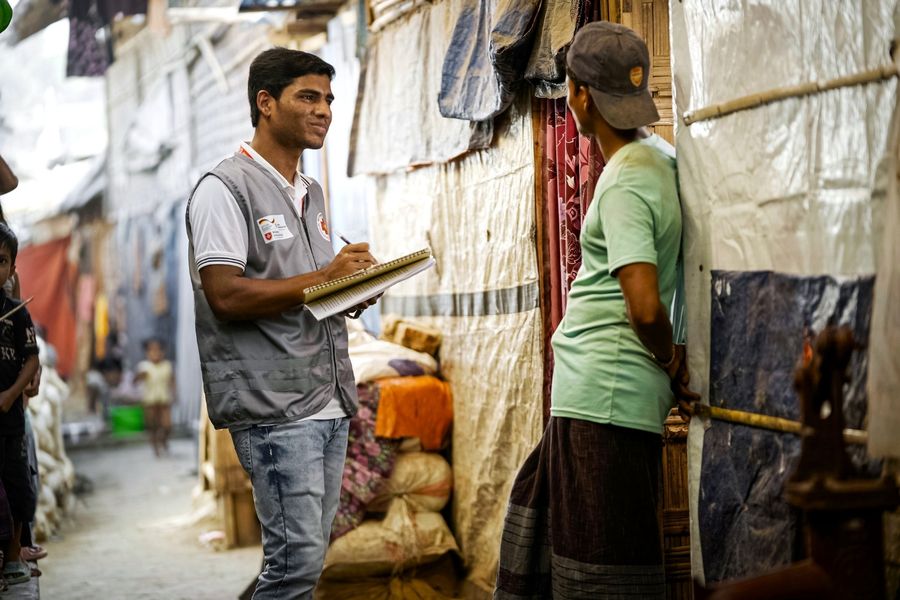
That was nearly six years ago. Now, at twenty-five, Nurul Amin is no longer lost in the crowd. He is known. Every day at 9 a.m., Nurul reports to one of the health posts operated by GK with our support. He checks in with the staff, receives updates or special instructions, and then steps out into the camp‘s narrow pathways to begin his rounds.
The people he visits do not regard him as an outsider bringing foreign ideas. They see him as one of them – someone who shares their history, their language, their daily reality. That is why they open their doors to him. That is why they listen when he speaks. “Because you come to our homes and talk to us,” people tell him again and again, “we are much freer from disease than before.”
Health as a foundation for stability
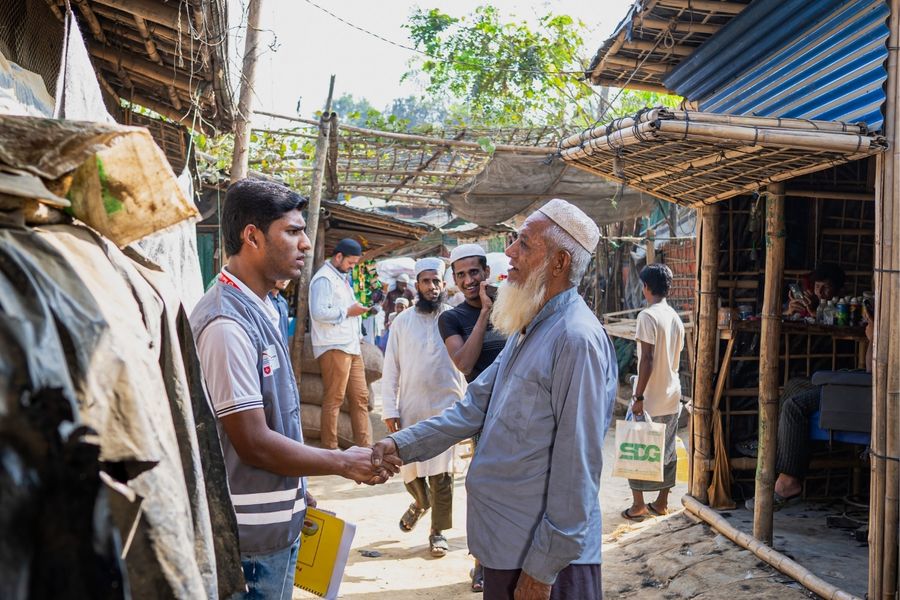
The Rohingya crisis is often framed as a humanitarian burden, yet access to dignified healthcare is an investment in regional and global stability. “When displaced people can maintain their health, manage chronic conditions, and protect maternal and child wellbeing, they are better equipped to withstand uncertainty and contribute positively to their communities – whether in displacement, return, or future resettlement,” says Keerti Keerti, our Country Director in Bangladesh.
An essential link
None of our support services would reach the people who need it most without volunteers like Nurul. He builds the bridges that connect our healthcare services with the homes and people of his community.
Nurul‘s work is not easy. The hours are long, the resources limited, the emotional weight heavy. Every day, he listens to painful stories. He carries those stories with him, and sometimes they sit heavy on his heart.
But he keeps knocking. He keeps talking. He keeps walking. He is one in a million who wait and pray for a better future and that the world will not forget him: In 2025, not even half the global funding needs assessed by the UN for Cox's Bazar were met. “Continued and reliable funding is crucial to ensure that critical health services in Cox’s Bazar will continue uninterrupted to phold wellbeing and basic human dignity,” says Keerti Keerti.
(June 2026 - Article from our Annual Report 2025)