For a healthier future: Infection prevention for Junior and his classmates
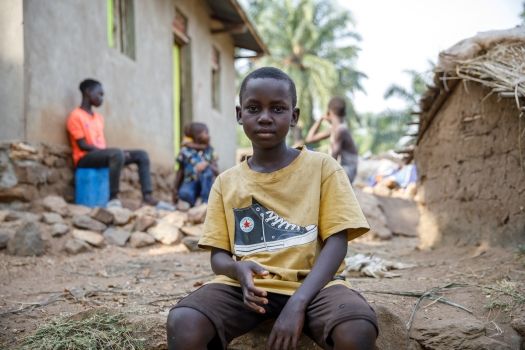
Clean water, hygiene, and knowledge – for Junior, this means more than just good health. It means hope for his family and a dream for the future: one day, he wants to save lives himself.
Junior Munguromo is 14 years old when we meet him in February 2025. He and his sister Francince, 15, live in the Ituri province of the Democratic Republic of the Congo. Reaching their home requires a sturdy car that can navigate the rough, winding, steep, slippery slopes and numerous dusty roads in this mountainous area. The roads were mostly made by the people living here who cleared the bush and carved sections of the mountains with the limited tools at hand. During the rainy season, all the roads sometimes become completely impassable, and often a bridge may be broken or otherwise unusable.
Improved conditions for healthy learning
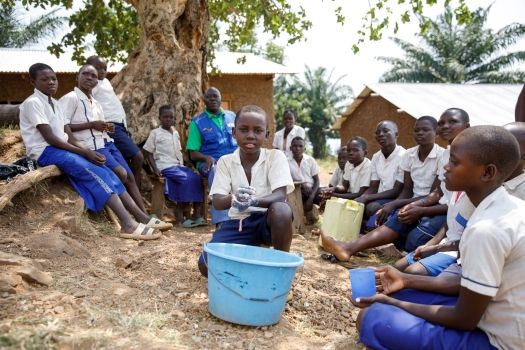
Junior’s school – the Mbunya Primary School – lies in the Angumu Health Zone, close to Lake Albert. On a clear day, one can see Uganda across the lake. Like most families here, Junior and Francince do not have running water at home, and neither did their school before it took part in Malteser International’s One Health program. As part of the program, we installed latrines, sinks, and water tanks in this school and a number of others in the area, as well as in community centers. Teachers were taught about hand hygiene, and in turn, they taught their students, who then passed on the knowledge to their families.
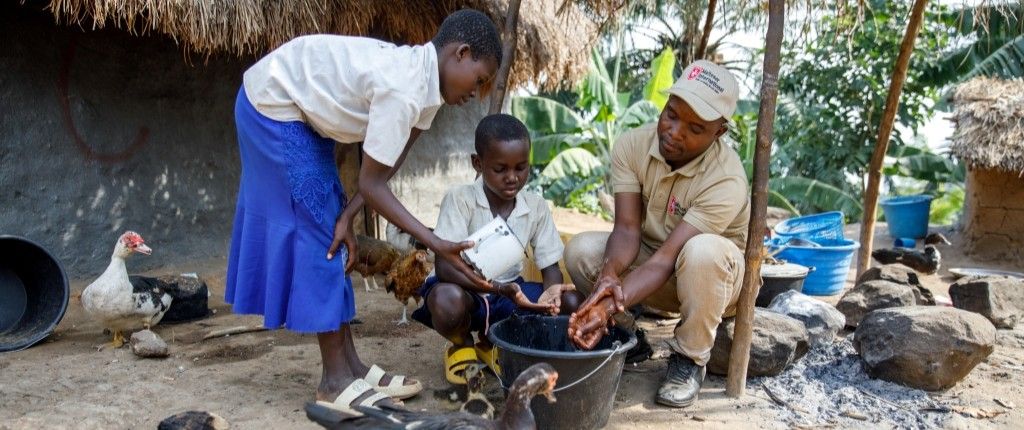
"At school, they taught us the importance of keeping our hands clean. We have to wash our hands before eating and after using the toilet. If we do not keep them clean, we risk becoming sick,” says Junior.
At home water is still far away
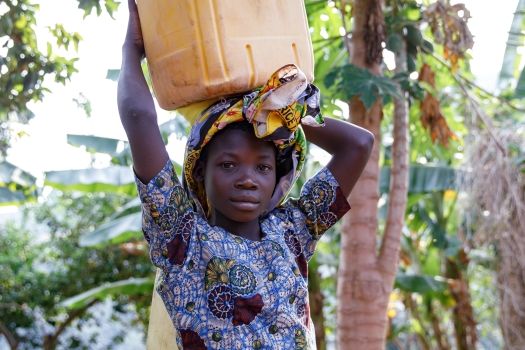
Keeping up the healthy new habits at home is a challenge. “The problem sometimes is that we don't have enough water,” says Francince. “We have to walk down the hill and to the river in the valley. I have to carry a 20-litre jerrycan on my head and another 5-litre on my back. We have to do this every day because there are many people living in this house, including my aunt and her children who had to run away because of war." The river water, though, can be dangerous, as a waterborne parasitic disease called Schistosomiasis (Bilharzia) is endemic in the area.
Junior says: "We were also taught about Schistosomiasis. If you work at the river or the lake, the parasites can enter your body through your skin. When they enter, they grow and make your stomach become swollen. A person looks big but sick. So, to prevent Schistosomiasis, we should not play or swim in the lake or the river. People working in or close to the water should wear gumboots before entering the water. It is also not good to wash clothes there."
Achievements need to be expanded
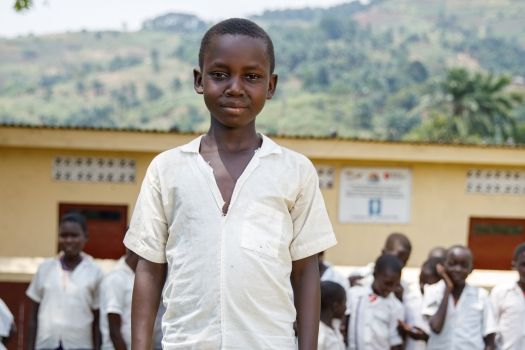
Numerous communities in the area like Junior’s and Francince’s lack a save water source, latrines, and other amenities. Under Malteser International's implementation of the One Health approach, work is being done to improve this situation to contribute to the successful prevention of epidemics. New sanitary facilites were also built in health centers to reduce cases of people having to use rivers, the lake, and bushes as a toilet. Communal water sources were constructed. Local committees control access to the water, and also ensure hygiene at these water sources. Access to safe water, adequate sanitation, and good hygiene have lowered the odds of Schistosomiasis infection. However, there is still much work to be done.
At least the renovations at his school are complete, and Junior appreciates the changes: "We used to have bad toilets at school until new ones were built. They look nice, and I feel more comfortable using them. The door closes well, and the room is big and well-aerated. The restrooms also have a water tank, so it is possible to wash our hands."
Junior's dream for the future
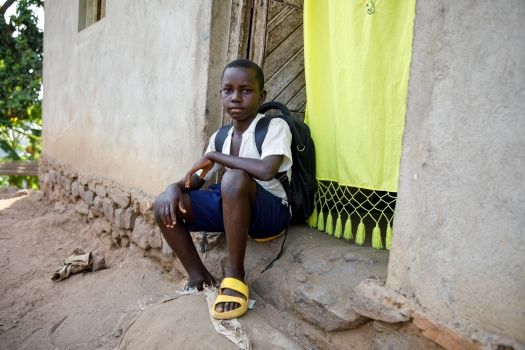
At his young age, Junior already understands the needs and sees the positive changes that have happened through the water, sanitation, and hygiene measures, but also the work that still needs to be done: “Not all children have changed their habits, even if we were taught!” Junior likes to pass on the knowledge he gained at school and hopes to one day play an even more active role in the health of his community. "At school, I love studying anatomy. In the future, I'd love to become a doctor to help those suffering from illness."